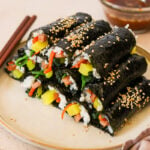
Mini Kimbap (Mayak Kimbap) with Mustard Dipping Sauce
This mini kimbap (also called mayak kimbap) is a poppable, snack-sized version of the classic Korean seaweed rice roll, filled with seasoned rice, spinach, carrots, Spam, and yellow pickled radish. The rolls come together in about 40 minutes and they're naturally gluten free when made with tamari. We eat a lot of kimbap at home - it's one of my favorite ways to add veggies to my kids' diet - and these mini rolls are perfect for picnics, lunch boxes, and eating on-the-go.
Servings: 18 mini kimbap
Ingredients
Kimbap
- 3 cups freshly cooked short grain rice about 1.5 cups uncooked
- 1 tbsp + 2 tsp sesame oil divided
- 3/4 tsp sea salt divided
- 4 oz spinach
- 1 carrot julienned
- 1/3 container spam about 2.5 oz, thinly sliced
- 4 oz yellow pickled radish (danmuji) or lightly salted cucumbers, thinly sliced
- 4½ sheets dried seaweed nori
- Sesame oil and sesame seeds for garnish
Dipping Sauce (Optional)
- 2 tbsp tamari sauce or soy sauce
- 2 tbsp water
- 2 tbsp mirin
- 1 tbsp Korean hot mustard or dijon mustard
- 2 tsp sugar
- 1 tsp sesame seeds
Instructions
- If making, combine all ingredients for the sauce in a small bowl, and stir until the mustard is dissolved. Set aside. If the rice isn’t cooked already, start cooking it now.2 tbsp tamari sauce, 2 tbsp water, 2 tbsp mirin, 1 tbsp Korean hot mustard, 2 tsp sugar, 1 tsp sesame seeds, 3 cups freshly cooked short grain rice
- Boil a pot of water over high heat and prepare an ice bath. Blanch spinach in the boiling water for 30-60 seconds, then immediate transfer to the ice bath.4 oz spinach
- Squeeze out all moisture from the spinach, then place in a bowl. Toss with 1 tsp sesame oil and 1/8 tsp sea salt. Set aside.
- Heat 1 tsp of sesame oil in a skillet over medium high heat. Add carrots and 1/8 tsp sea salt. Stir cooking for about 2 minutes until softened slightly, then remove from the pan.1 carrot
- In the same skillet, add spam and cook stirring for 3-4 minutes until lightly charred on the outside. Remove from heat.1/3 container spam
- Once the rice is finished cooking, add 1 tbsp of sesame oil and 1/2 tsp sea salt. Toss gently to mix.
- Cut seaweed sheets into 4 quarters. Take a piece and lay shiny side down with the shorter side facing you. Spread about 2 tbsp of rice, leaving about 1/2 inch space at the top ( I like to wear a plastic glove to spread out the rice with my fingers without it sticking). Add small amounts of the spinach, carrot, radish, and spam slices evenly on the bottom portion of the rice.4½ sheets dried seaweed, 4 oz yellow pickled radish (danmuji)
- Carefully roll the seaweed tightly from the bottom edge to the top, tucking the filling with your fingers. Repeat with the rest of the ingredients.
- Brush the rolled gimbap lightly with some sesame oil and sprinkle with sesame seeds. Enjoy with the dipping sauce!Sesame oil and sesame seeds
Video
Notes
- Use freshly cooked rice so it sticks to the seaweed easily.
- Wear a plastic glove to spread the rice without it sticking to your fingers.
- Squeeze the spinach very dry so the rolls don't get soggy.
- Kimbap can be left out at room temperature for 2-4 hours, or stored in the fridge for up to 6 hours. Any longer and the rice will harden and won't be enjoyable - it's best eaten the same day it's made.
Nutrition
Serving: 1kimbap - makes 18 | Calories: 94kcal | Carbohydrates: 15g | Protein: 2g | Fat: 3g | Saturated Fat: 1g | Polyunsaturated Fat: 1g | Monounsaturated Fat: 1g | Cholesterol: 4mg | Sodium: 234mg | Potassium: 112mg | Fiber: 1g | Sugar: 1g | Vitamin A: 1190IU | Vitamin C: 4mg | Calcium: 16mg | Iron: 0.5mg