

This post may contain affiliate links. Please see our disclosure policy.

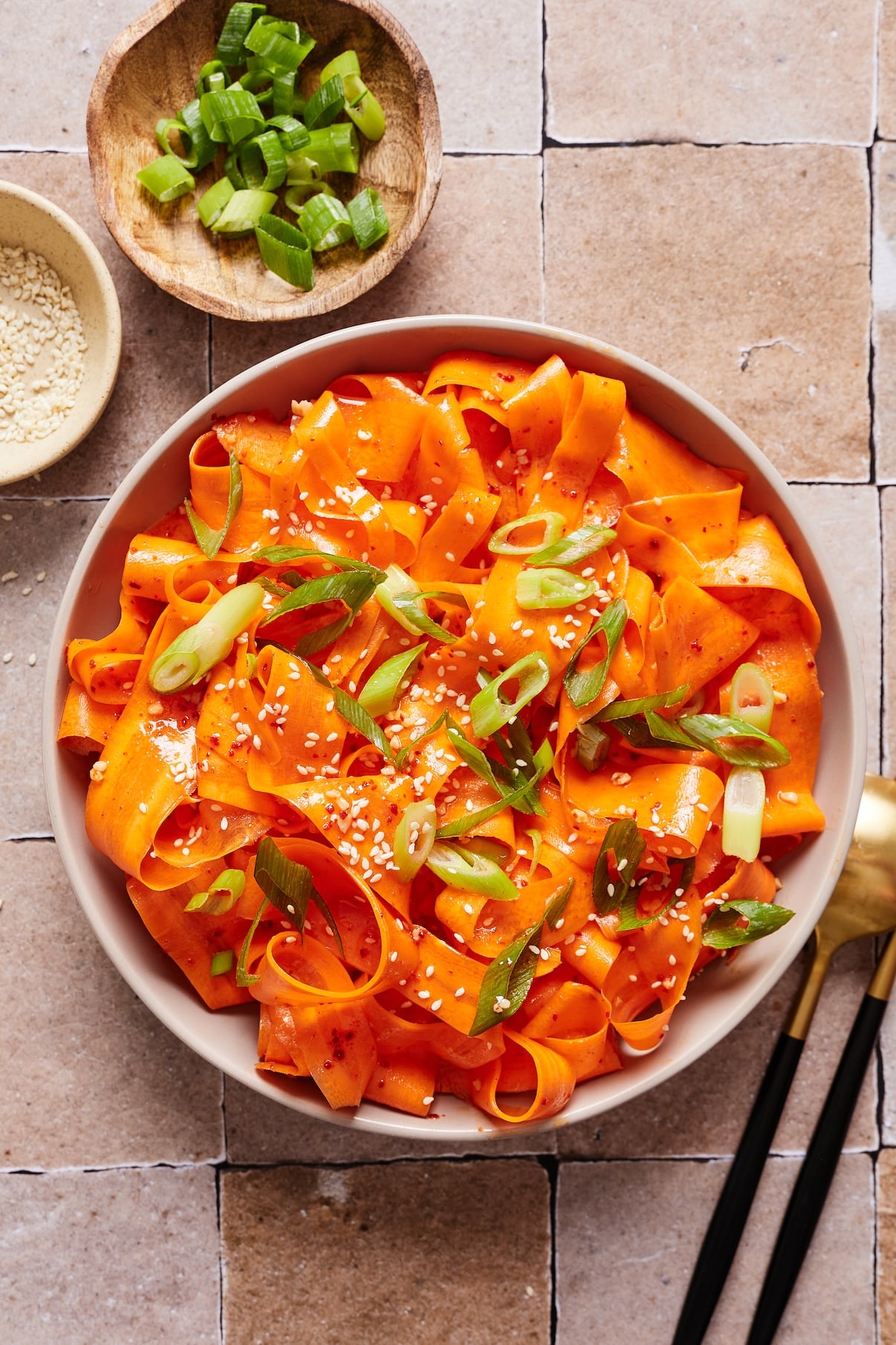
What Is Morkovcha?
I grew up eating it with my family, but the dish itself comes from the Koryo-saram, ethnic Koreans who had moved to the former Soviet Union in the early 1900s to escape famine at home. Napa cabbage was nearly impossible to find there, so when they wanted the flavors of kimchi, they turned to what was everywhere: carrots. Morkov is Russian for carrot, and chae (채) is Korean for sliced vegetables.
Today morkovcha is eaten all over the former Soviet Union and beyond. It’s inspired by Korean flavors, but it belongs to the Koryo-saram community more than to modern South Korean cuisine, and I think that’s exactly what makes it worth knowing.
Why You’ll Love This Korean Carrot Salad Recipe
This is one of those recipes where the ingredient list does almost all the work for you. The dressing is pantry staples, there’s one minute of actual cooking (the garlic oil), and then the carrots take over, softening in the fridge and drinking up all that garlicky, tangy flavor while you do something else. There’s nothing to reheat, which makes it my kind of dish for gatherings and busy weeknights alike.
It also gets better as it sits! This is genuinely better on day two, once the flavors have had time to settle into the carrots. That makes it a side dish you can fully make ahead without compromising anything.
If you’re already cooking Korean-inspired mains like my pork bulgogi or Korean BBQ short ribs, this adds a fresh, crunchy contrast to the table for almost no extra effort.
Ingredient Notes
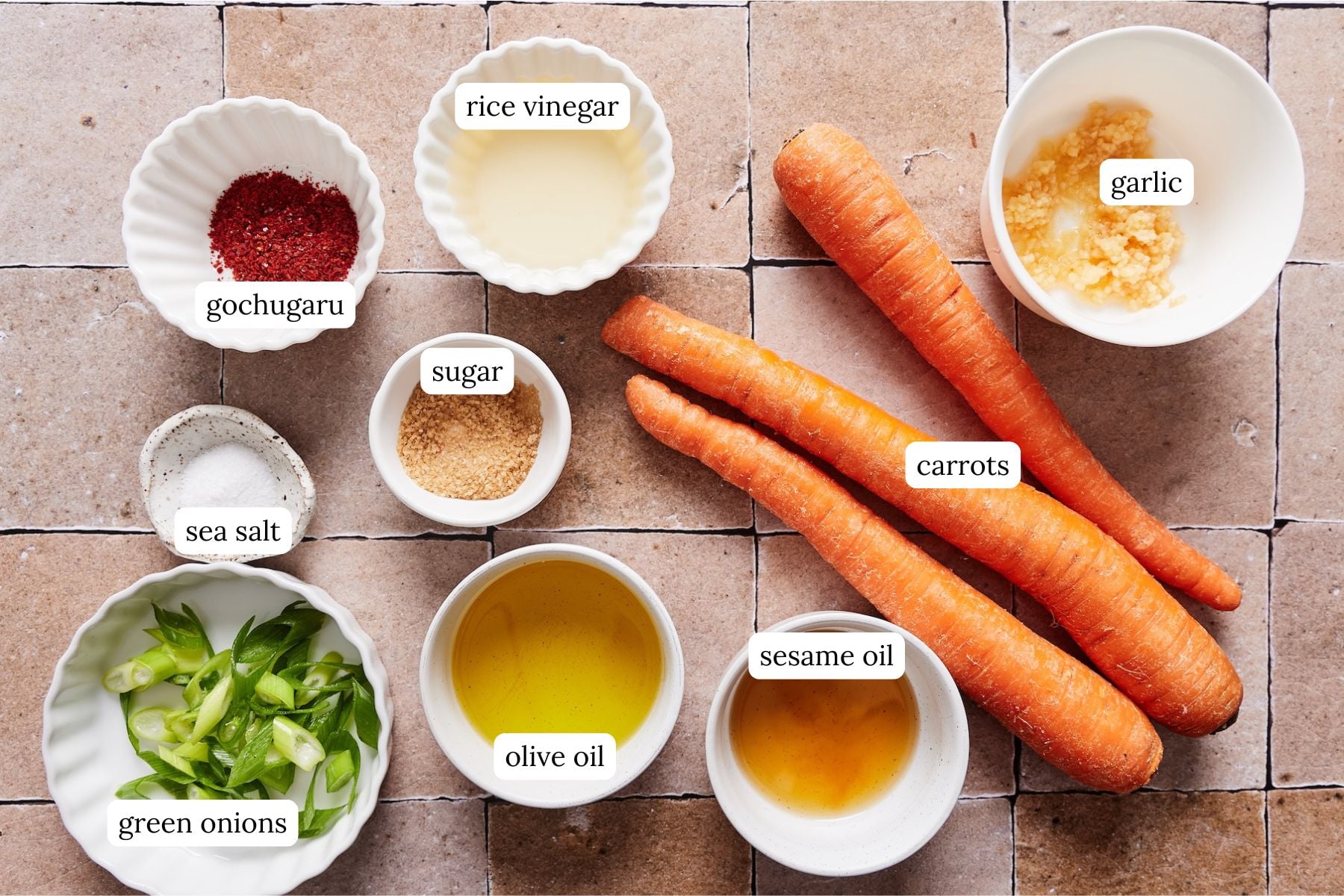
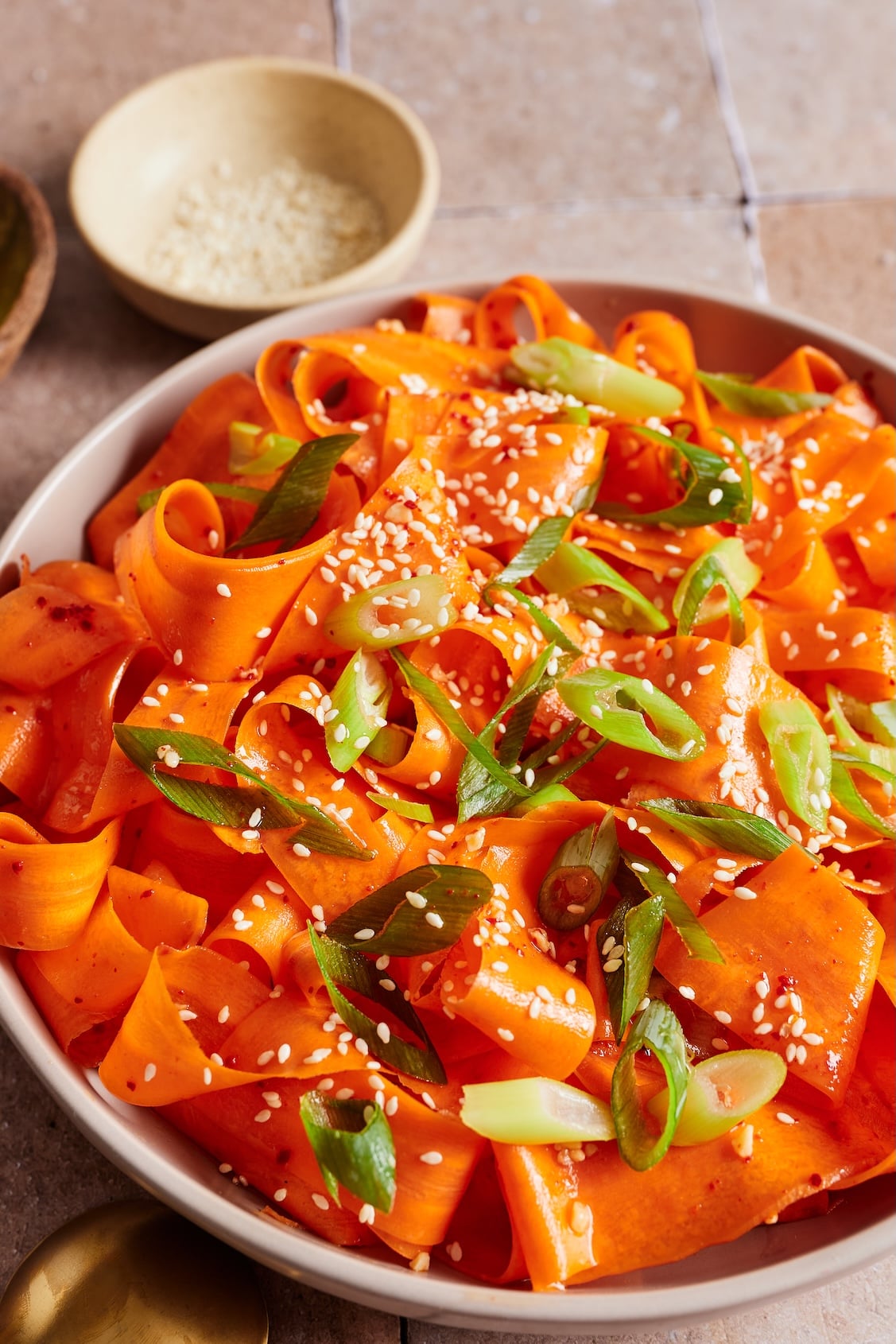
- Carrots: I personally love slicing these into wide ribbons instead of the traditional matchsticks. Ribbons have more surface area, so they hold onto more dressing and soften into a crisp-tender bite instead of a stiff one.
- Sea salt: This isn’t just seasoning. Salting the carrots first pulls out moisture so they relax and absorb the dressing instead of letting it pool at the bottom of the bowl.
- Rice vinegar: Milder and a touch sweeter than white vinegar, which keeps the tang bright instead of sharp. It’s what I reach for here.
- Gochugaru: Korean red pepper flakes bring gentle heat, a subtle smokiness, and that vibrant red-orange color. I use gochugaru constantly in my Korean-inspired cooking because it warms a dish without taking it over, which cayenne can’t do.
Recipe Variations
- Ribboned or julienned carrots: I make this with ribbons, but if you want a more traditional morkovcha, use a julienne peeler or mandoline to cut thin matchsticks instead. Both work: ribbons are softer and saucier, matchsticks are crunchier.
- Adjust the heat: Gochugaru varies a lot in spice level by brand. If you’re heat-shy, start with less; you can always stir in more after the salad has chilled and you’ve tasted where it landed.
- Add coriander seed: Classic Soviet-era morkovcha often uses ground coriander instead of sesame. If you want that more traditional version, add about a teaspoon along with the gochugaru for a warm, citrusy edge.
- Use pre-shredded carrots: They’ll work in a pinch, but they’re drier and thicker than freshly cut carrots, so give the salad extra marinating time before serving. Fresh carrots are worth the ten minutes.
How to Make Korean Carrot Salad
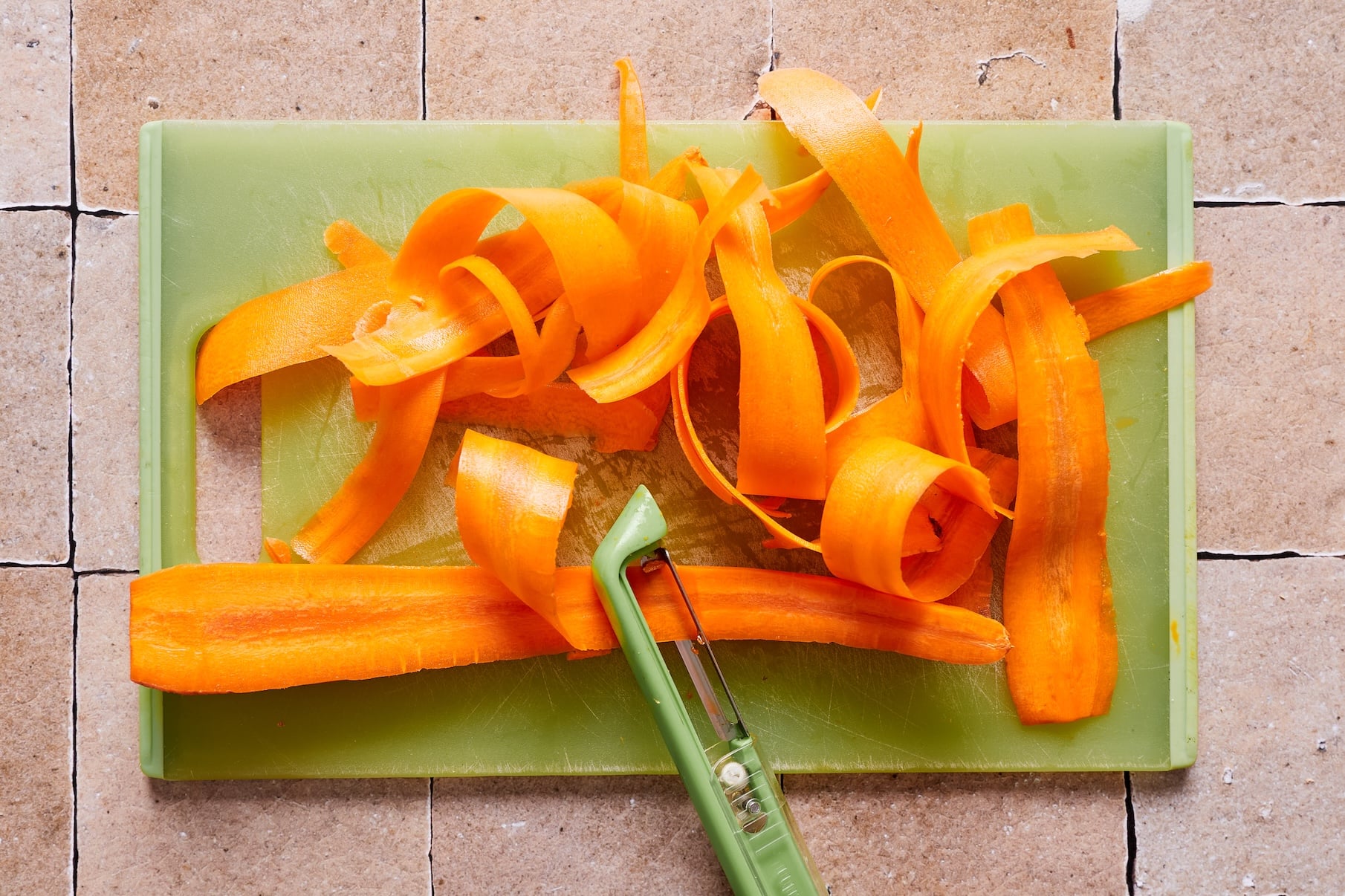
Step 1: Wash the carrots well, then use a vegetable peeler to slice them lengthwise into wide, thin strips. Rotate each carrot as you go so the ribbons stay a consistent width. If you prefer matchsticks, use a julienne peeler here instead.
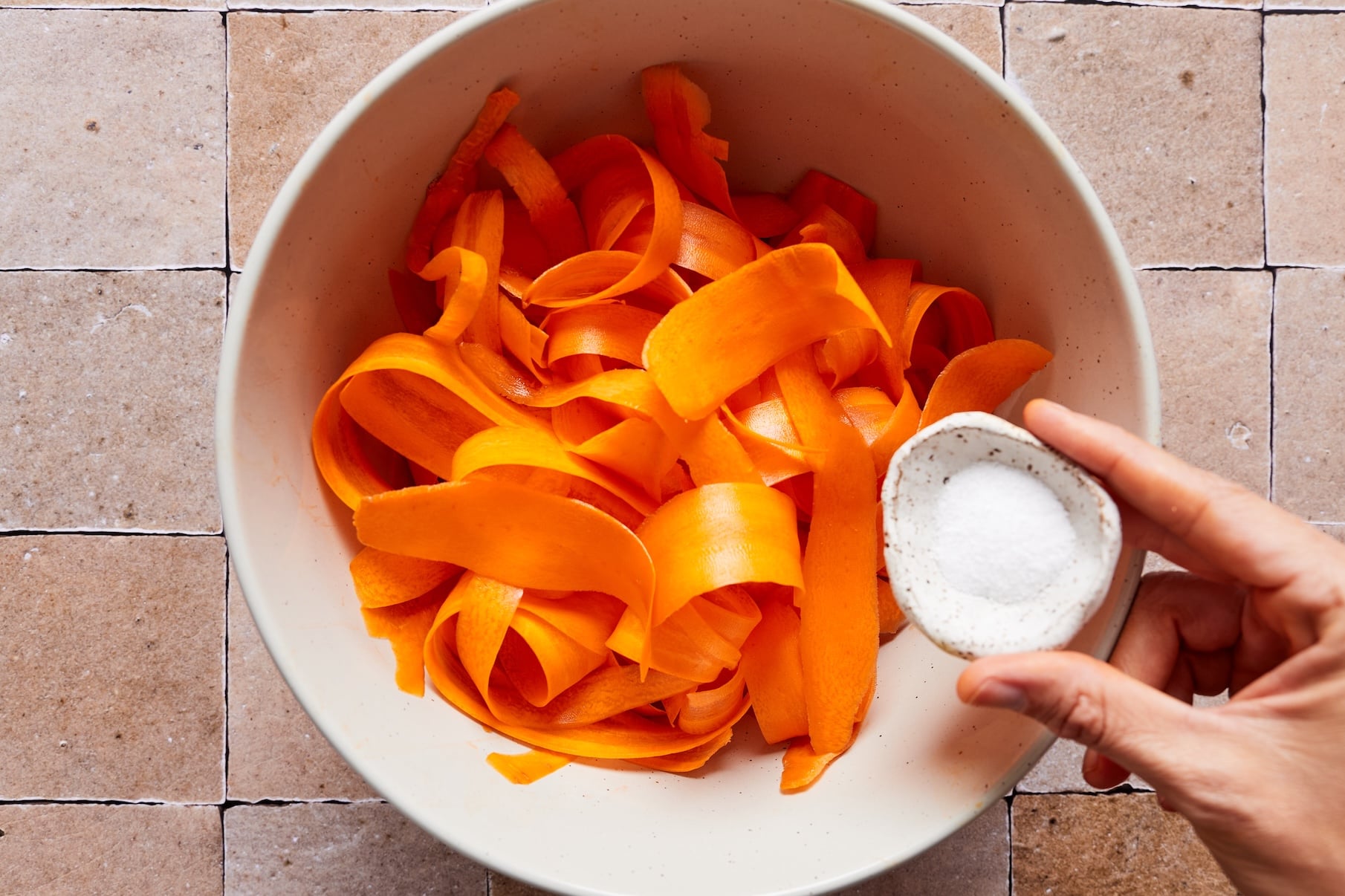
Step 2: Place the carrots in a large bowl and toss them with the sea salt. Let them sit for 10 to 15 minutes. Don’t skip this even if you’re in a hurry, because this is what lets the carrots absorb the dressing later. You’re looking for ribbons that bend easily and look slightly wilted, but not limp.
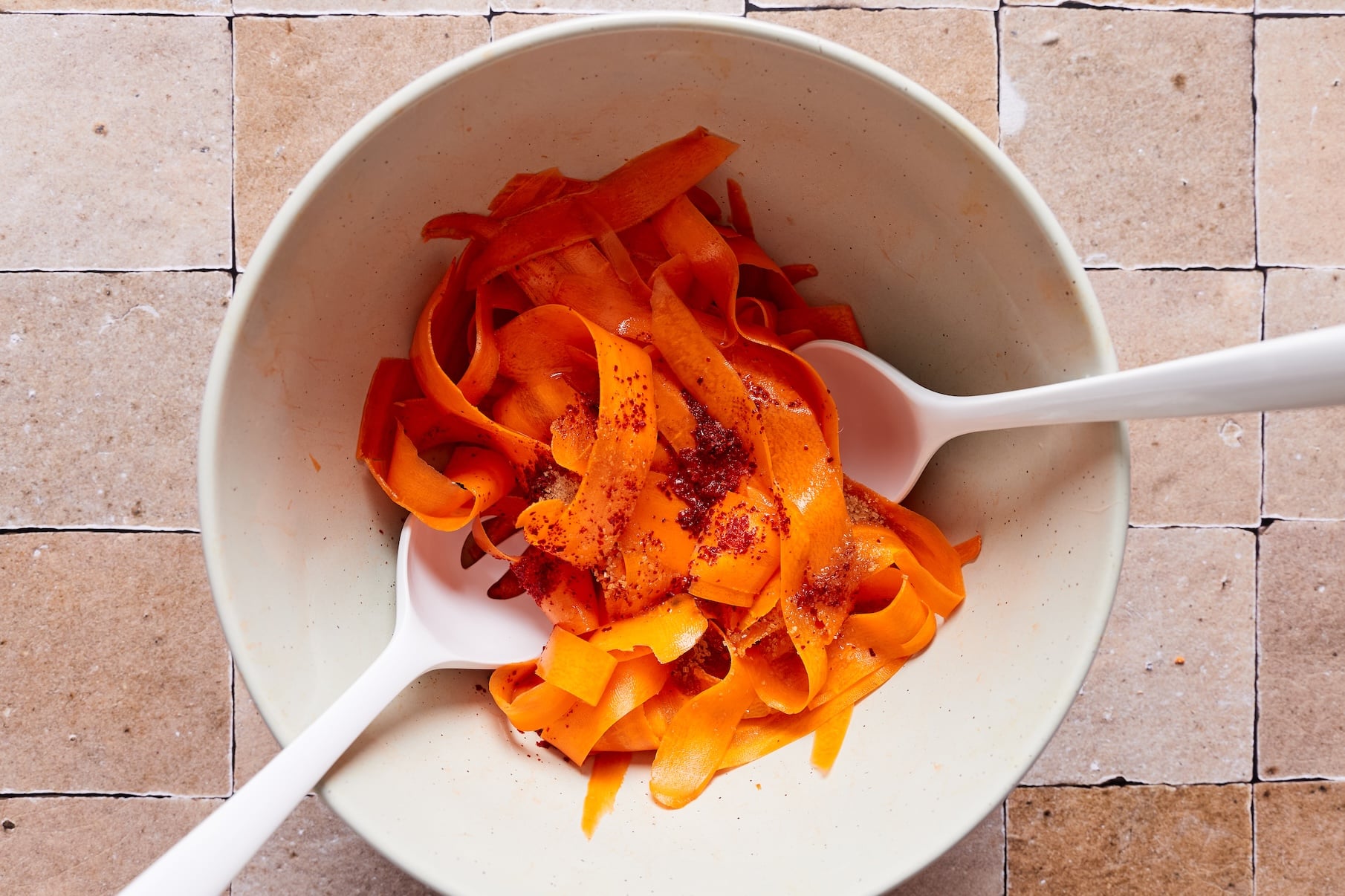
Step 3: Add the rice vinegar, sugar, and gochugaru. Toss well, pulling the carrot strips apart with your hands or tongs as you go so the seasoning reaches every ribbon instead of coating just the top layer.
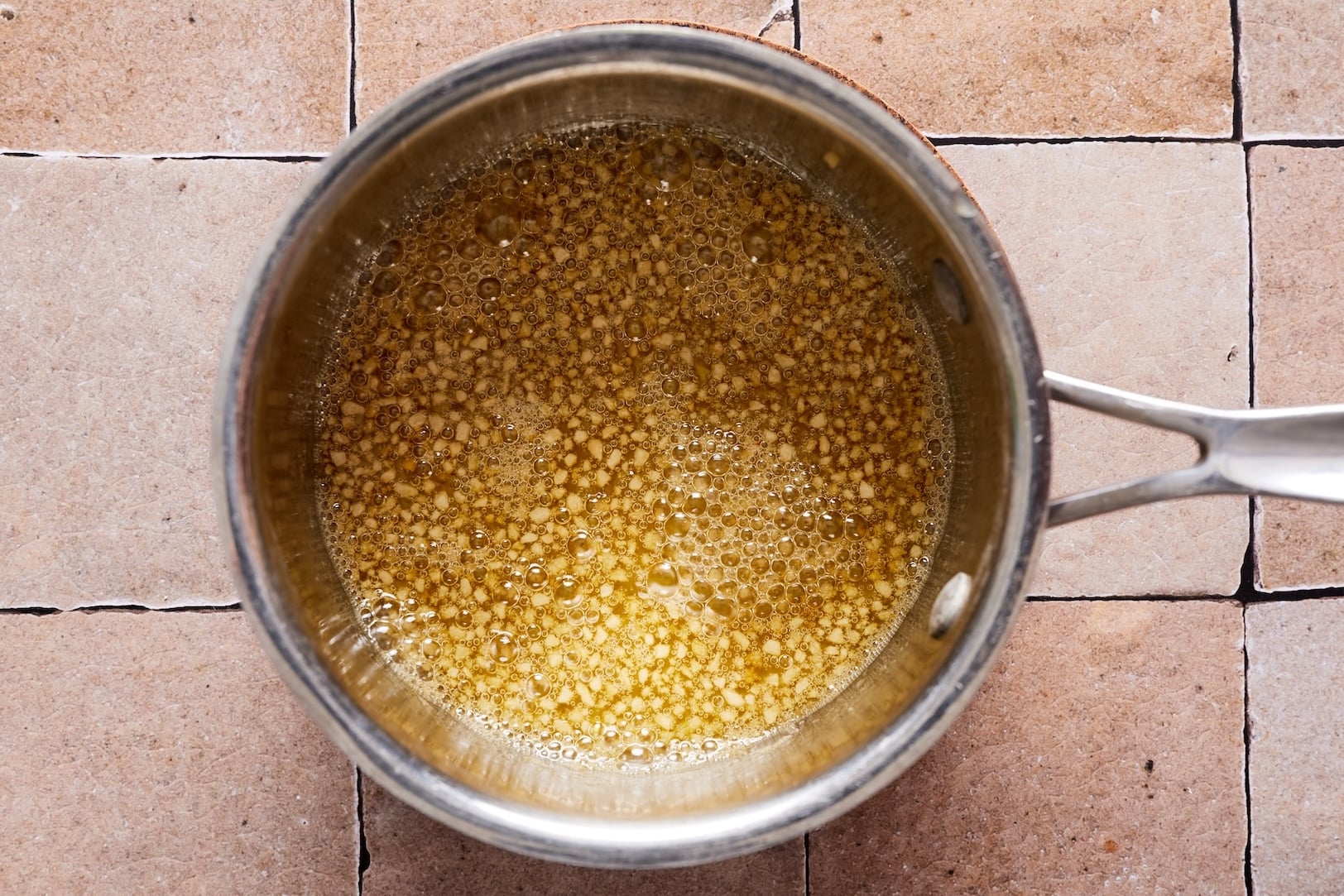
Step 4: Heat the olive oil and sesame oil in a small pot or pan over medium heat. Add the garlic and cook, stirring, for about 1 minute. Pull the pan off the heat the moment the garlic is fragrant and lightly golden. Garlic goes from golden to dark brown fast, and dark brown garlic will make the whole salad taste bitter.
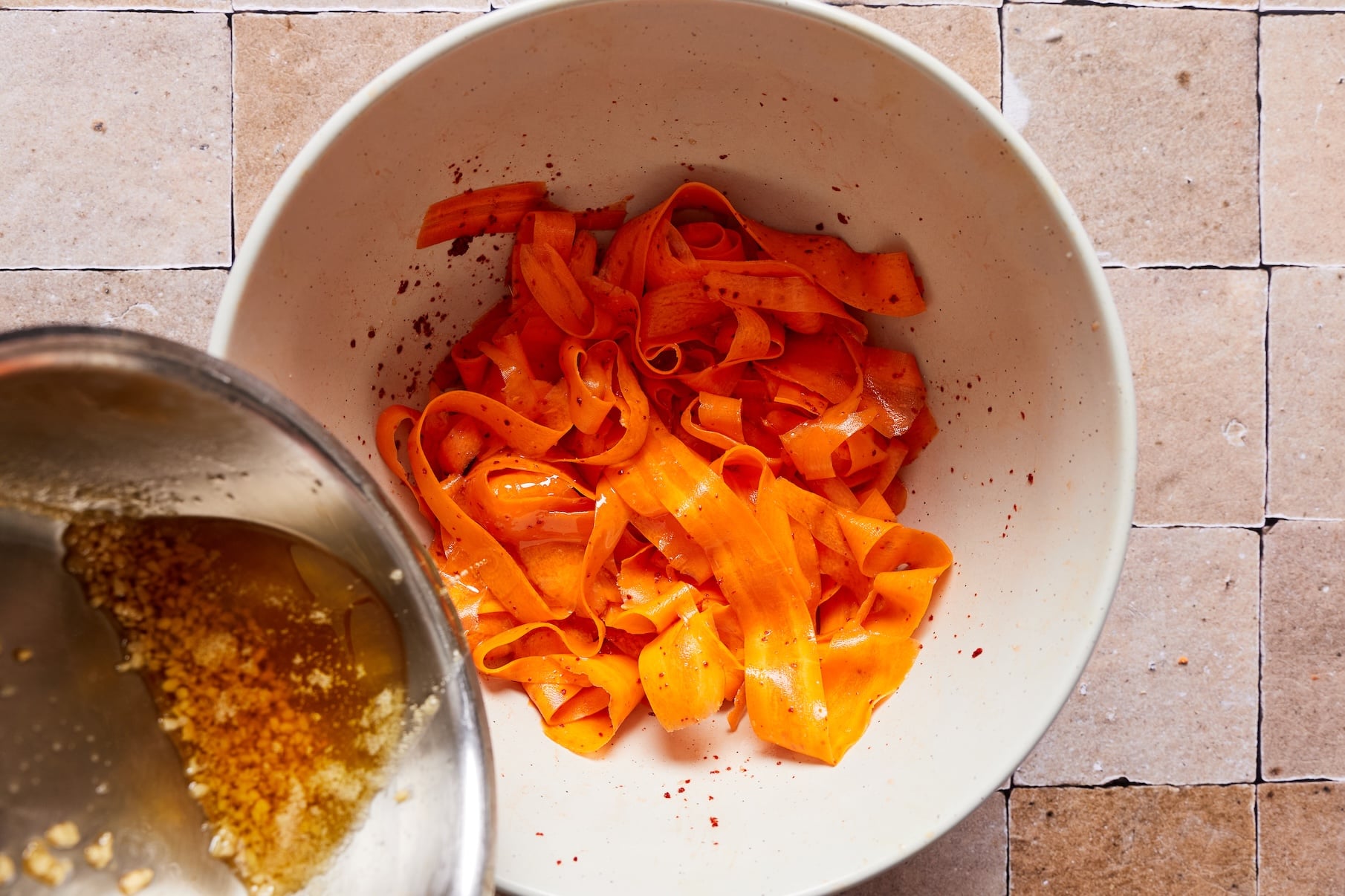
Step 5: Pour the warm garlic oil over the carrots and toss thoroughly. You’ll know it’s ready when the ribbons look glossy and evenly coated.
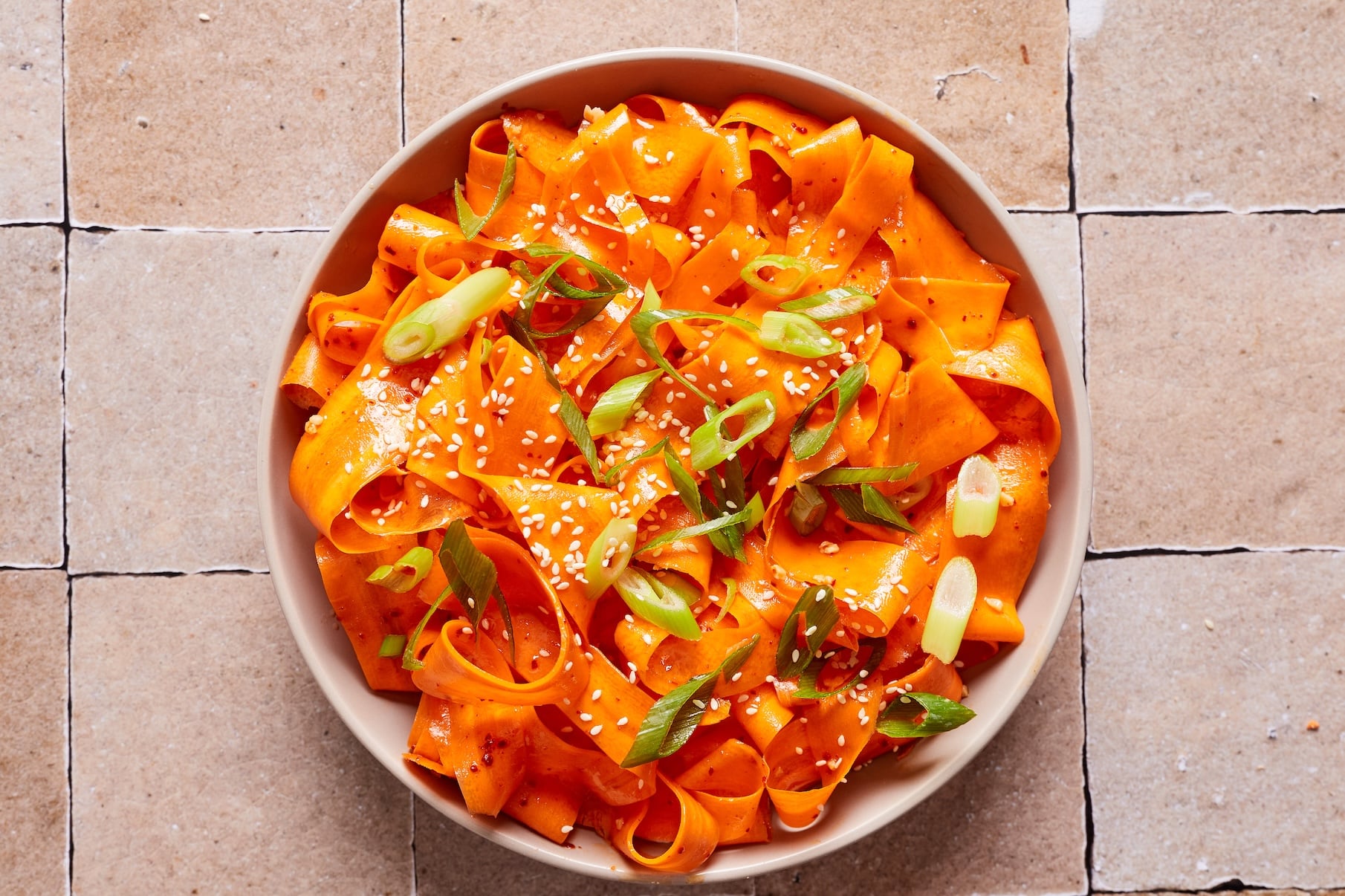
Step 6: You can serve it right away, but if you can wait, refrigerate it for a few hours. The flavor gets deeper and more balanced as it sits. Toss again before serving, then finish with the green onions and sesame seeds.
This salad is especially good alongside my crispy gochujang chicken wings, Korean BBQ meatballs, or any Korean-inspired grilled meat.
Expert Tips
- Keep the carrot ribbons as even as possible. Uniform strips soften at the same rate, so every bite lands at the same crisp-tender texture instead of some being stiff and others mushy.
- Watch the garlic. It only needs about a minute. The moment it’s lightly golden and fragrant, take it off the heat, because the oil stays hot enough to keep cooking it and bitter garlic can’t be fixed.
- Make it the night before if you can. This is one of the few salads that genuinely tastes better the longer it sits. The morning or evening before serving is the sweet spot: the flavors pull together while the carrots keep their bite.
- Toss before serving. The dressing settles as the salad sits, so a quick toss redistributes the garlic oil and seasoning through every ribbon.
- Hold the garnish until the end. Green onions and sesame seeds go on right before the salad hits the table so they stay fresh and crunchy.
If you’re building a full banchan spread, my Korean cucumber salad (oi muchim) makes a second crisp, cooling side that comes together just as fast.
Storage & Make-Ahead Tips
- Store leftover Korean carrot salad in an airtight container in the fridge for up to 1 week.
- The carrots keep softening slightly and absorbing dressing as they sit. That’s the salad improving, not going wrong. Toss before serving and add the green onions and sesame seeds fresh.
- I don’t recommend freezing this one. The carrots lose their crunch when thawed, and crunch is the whole point.
Recipe FAQs
Yes. Morkovcha is the common name for this Koryo-saram carrot dish; in English you’ll see it called Korean carrot salad, Korean-style carrots, or carrot kimchi. There are many variations, but they all center on carrots in a tangy, garlicky dressing.
No, and this surprises people, given the kimchi connection. This is a quick marinated salad: the carrots are salted briefly, then dressed with rice vinegar, garlic, and gochugaru. All the tang comes from the vinegar, not fermentation, so it’s ready in minutes instead of days.
Only gently. Gochugaru brings warmth and color more than fire, so this lands closer to “pleasantly warm” than “spicy.” If your crowd is heat-sensitive, start with half the gochugaru and adjust after chilling; if you like real heat, add more or a pinch of cayenne alongside it.
Easy Korean Carrot Salad (Morkovcha)
Video
Ingredients
- 1 lb carrots
- 1 tsp sea salt
- 4 tbsp rice vinegar
- 2 tsp sugar
- 1 tsp gochugaru, Korean chili flakes, plus more for spicy
- 3 tbsp extra virgin olive oil
- 1 tbsp toasted sesame oil
- 4 garlic cloves, minced
- Sliced green onions and sesame seeds, for garnish
Instructions
- Wash the carrots well, and use a veggie peeler to thinly slice the carrots into wide long strips. If you prefer thinner strips, you can use a julienne peeler.1 lb carrots
- Add the carrot strips to a large bowl and toss with salt. Let this sit for 10-15 minutes to wilt.1 tsp sea salt
- Add rice vinegar, sugar, and gochugaru, and toss.4 tbsp rice vinegar, 2 tsp sugar, 1 tsp gochugaru
- In a small pot or pan, heat olive oil and sesame oil over medium heat. Add in garlic and cook, stirring for about a minute until the garlic is fragrant and golden.3 tbsp extra virgin olive oil, 1 tbsp toasted sesame oil, 4 garlic cloves
- Pour the garlic oil mixture over the salad and toss to coat evenly.
- You can enjoy immediately, but it’s best to let it chill for a few hours. Sprinkle with green onions and sesame seeds just before serving.Sliced green onions and sesame seeds
Nutrition
Nutrition information is automatically calculated, so should only be used as an approximation.


easy to make, store and continue to use a side throughout the week!
I have a MAJOR problem with this recipe. It is so delicious and addicting that I ate 2 lbs of carrots in the last 2 days and just bought more carrots to make more of it. 🫠 Holy hell is this yummy! Thanks for the fantastic recipe Jean. ❤️
Haha I have the same problem with this recipe. I’m so glad you are enjoying it!