This post may contain affiliate links. Please see our disclosure policy.
Add as Google preferred source
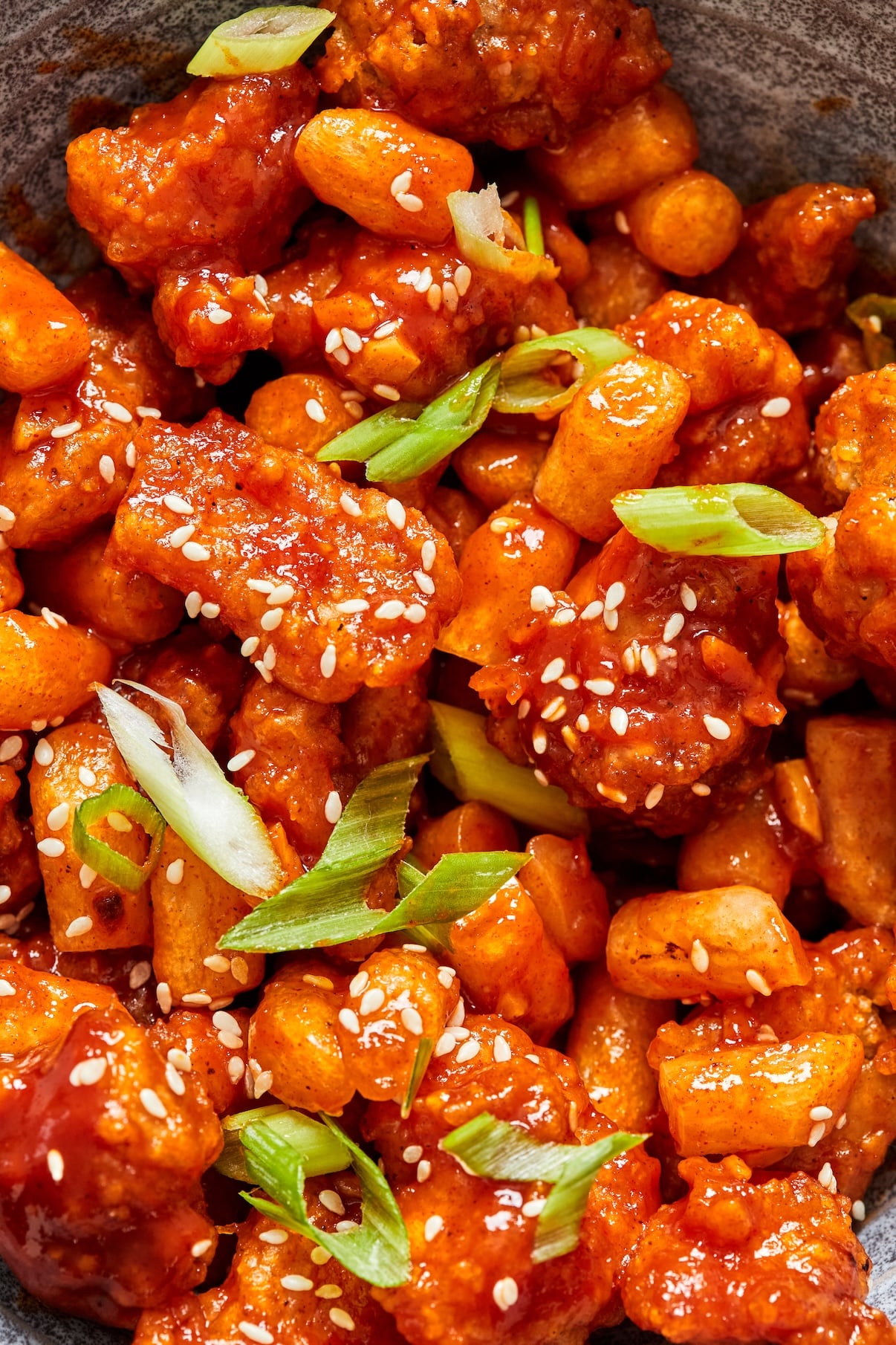
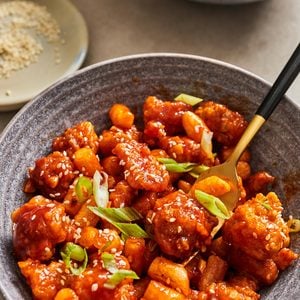
Dakgangjeong (닭강정), aka Korean popcorn chicken, was a treat for me growing up when I’d visit Korea every summer. We’d go nighttime shopping at stores that stayed open until 2am (yes, 2am), and when we got hungry, we’d stop to snack on popcorn chicken from street vendors. Priorities.
Today we’re making an air fryer version, which is just as delicious as the original, but quicker and less messy. Plus, we’re making a delicious, sweet & spicy dipping sauce that’s as addicting as the chicken! It serves 4, and it’s easy to make gluten-free or regular.
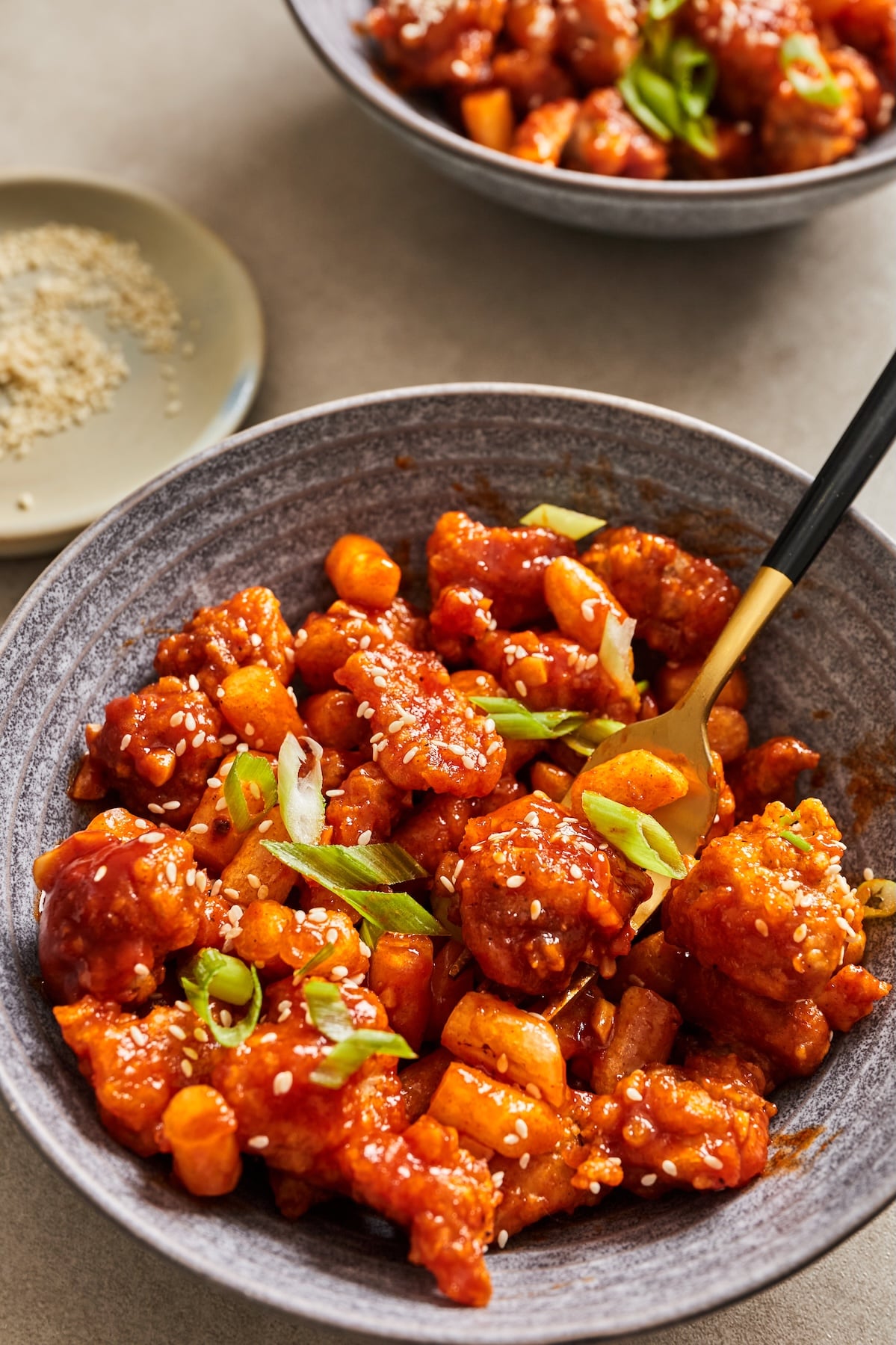
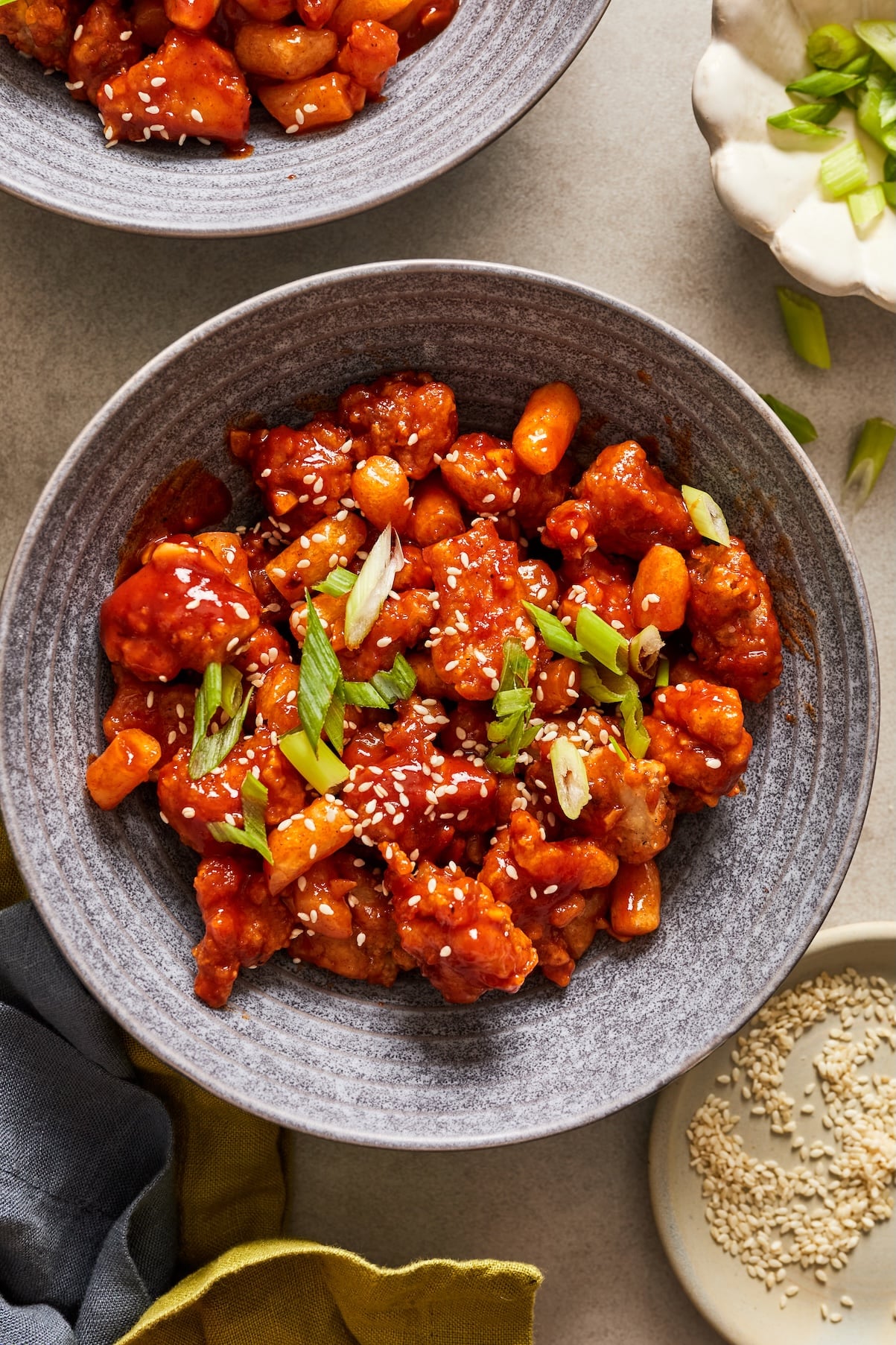
Dak means chicken in Korean, and gangjeong are traditional Korean sweets, fried and glazed in honey or syrup. So you can probably guess where this is going: bite-sized chicken fried until crunchy and coated in a seriously addicting sweet and spicy sauce.
Rice cakes often get fried right alongside the chicken, so they come out crispy on the outside and chewy on the inside.
What Makes This Dakgangjeong Work!
My version skips the pot of oil. (No splatters, no leftover oil to deal with. You’re welcome.) Boneless chicken thighs get a rice vinegar marinade and a potato starch coating, then go into the air fryer with cylinder-shaped rice cakes. The sauce is made with gochujang, ketchup, honey, tamari, and a little oyster sauce. It takes about an hour, and half of it is the chicken hanging out in the fridge.
If you’ve made my air fryer Korean fried chicken wings (yangnyeom chicken), think of this as their boneless, bite-sized cousin, with rice cakes in the mix. And if you want chicken bites with no rice cakes at all, my crispy gochujang chicken bites with a garlicky honey glaze are the ones to make.
Ingredient Notes
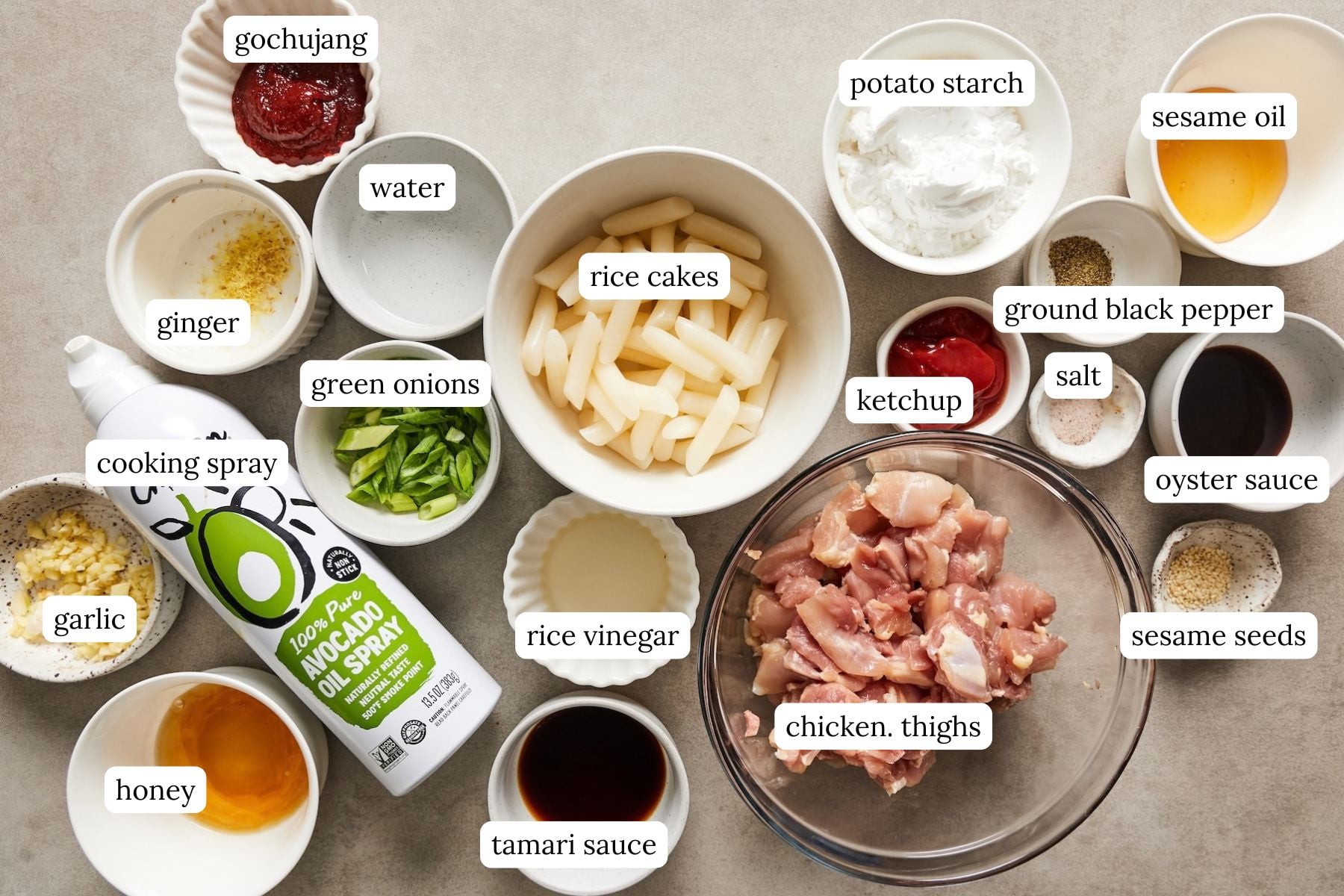
- Rice cakes: I recommend cylinder-shaped rice cakes, the same kind you’d use for tteokbokki. You can find them at your local Asian market or order them online. You can leave them out if you want (they aren’t necessary), but I personally love their chewy texture and think they add SO much to the dish. Crunchy chicken, chewy rice cakes. That’s the combo.
- Chicken thighs: I use boneless, skinless thighs, but you can use chicken breasts instead if that’s what you have. Chicken breast dries out faster, so check them 6 minutes after you flip and take them out as soon as they reach 165°F.
- Potato starch: This is what we’re using for the coating: no egg, no flour batter, just potato starch. The cooking spray is what turns the coating lightly golden instead of chalky, so don’t skip it.
- Gochujang and ketchup: There’s twice as much ketchup as gochujang, plus honey, so this sauce is on the sweet side of sweet and spicy. The heat is mild to medium, depending on how hot your gochujang is. If you’re making it for kids or anyone sensitive to spice, set a few plain pieces aside before you toss the rest in the sauce. Easy peasy!
Gluten-Free Version: The rice cakes, the gochujang, and the oyster sauce all come in regular versions that can contain wheat and gluten-free versions that don’t. Check the labels (for gochujang, look for one that’s certified gluten-free), and use tamari instead of soy sauce. Don’t need it gluten-free? The regular versions work just the same.
How to Make Air Fryer Dakgangjeong
The traditional version is deep-fried, but it gets just as crispy and delicious in the air fryer. The one thing to watch is the timing. The rice cakes come out at 10 minutes, while the chicken keeps cooking. Rice cakes dry out a lot faster than chicken does, so if you forget and leave them in, they’ll be hard and tough instead of chewy. No bueno.
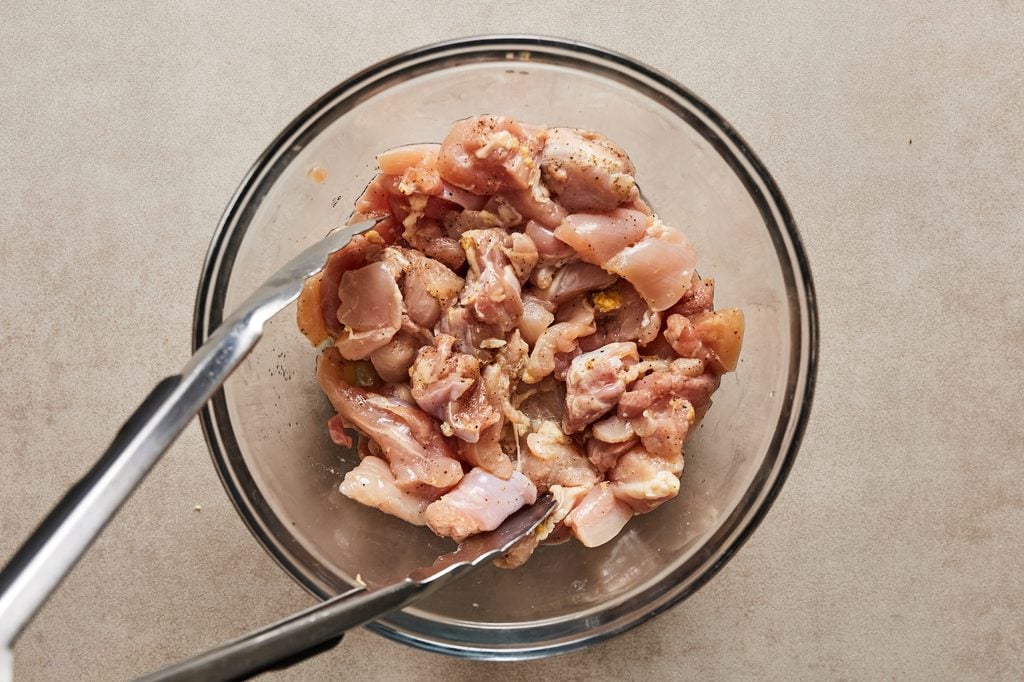
Step 1: Marinate your chicken for 30 minutes to an hour in the fridge.
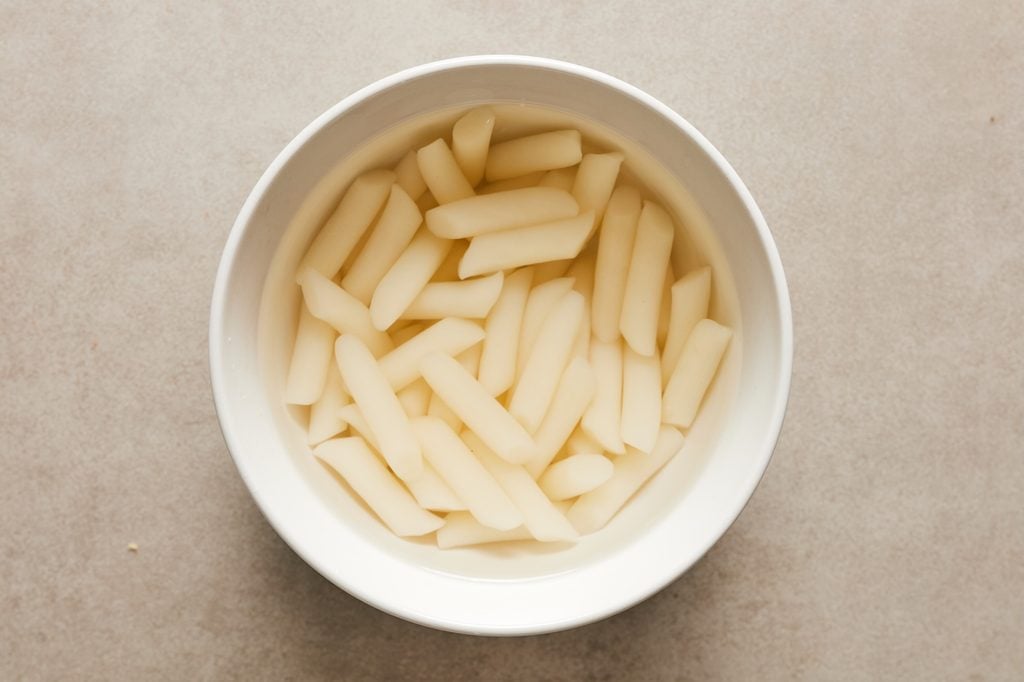
Step 2: Soak your rice cakes as the chicken marinates, then drain and cut in half.
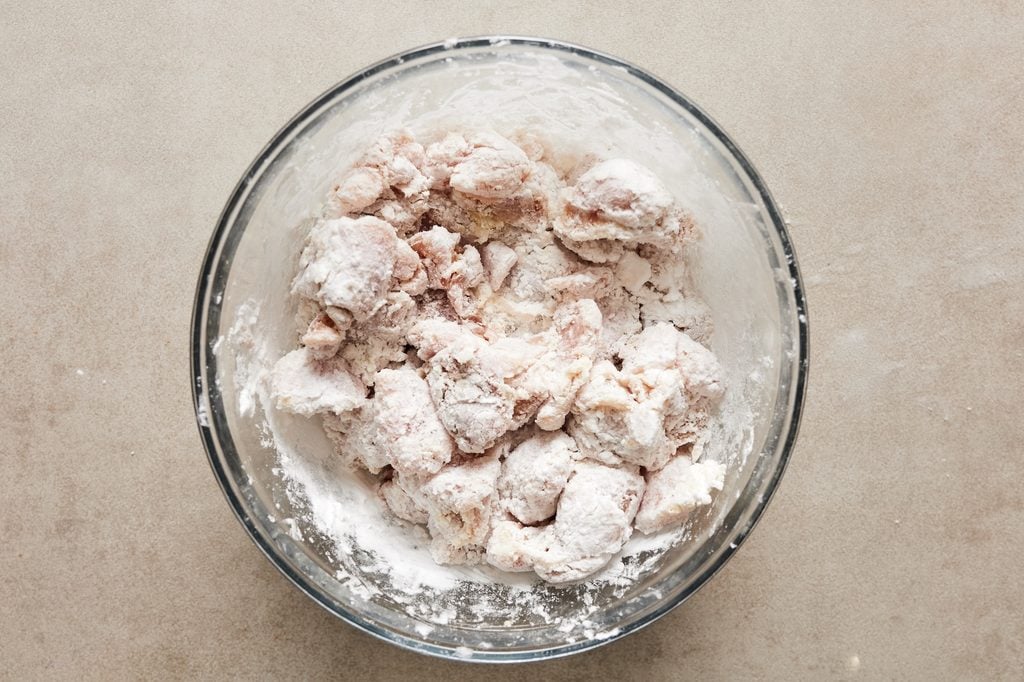
Step 3: Toss the chicken in the potato starch until every piece is coated and no wet spots show.
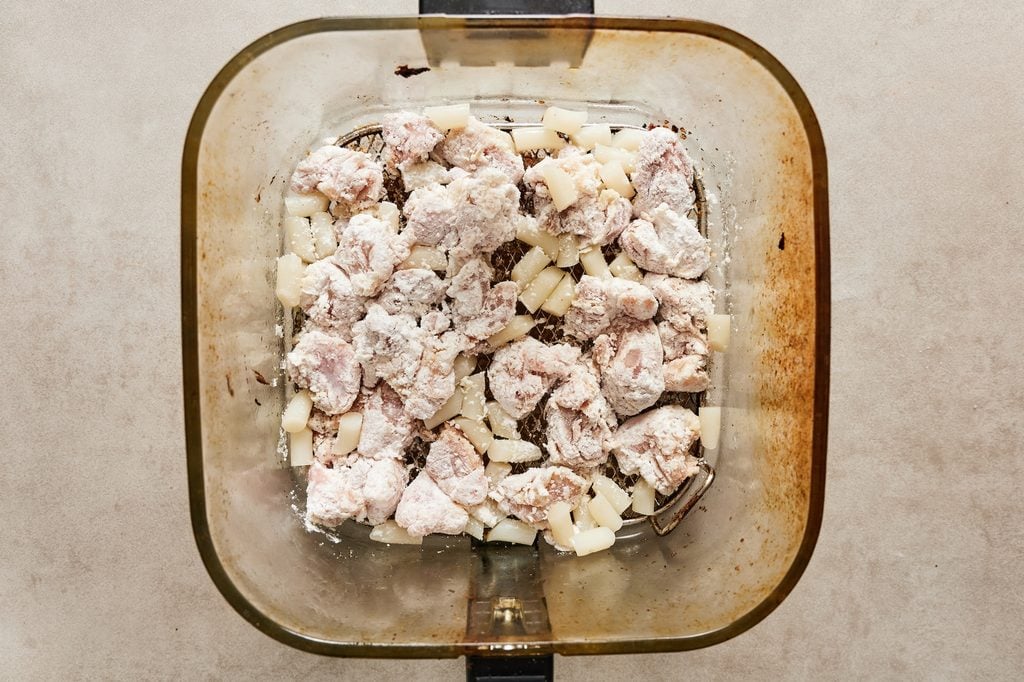
Step 4: Lay out the chicken in a single layer, with the rice cakes tucked into the gaps. Remove the rice cakes at 10 minutes, when they’re lightly golden in spots and crisp on the outside.
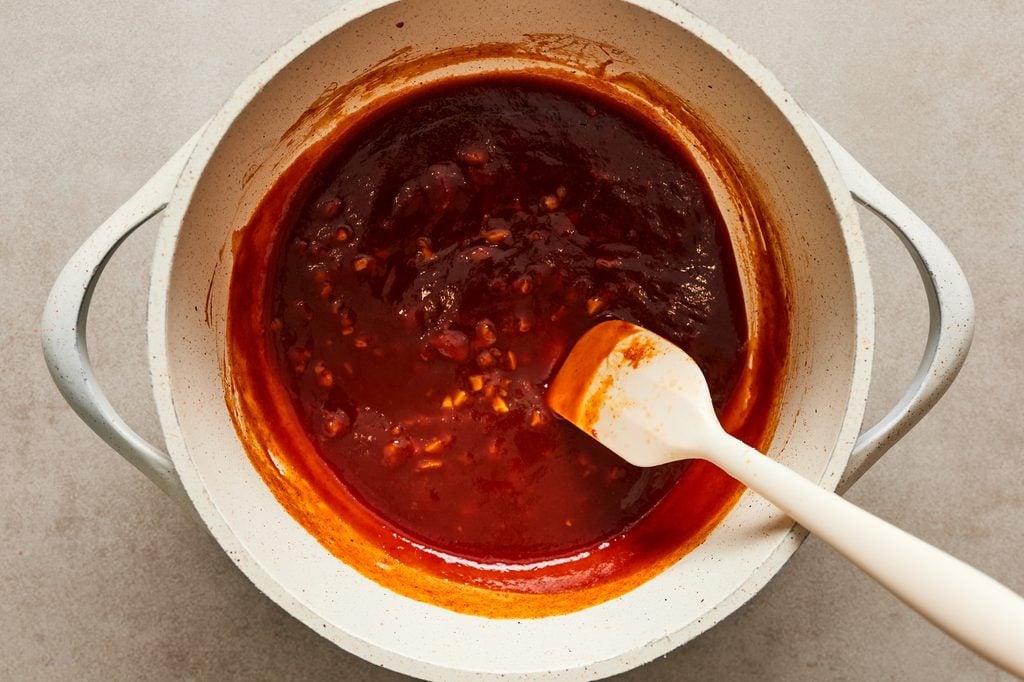
Step 5: Simmer the sauce, stirring, until it’s glossy and thick enough to coat the spatula.
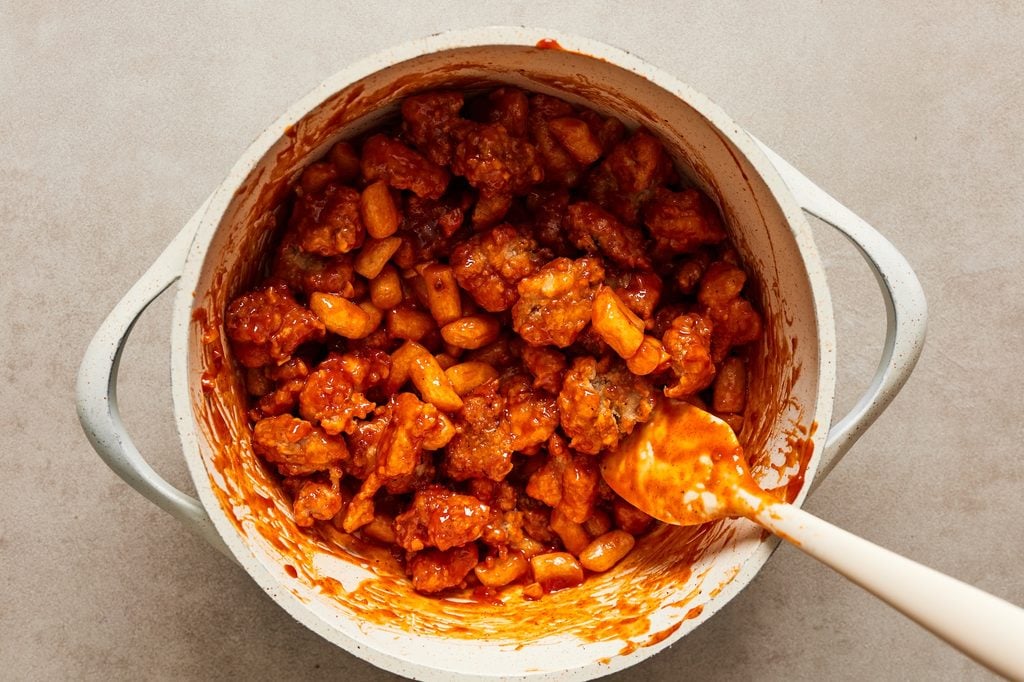
Step 6: Fold in the chicken and rice cakes until every piece is covered. Do this right before you eat, while the coating is still crunchy. These are best enjoyed right away.
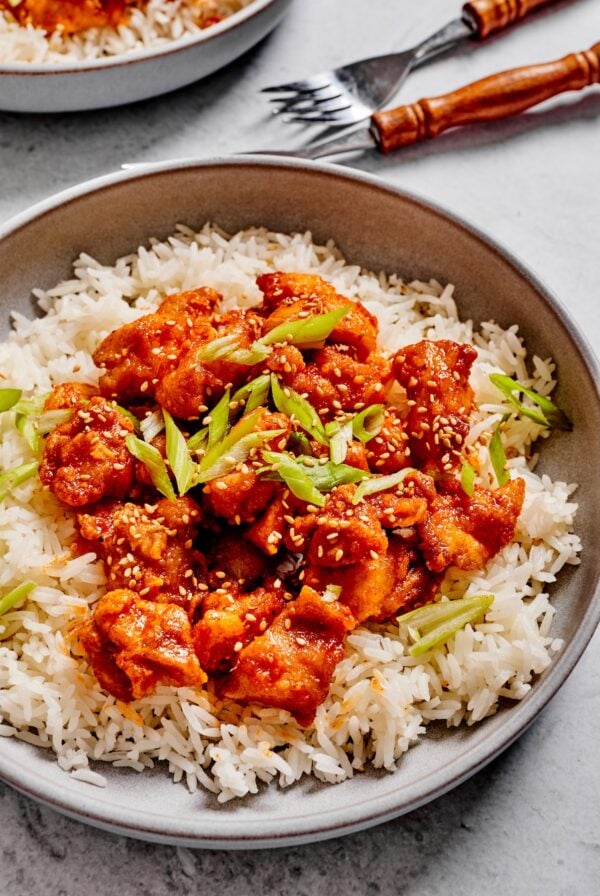
Eat it straight from the bowl as a snack, the way it’s sold on the street, or spoon it over steamed rice and call it dinner
Recipe Tips
- The chicken is done when the coating is lightly golden and crunchy when you tap it with tongs, and the thickest piece reads 165°F inside. See white, powdery patches after you flip? Give them another spritz of oil, and you’re good.
- Don’t crowd the basket! Pieces piled on top of each other steam instead of crisping, so if your air fryer is on the small side, cook in two batches.
Got rice cakes left in the bag? Use them up in my gungjung tteokbokki, a non-spicy rice cake stir-fry with beef and veggies. And for a snacky spread, easy Korean corn cheese melts together in a skillet in about 15 minutes.
More Air Fryer Recipes
30 Minutes or Less
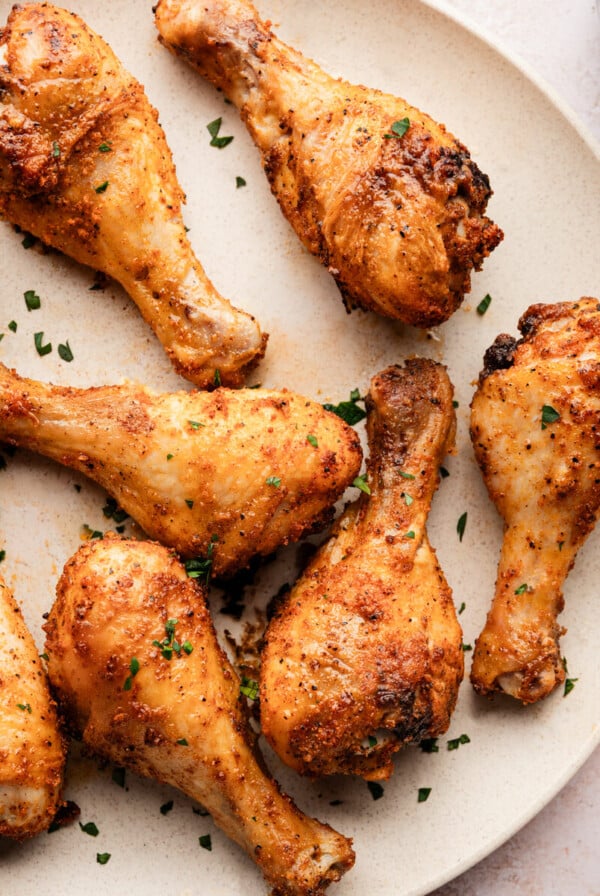
Extra Crispy Air Fryer Chicken Drumsticks
Salads
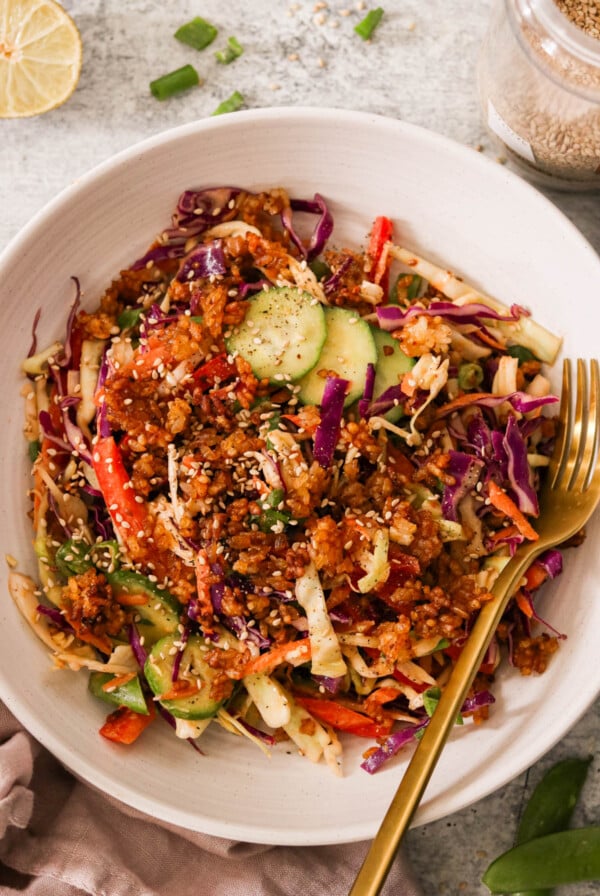
Crispy Rice Salad with Peanut Sesame Dressing (Nam Khao-Inspired)

If you make this recipe, please leave me a star rating and comment below! I love to hear your thoughts and feedback. Follow me on social media Instagram, Facebook, and Pinterest for even more delicious recipes!
Air Fryer Dakgangjeong with Rice Cakes
Video
Ingredients
- 1 lb boneless skinless chicken thighs, cut into bite-sized pieces
- 1 tbsp rice vinegar
- ½ tsp sea salt
- ¼ tsp ground black pepper
- 6 oz Korean rice cakes, cylinder shaped
- ¾ cup potato starch
- Cooking spray
- Sesame seeds and green onions, for garnish
Sauce
- 4 tbsp ketchup
- 2 tbsp gochujang, Korean chili paste
- 2 tbsp water
- 1 tbsp tamari sauce, or soy sauce
- 1 tbsp oyster sauce
- 1 tbsp honey
- 2 tsp sesame oil
- 3 garlic cloves, minced
- ½ inch grated ginger
Instructions
- Combine chicken thigh pieces in a bowl with rice vinegar, salt, and pepper, and toss to coat. Let this marinate for 30 minutes to 1 hour in the fridge.1 lb boneless skinless chicken thighs, 1 tbsp rice vinegar, ½ tsp sea salt, ¼ tsp ground black pepper
- While the chicken marinates, prepare the rice cakes. If your rice cake is stuck together or frozen, soak them in warm water for about 5 minutes so they separate. Drain and cut them in half so they are smaller.6 oz Korean rice cakes
- Once the chicken is done marinating, preheat the air fryer to 400 degrees. Add potato starch to the chicken, dredge until the meat is fully coated on all sides.¾ cup potato starch
- Spray the air fryer basket or tray evenly with cooking spray. Place the coated chicken and rice cakes in a single layer, then spray the top with cooking spray. Air fry for 10 minutes, then remove the rice cakes. Flip the chicken, spray with cooking oil, then air fry for 6-8 more minutes until crispy and crunchy. You can make the sauce while the chicken finishes cooking.Cooking spray
- To make the sauce, place all the ingredients in a small saucepan and stir together. Heat over medium heat then let the sauce simmer for 1-2 minutes while stirring until thickened.4 tbsp ketchup, 2 tbsp gochujang, 2 tbsp water, 1 tbsp tamari sauce, 1 tbsp oyster sauce, 1 tbsp honey, 2 tsp sesame oil, 3 garlic cloves, ½ inch grated ginger
- Remove from heat, and add in chicken and rice cakes to the sauce. Toss to coat. Serve immediately, garnished with sesame seeds and green onions.Sesame seeds and green onions
Notes
- Chicken breasts work in place of thighs. Check them 6 minutes after the flip.
- Rice cakes are optional. Look for cylinder-shaped rice cakes at an Asian market or online.
- If your air fryer is small, cook in two batches. This adds about 16 to 18 minutes.
- Leftovers keep in an airtight container in the fridge for 3-4 days. Reheat in the microwave, or crisp them back up in the air fryer for 5-6 minutes at 400°F.
- To make it gluten-free, use tamari plus gluten-free rice cakes, gochujang, and oyster sauce. If you don’t need it gluten-free, regular versions work the same.
Nutrition
Nutrition information is automatically calculated, so should only be used as an approximation.