This post may contain affiliate links. Please see our disclosure policy.
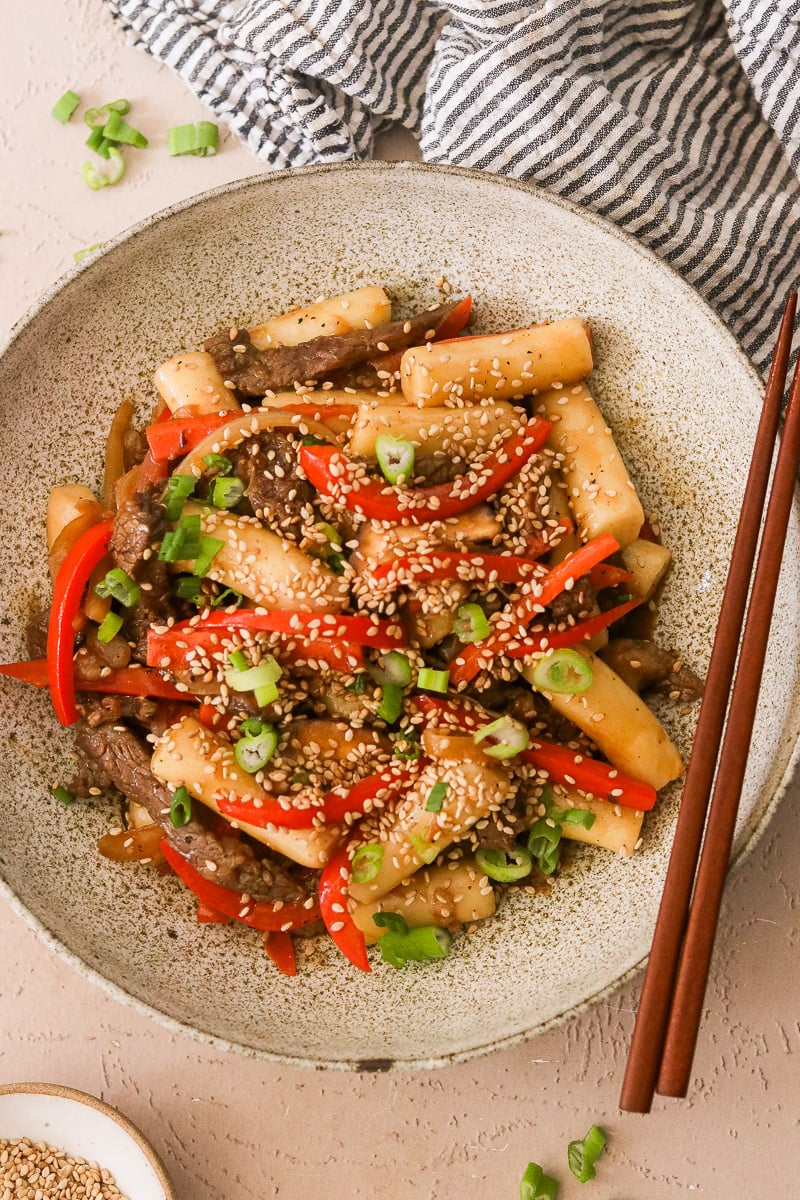
What Is Gungjung Tteokbokki?
“Gungjung” means royal court in Korean, and “tteokbokki” means rice cake stir fry. Royal court tteokbokki was served to Korean royalty during the Joseon Dynasty and is one of the most historically significant Korean rice cake dishes you can make at home. Hot peppers weren’t yet part of Korean cuisine at that time, so the sauce was built entirely on soy sauce, garlic, and sesame.
The spicy red version that’s everywhere today came much later. So when you make gungjung tteokbokki, you’re cooking something with real roots, not a shortcut version of something else. It’s also sometimes called ganjang tteokbokki, since ganjang means soy sauce in Korean. Both names refer to the same dish.
If you love tteokbokki but want to try another variation, my creamy rose tteokbokki is mildly spicy and just as easy to pull together.
Why You’ll Love This Gungjung Tteokbokki Recipe
This is one of those dishes I grew up eating, and it still feels a little special every time I make it. There’s something about the chewy rice cakes soaking up that savory soy-garlic sauce that just works, and because there’s zero heat, my kids are completely on board. If you’re building out your Korean pantry, my essential Korean cooking ingredients guide is a great place to start before you shop.
The biggest selling point here is that it’s completely non-spicy, which means everyone at the table can eat it without negotiation. My kids love the chewy rice cakes in that savory-sweet sauce, and it’s filling enough to work as a full weeknight dinner rather than just a side dish.
I use tamari instead of regular soy sauce, which keeps this naturally gluten-free without changing the flavor at all. If that matters to your family, you’re already covered.
Ingredients You’ll Need
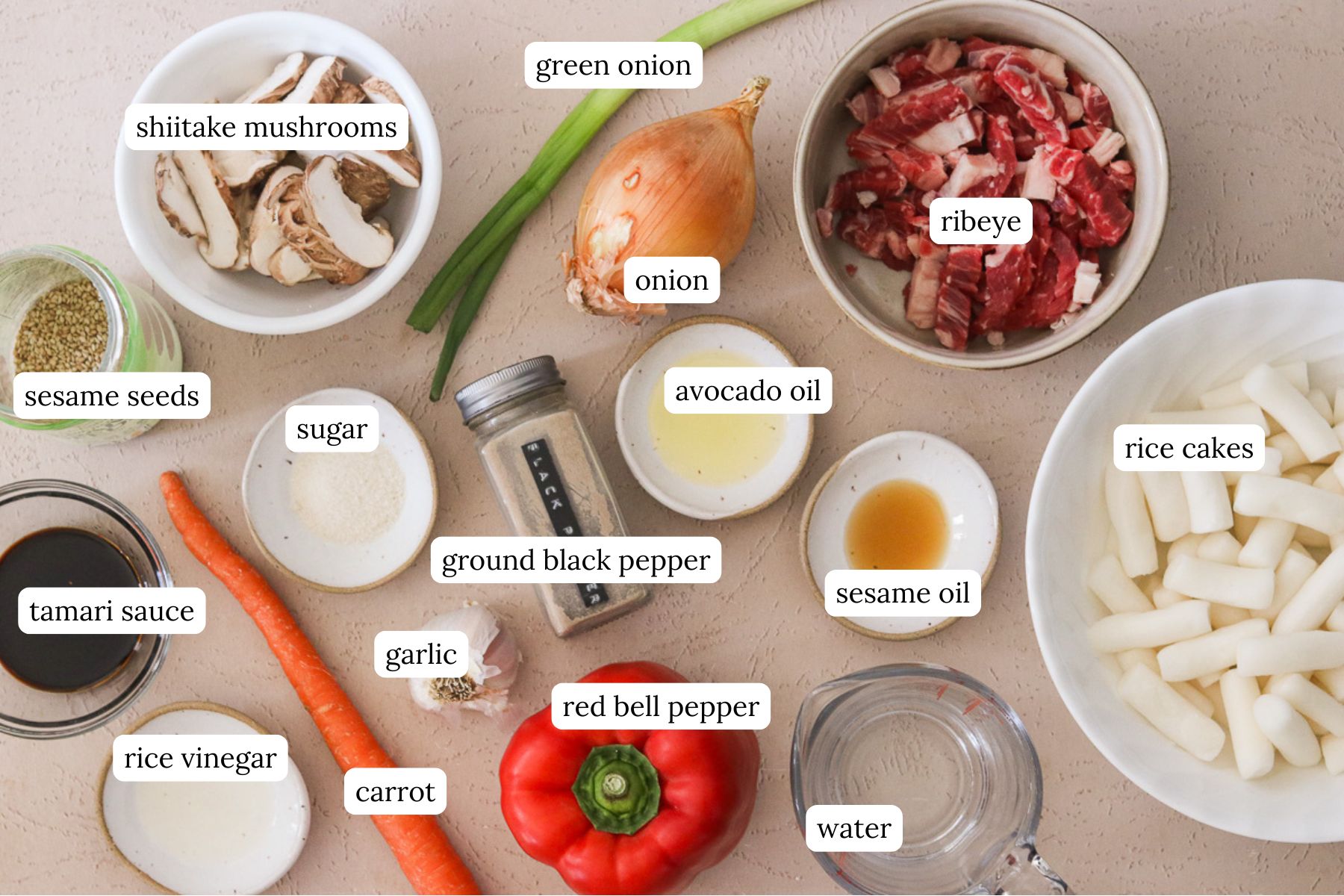
For the stir fry
- Ribeye, thinly sliced into strips: I personally love ribeye here for the tenderness. The fat marbling keeps it juicy through a fast stir fry, and sliced thin with even a short marinade, it cooks in just a couple of minutes without turning tough. Brisket, sirloin, and flank steak all work as alternatives, but ribeye is my first choice every time.
- Rice cakes: Look for the cylinder-shaped tteokbokki rice cakes, also called garaetteok. They hold their shape in the pan and have that satisfying chew. Oval tteokguk tteok works fine too. Fresh or refrigerated rice cakes are best, but frozen works if you thaw them completely first.
- Avocado oil: Avocado oil has a high smoke point, which matters here because the pan needs to stay hot throughout the stir fry. Any neutral oil with similar heat tolerance works.
- Onion: Sliced thin so it softens and sweetens quickly in the hot pan.
- Carrot: Cut into matchsticks so it cooks through in the same 3 to 4 minutes as everything else.
- Red bell pepper: Adds color and a mild sweetness that balances the savory sauce.
- Shiitake mushrooms: These have a meatier texture than most other mushrooms and they release a deep, savory flavor as they cook down. They make the whole dish feel more substantial, so don’t swap these for button mushrooms if you can help it.
- Chopped green onion and sesame seeds: Added at the end for garnish, with the green onion bringing freshness and the sesame seeds adding a little crunch.
For the beef marinade
- Tamari sauce: My gluten-free soy sauce of choice and what this whole recipe is built around. Regular soy sauce works too if gluten isn’t something you’re watching.
- Rice vinegar: Adds a mild acidity that brightens the marinade and helps the beef stay tender.
- Toasted sesame oil: Gives the marinade a nutty, aromatic depth that carries all the way through to the finished dish.
- Garlic cloves, minced: The savory backbone of the marinade. I don’t skimp on this.
- Ground black pepper: Adds a little sharpness without any chili heat.
For the tteokbokki sauce
- Water: Helps the sauce distribute evenly across the rice cakes and prevents sticking.
- Tamari sauce: The salty, savory base of the sauce. Soy sauce works too!
- Sugar: Just enough to balance the saltiness and round out that slightly sweet finish gungjung tteokbokki is known for.
- Sesame oil: Stirred in at the end for a toasty, rich finish.
Substitutions and Variations
- Beef alternatives: Brisket is actually the most traditional cut for gungjung tteokbokki and gives a slightly chewier texture than ribeye. Sirloin and flank steak both work well too. Whatever you use, slice it very thin against the grain so it stays tender in the pan.
- Vegetables: The vegetables here are pretty flexible. Zucchini, spinach, garlic chives, and bok choy all cook quickly at high heat and work well. Use what you have.
- Vegetarian option: Leave out the beef entirely and double the mushrooms. Shiitake mushrooms are meaty enough to carry the dish on their own, and the sauce is just as satisfying. My Korean braised tofu is another great plant-based Korean option if you’re cooking for someone who avoids meat.
- Rice cake shape: If you’re using thick oval-shaped rice cakes, slice them in half lengthwise to help them cook more evenly in the stir fry time.
- Gluten-free: The recipe is already written with tamari, so it’s naturally gluten-free as written.
How to Make Gungjung Tteokbokki
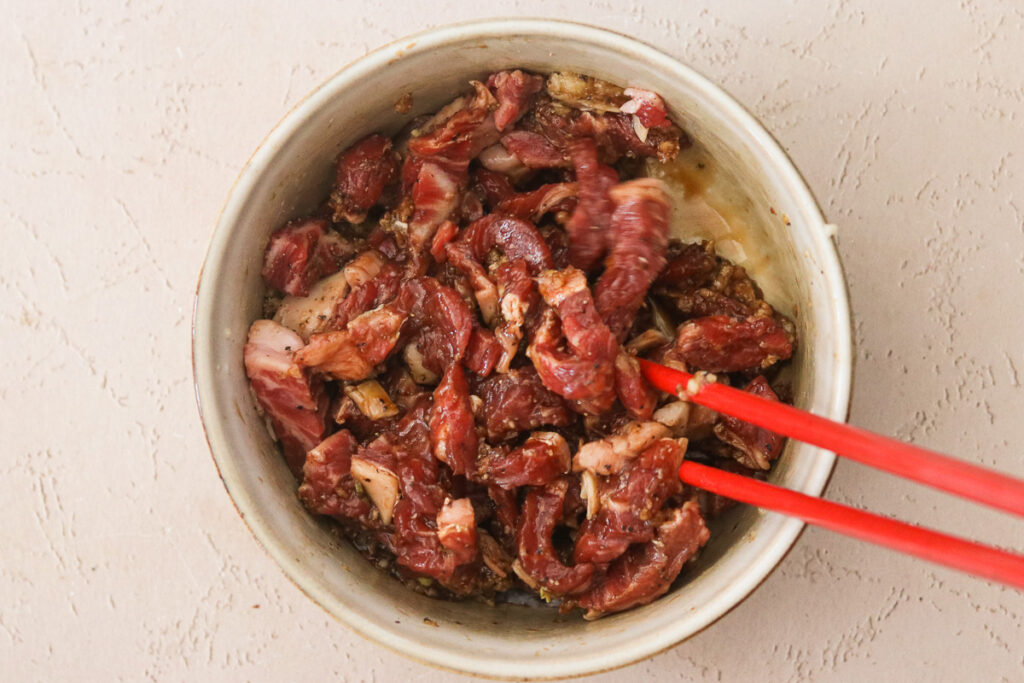
Step 1: Combine the ribeye with all the beef marinade ingredients in a bowl and place in the fridge until ready to cook. Even 10 to 15 minutes of marinating makes a noticeable difference in tenderness.
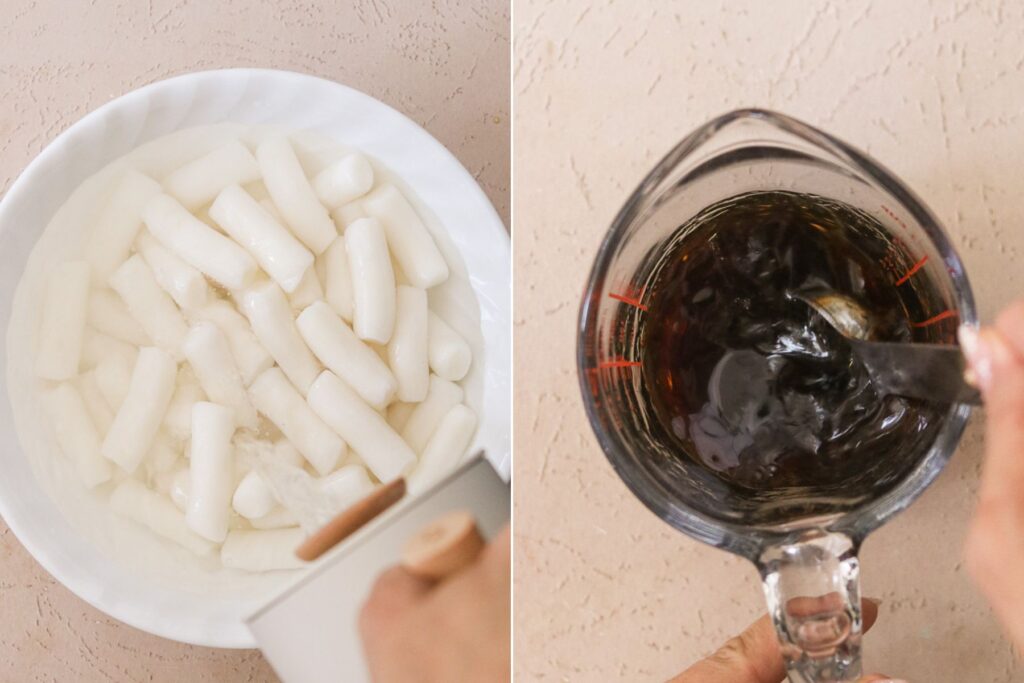
Step 2: Soak the rice cakes for 10 minutes in hot water, then separate them by hand and drain. Do this step even if your rice cakes look soft already. Soaking helps them cook evenly and prevents cracking when they hit the hot pan. In a separate bowl, mix the tteokbokki sauce ingredients together and set aside.
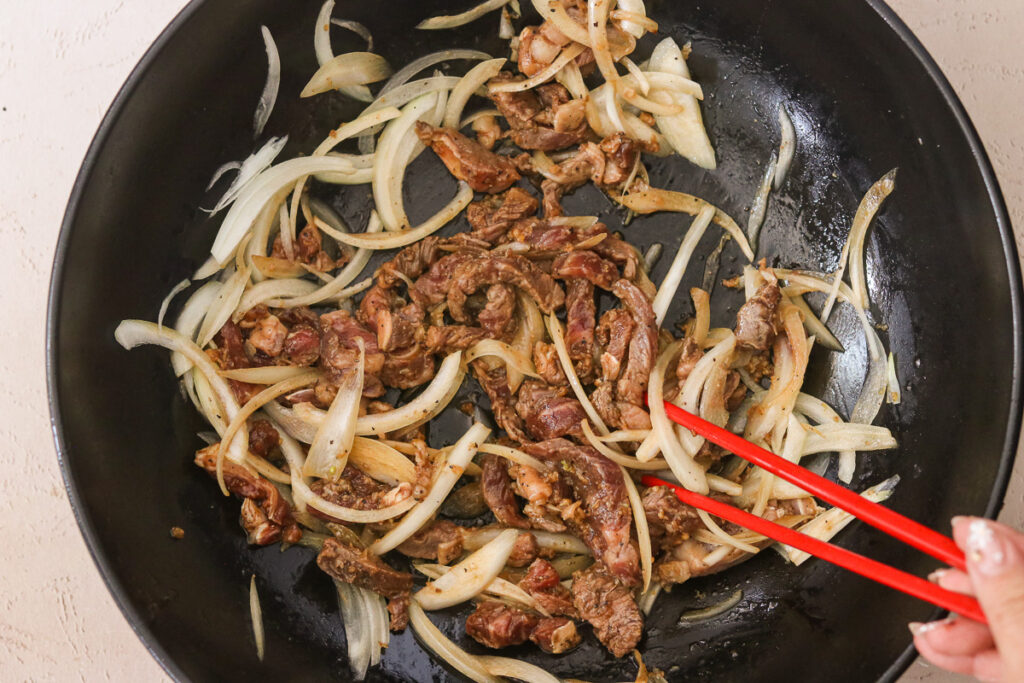
Step 3: Heat avocado oil in a large skillet over medium-high heat. Add the onions and the marinated beef. Cook, stirring, until the beef is lightly browned on the outside, about 2 to 3 minutes. The beef doesn’t need to be fully cooked through at this stage.
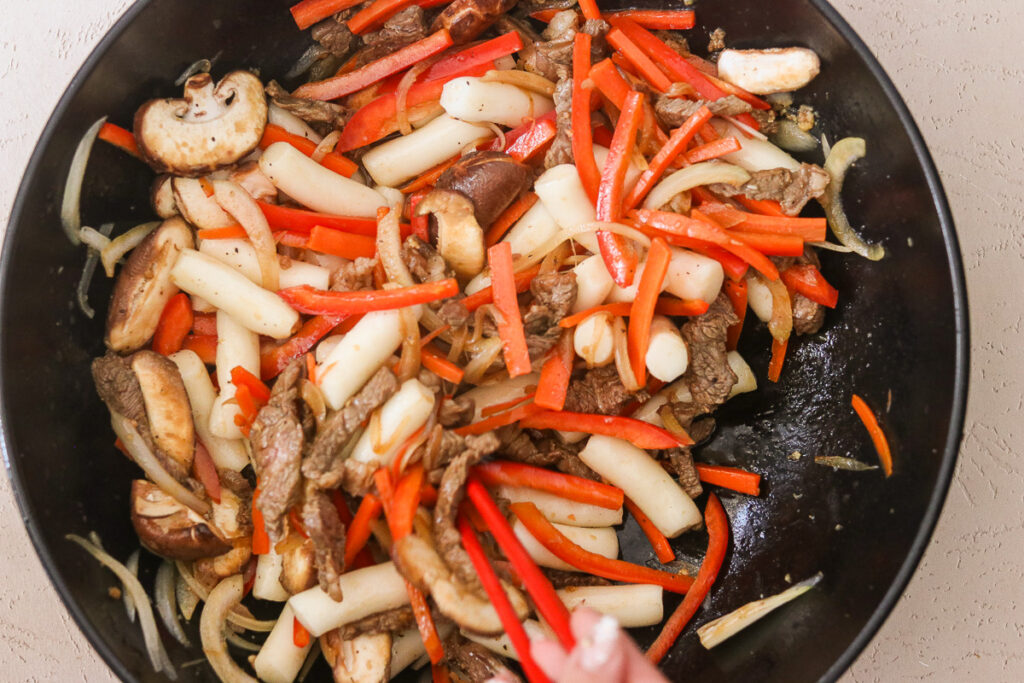
Step 4: Add the carrot, bell pepper, mushrooms, rice cakes, and the tteokbokki sauce. Stir everything together so the sauce coats the rice cakes and vegetables evenly. Simmer, stirring frequently, for 3 to 4 minutes. The rice cakes are ready when they’re soft all the way through but still have a good chew. The sauce should look glossy and mostly absorbed into the rice cakes.
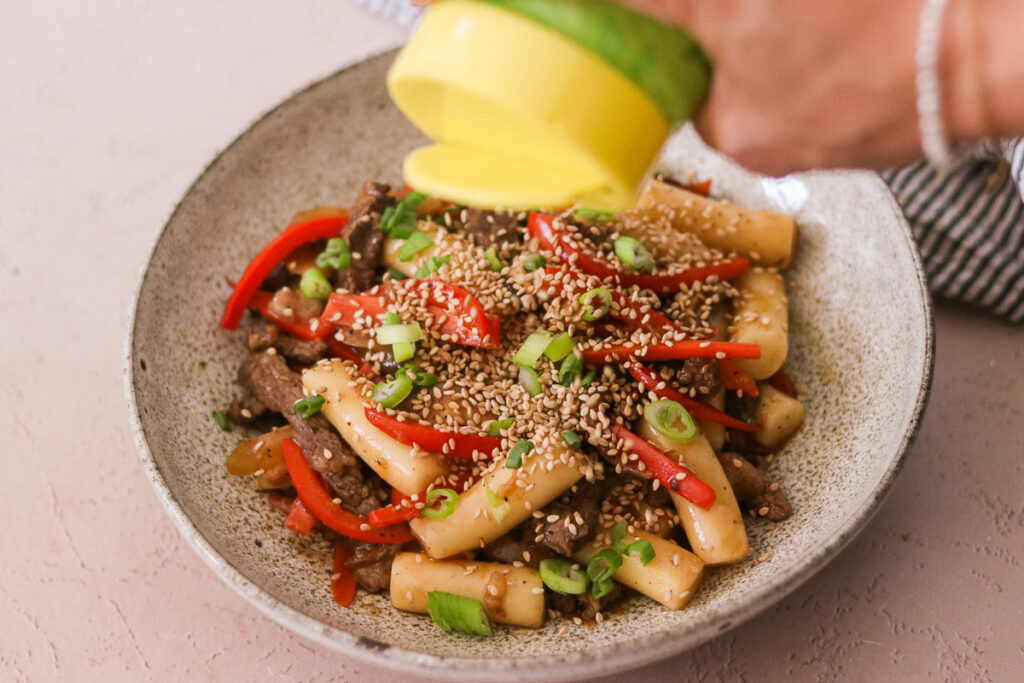
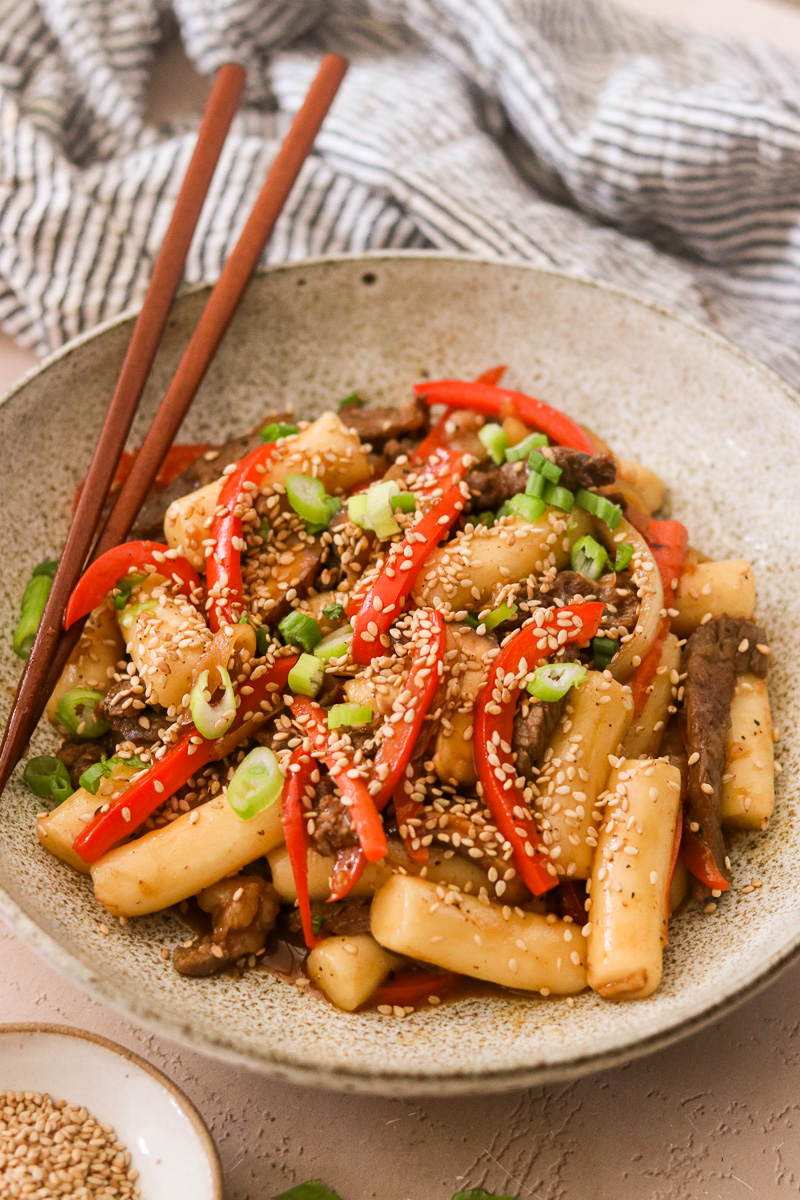
Step 5: Taste and adjust the seasoning if needed. Remove from heat and serve immediately, garnished with chopped green onions and sesame seeds.
Expert Tips
- Separate the rice cakes before they hit the pan. Rice cakes stick together when stored, and a clump in the pan means the ones in the center won’t cook evenly or absorb the sauce properly. Thirty seconds of pulling them apart by hand after soaking makes a real difference.
- Use a large skillet and keep the heat up. If the pan is too small, the rice cakes steam each other instead of getting that glossy, sauce-coated exterior. A 12-inch skillet gives everything enough room to move. And when you add the sauce, keep the heat at medium-high so it reduces and clings to the rice cakes instead of sitting at the bottom of the pan.
- Watch the beef carefully in Step 3. You’re looking for it to just lose its pink color on the outside, since it finishes cooking with the rice cakes in the next step. If it’s fully cooked through before you add the rice cakes, it’ll be chewy by the time the dish is done.
- Taste the sauce before it goes in. Tamari/soy sauce brands vary in saltiness more than you’d think. If the sauce tastes very salty, add a splash more water. If it tastes flat, a small pinch of sugar fixes it quickly. Use low-sodium variations if needed.
This dish is also great served alongside a simple Korean cucumber salad or my fluffy Korean steamed eggs for a full Korean-style meal at home.
Storage & Make Ahead Tips
- Leftovers keep in an airtight container in the refrigerator for up to 3 days.
- One thing to know: the rice cakes will harden when chilled. This is completely normal and doesn’t mean anything went wrong. To reheat, add the leftovers to a skillet over medium-low heat with about 3 to 4 tablespoons of water. Stir gently as it heats and the rice cakes will soften back to their original texture as the water absorbs. This takes about 5 minutes and works so much better than the microwave, which tends to make the rice cakes rubbery and sad.
- Freezing is not recommended since the texture changes significantly after thawing.
- Make-ahead tip: You can marinate the beef up to 24 hours in advance and keep it covered in the fridge. It’s the longest hands-on prep step, so doing it the night before makes the actual cooking feel almost effortless.
Recipe FAQs
Not at all. This is a soy sauce-based dish with no gochujang or red pepper anywhere in the recipe. It’s one of the reasons I make it so often, everyone in my family can eat it with no heat tolerance required.
Most Asian grocery stores carry them in the refrigerated or frozen section. You can also find them online through Amazon.
Gungjung tteokbokki uses a soy sauce-based sauce and is completely non-spicy. Regular tteokbokki uses gochujang and gochugaru for that spicy, bright red sauce you see at Korean street food stalls.
More Korean Recipes


If you make this recipe, please leave me a star rating and comment below! I love to hear your thoughts and feedback. Follow me on social media Instagram, Facebook, and Pinterest for even more delicious recipes!
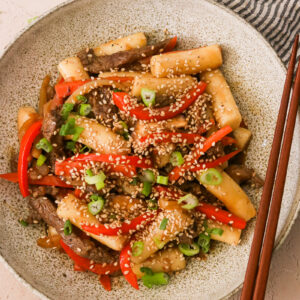
Gungjung Tteokbokki Recipe
Video
Ingredients
- 8 oz ribeye, thinly sliced into strips
- 1 lb rice cakes
- 1 tbsp avocado oil, or any neutral flavored oil
- 1 onion, thinly sliced
- 1 carrot, cut into matchsticks
- 1 red bell pepper, thinly sliced
- 4 oz shiitake mushrooms, sliced
- Chopped green onion and sesame seeds, for garnish
Beef Marinade
- 2 tbsp tamari sauce, or soy sauce
- 1 tbsp rice vinegar
- 1 tsp toasted sesame oil
- 4 garlic cloves, minced
- 1/4 tsp ground black pepper
Tteokbokki Sauce
- 1/4 cup water
- 2 tbsp tamari sauce, or soy sauce
- 2 tsp sugar
- 1 tsp sesame oil
Instructions
- Combine ribeye with all the beef marinade ingredients in a bowl and place in the fridge until ready to cook.8 oz ribeye, 2 tbsp tamari sauce, 1 tbsp rice vinegar, 1 tsp toasted sesame oil, 4 garlic cloves, 1/4 tsp ground black pepper
- Soak rice cakes for 10 minutes hot water, and separate them. Drain. In a separate bow,l mix tteokbokki sauce ingredients and set aside.1 lb rice cakes, 1/4 cup water, 2 tbsp tamari sauce, 2 tsp sugar, 1 tsp sesame oil
- Heat avocado oil in a large skillet over medium high heat. Add onions and beef, and cook stirring until the beef is lightly browned.1 tbsp avocado oil, 1 onion
- Add carrot, bell pepper, mushrooms, rice cakes, and the tteokbokki sauce, and simmer stirring for 3-4 minutes.1 carrot, 1 red bell pepper, 4 oz shiitake mushrooms
- Taste to adjust seasoning. Remove from heat and serve, garnished with green onions and sesame seeds.Chopped green onion and sesame seeds
Notes
- Separate the rice cakes before they hit the pan. Rice cakes stick together when stored, and a clump in the pan means the ones in the center won’t cook evenly or absorb the sauce properly. Thirty seconds of pulling them apart by hand after soaking makes a real difference.
- Use a large skillet and keep the heat up. If the pan is too small, the rice cakes steam each other instead of getting that glossy, sauce-coated exterior. A 12-inch skillet gives everything enough room to move. And when you add the sauce, keep the heat at medium-high so it reduces and clings to the rice cakes instead of sitting at the bottom of the pan.
- Watch the beef carefully in Step 3. You’re looking for it to just lose its pink color on the outside, since it finishes cooking with the rice cakes in the next step. If it’s fully cooked through before you add the rice cakes, it’ll be chewy by the time the dish is done.
- Taste the sauce before it goes in. Tamari/soy sauce brands vary in saltiness more than you’d think. If the sauce tastes very salty, add a splash more water. If it tastes flat, a small pinch of sugar fixes it quickly. Use low-sodium variations if needed.
Nutrition
Nutrition information is automatically calculated, so should only be used as an approximation.