This post may contain affiliate links. Please see our disclosure policy.
Add as Google preferred source
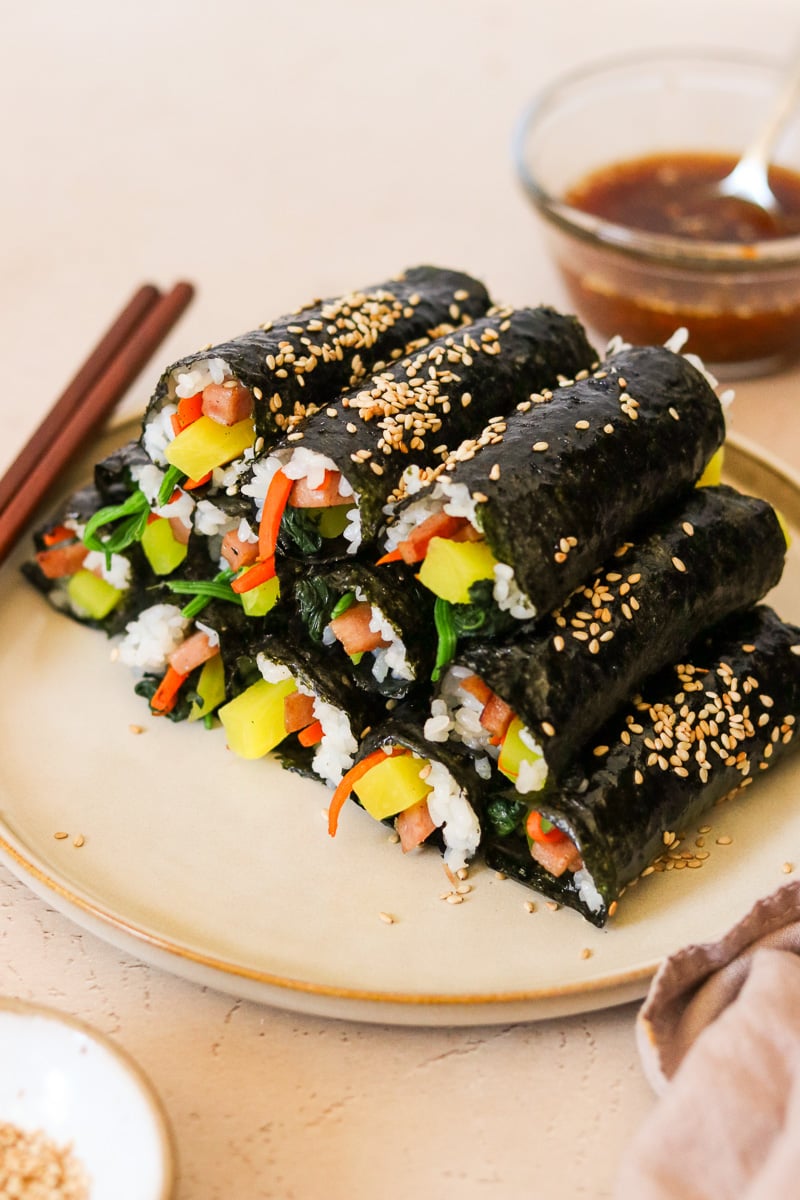
Why You’ll Love This Mini Kimbap Recipe
Kimbap is on constant rotation in our house, especially because our kids love it. Anything that gets veggies into them without a negotiation is a keeper in my book. Win/win.
The filling is also endlessly flexible – you can swap in whatever veggies or meat you have on hand, so it’s a great fridge clean-out meal. And since these are smaller than traditional kimbap, they’re the perfect finger food for picnics and lunch boxes. Pack them alongside my crunchy Korean cucumber salad (oi muchim) for an easy make-ahead spread, or add my tangy Korean carrot salad (morkovcha) if you want another side that travels well.
What Is Mayak Kimbap?
Mayak kimbap is a mini version of kimbap – a roll wrapped in seaweed and filled with seasoned rice, veggies, and a meat of your choice. It’s a popular snack or light meal in Korea, and the small size makes it extra fun to eat.
Here’s the best part: mayak means “drug” in Korean, implying how addicting these little rolls are. The name checks out. It’s the same naming logic behind my soy-marinated Korean mayak eggs, if you want to round out the theme.
Ingredient Notes
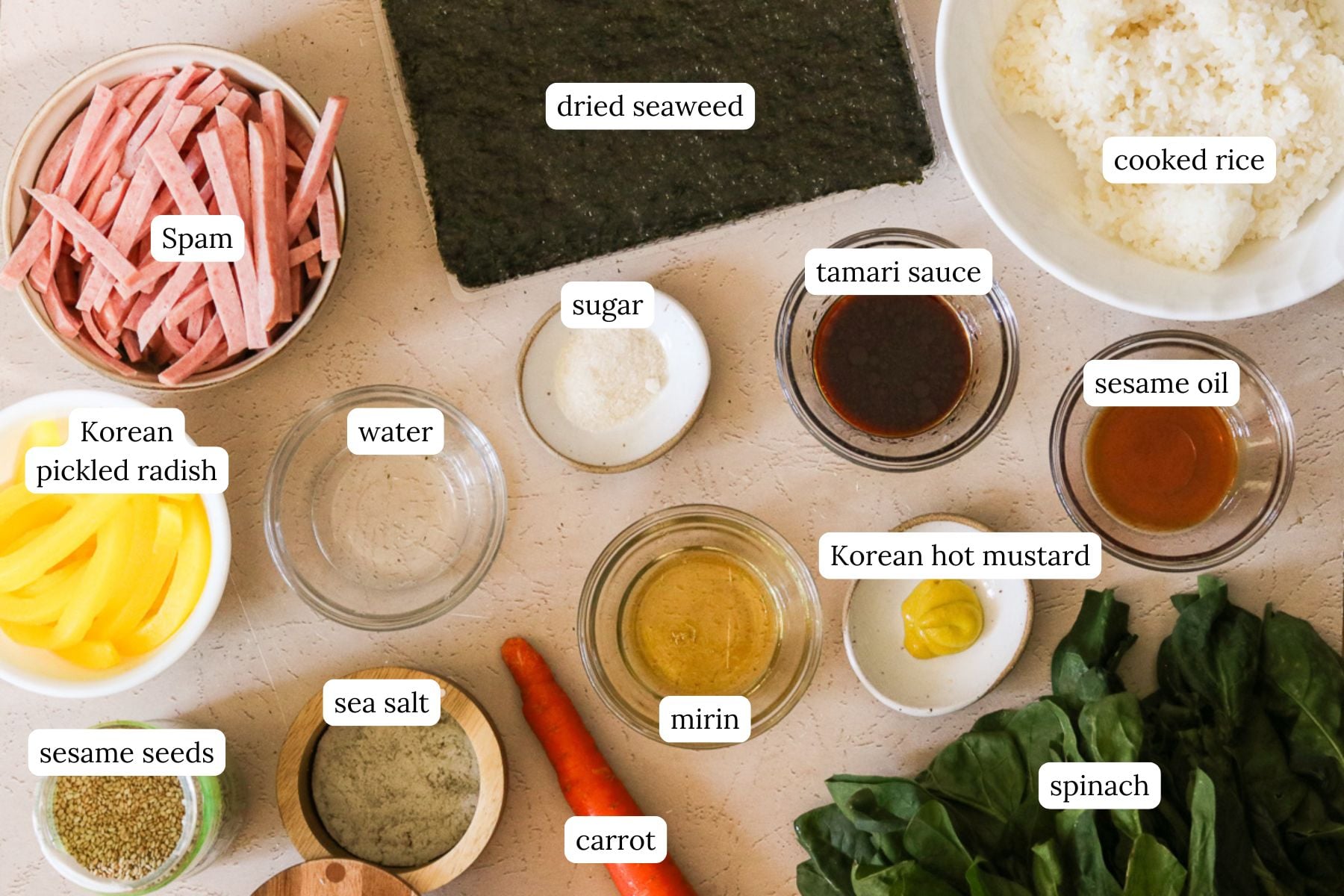
- Short grain rice: I recommend using freshly cooked rice when making kimbap so the rice can stick to the seaweed easily. Day-old rice from the fridge just won’t hold together the same way.
- Spam: We love Spam in this house, so that’s what we use for our protein. Other popular options are ham, imitation crab, or fish cakes.
- Yellow pickled radish (danmuji): If you have a hard time finding danmuji, you can substitute with lightly salted cucumber slices. They both add that refreshing crunch.
- Korean hot mustard: This goes in the dipping sauce and may not be available at a typical grocery store. Dijon mustard or yellow mustard will work in a pinch.
- Dried seaweed (nori): Make sure your sheets are fresh and crisp. Stale, bendy nori won’t roll tightly and the texture suffers.
- Tamari sauce: This keeps the dipping sauce gluten free. Regular soy sauce works too if that’s not a concern for you.
Recipe Variations
- Switch up the protein. Ham, imitation crab, or fish cakes are all popular fillings if Spam isn’t your thing.
- Use whatever veggies you have. That’s the beauty of kimbap – the filling can be substituted with whatever veggies you have on hand. Just cook and season them the same way as the spinach and carrots.
- Make it vegetarian. You can skip the Spam and load up on extra veggies instead.
- Simplify the dipping sauce. No Korean hot mustard? Dijon or yellow mustard both work in a pinch.
Looking for more Korean favorites? Try my gluten free Korean dumplings (mandu) for a fun weekend cooking project, or this cheesy Korean corn cheese for an easy side that tastes just like the Korean BBQ restaurant version.
How to Make Mini Kimbap
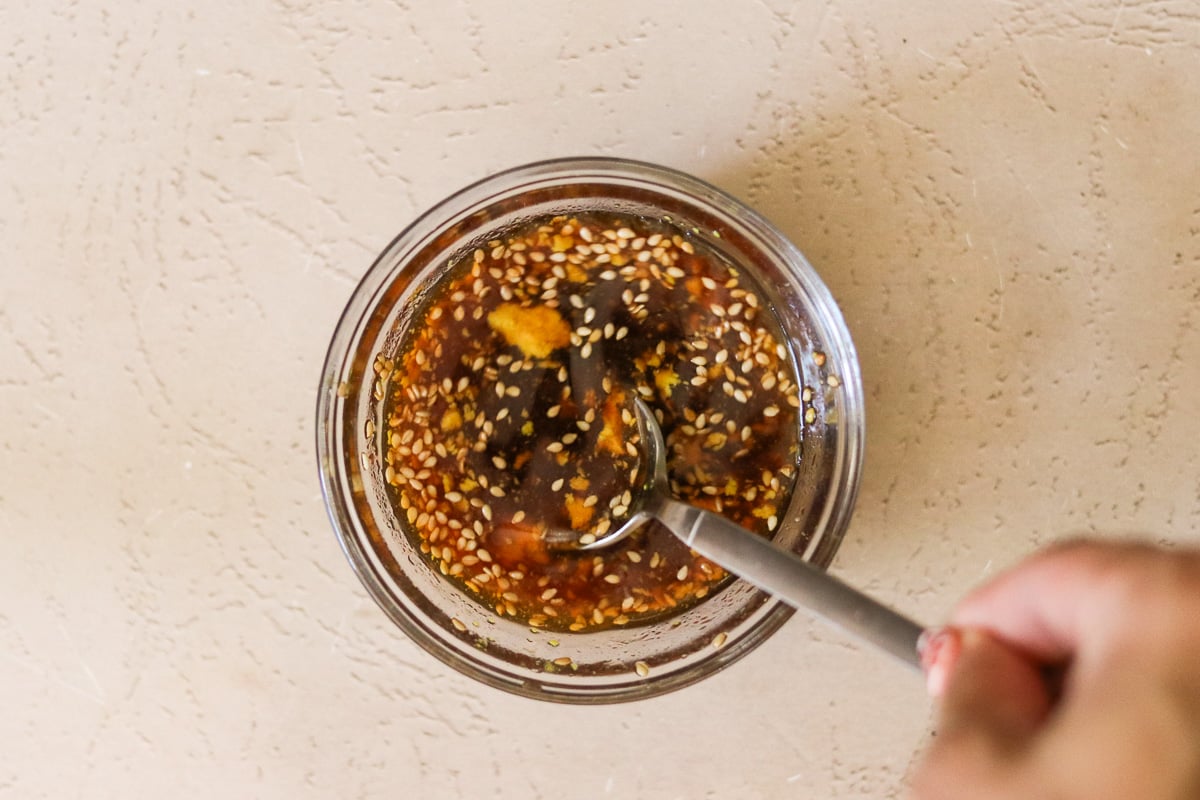
Step 1: Combine all the dipping sauce ingredients in a small bowl and stir until the mustard is dissolved. Set aside. If your rice isn’t cooked already, start it now.
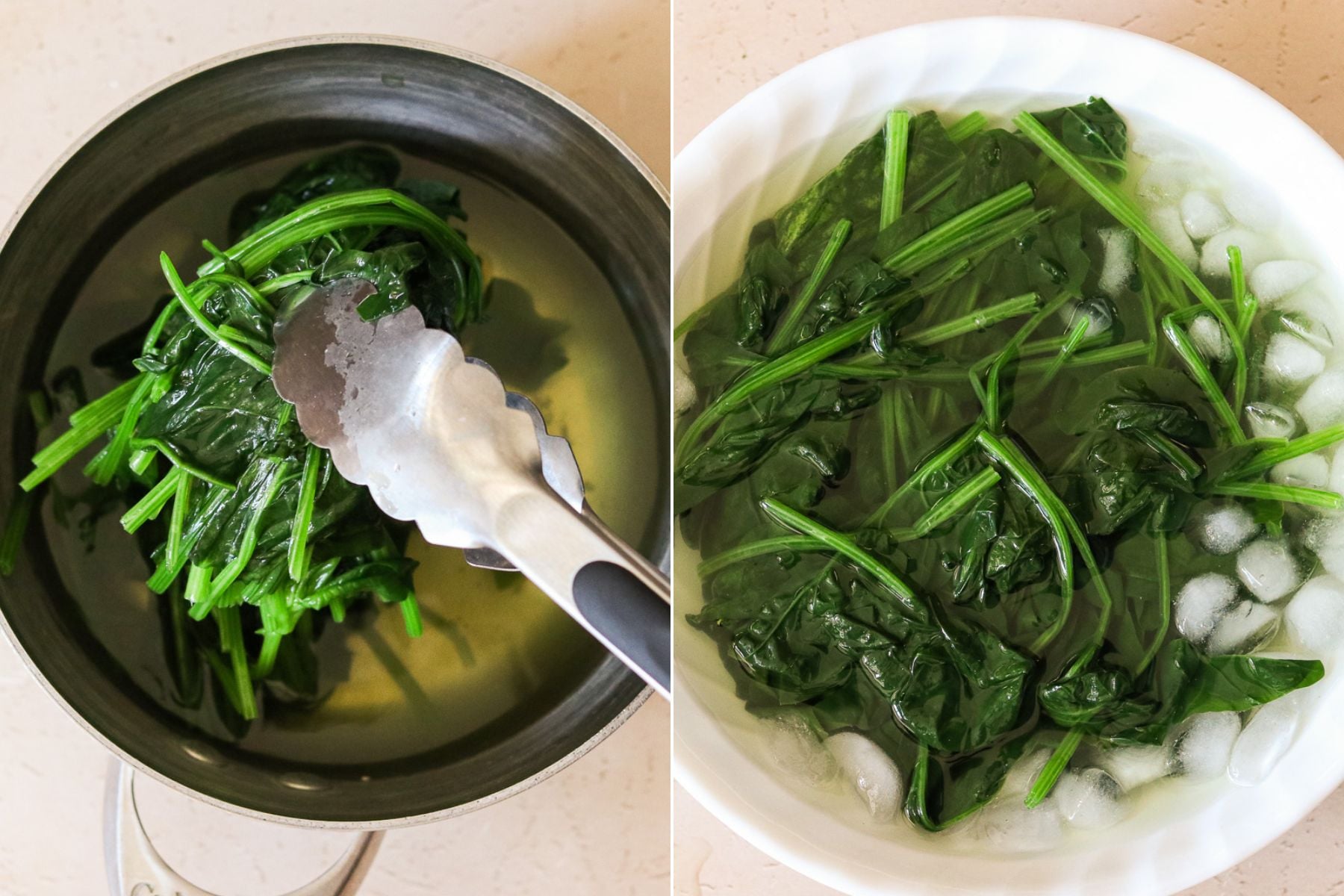
Step 2: Boil a pot of water over high heat and prepare an ice bath. Blanch the spinach in the boiling water for 30-60 seconds, then immediately transfer it to the ice bath to stop the cooking and keep it bright green.
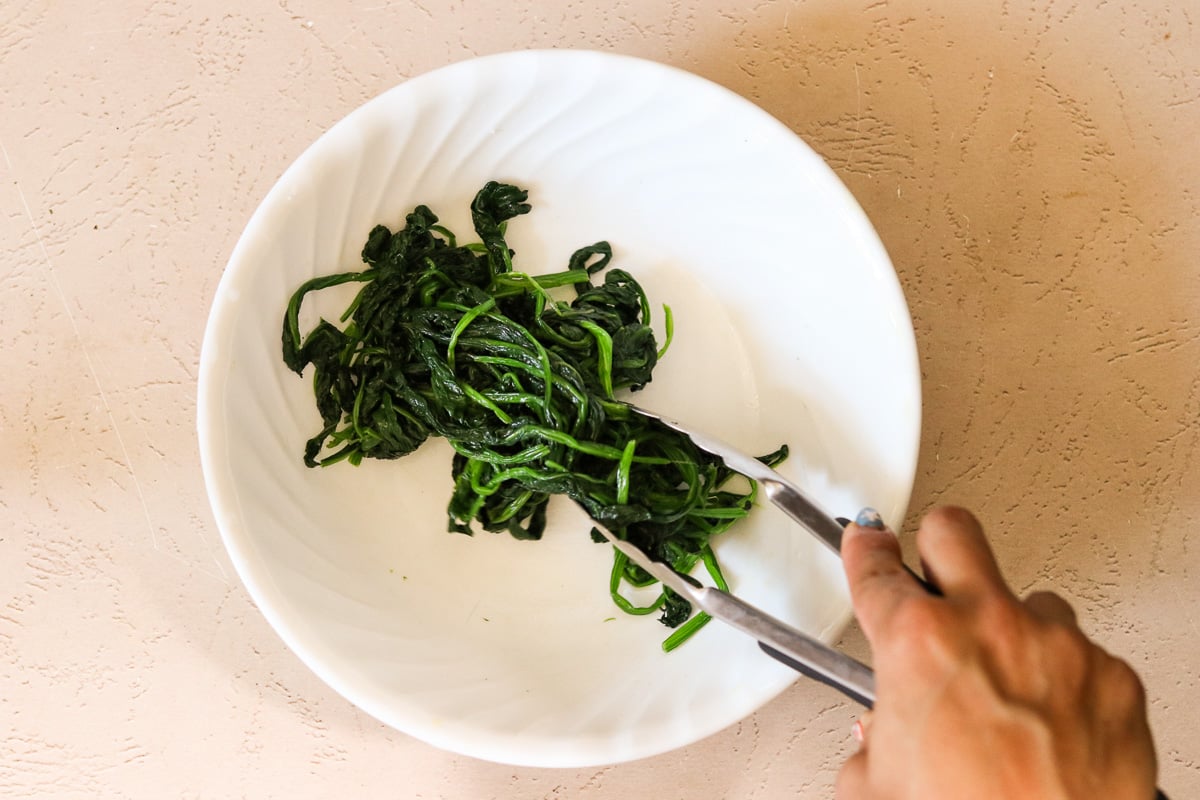
Step 3: Squeeze out all the moisture from the spinach, then place it in a bowl. Toss with 1 tsp sesame oil and 1/8 tsp sea salt. Set aside.
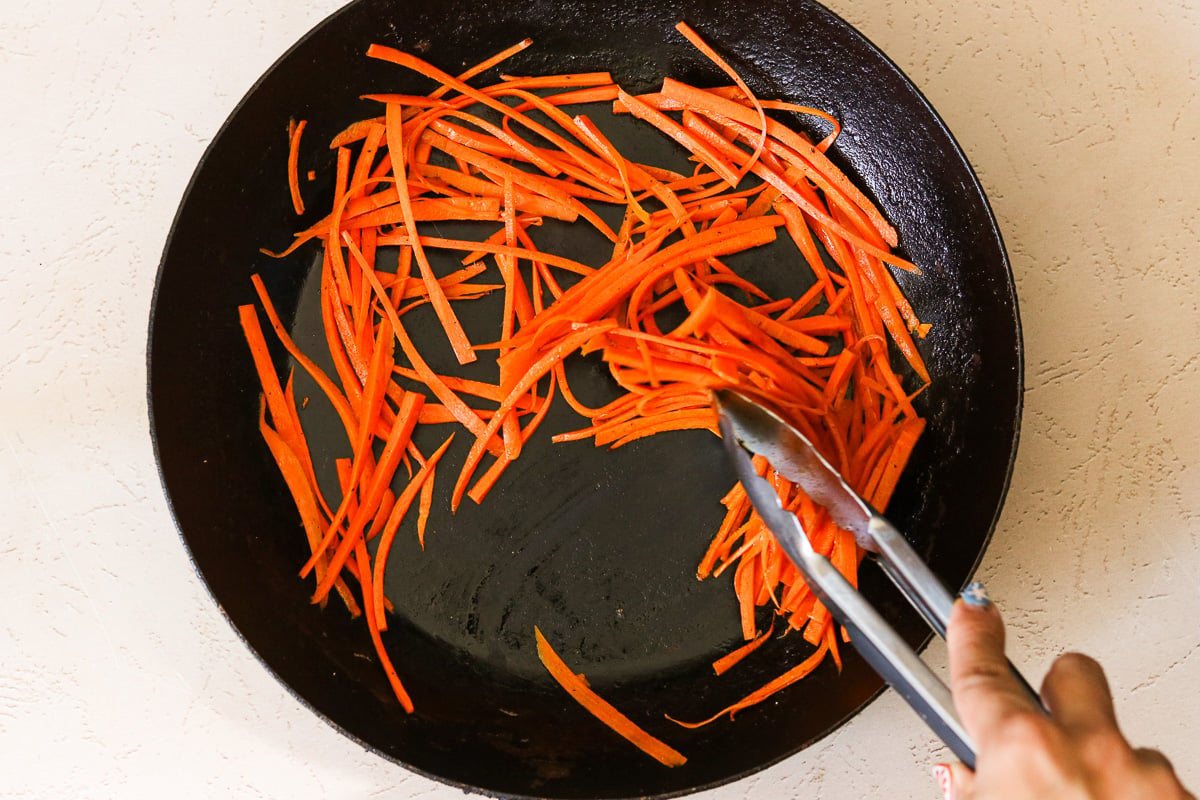
Step 4: Heat 1 tsp of sesame oil in a skillet over medium high heat. Add the carrots and 1/8 tsp sea salt, and stir for about 2 minutes until slightly softened. Remove from the pan.
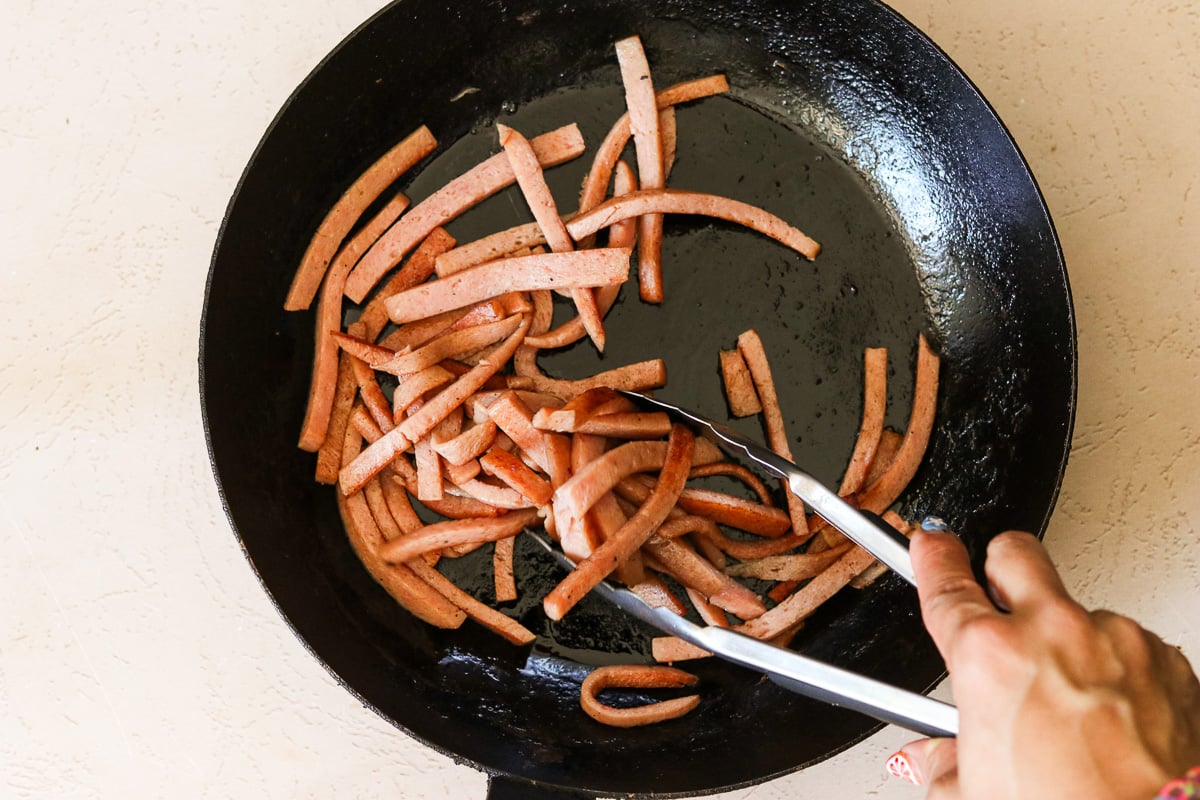
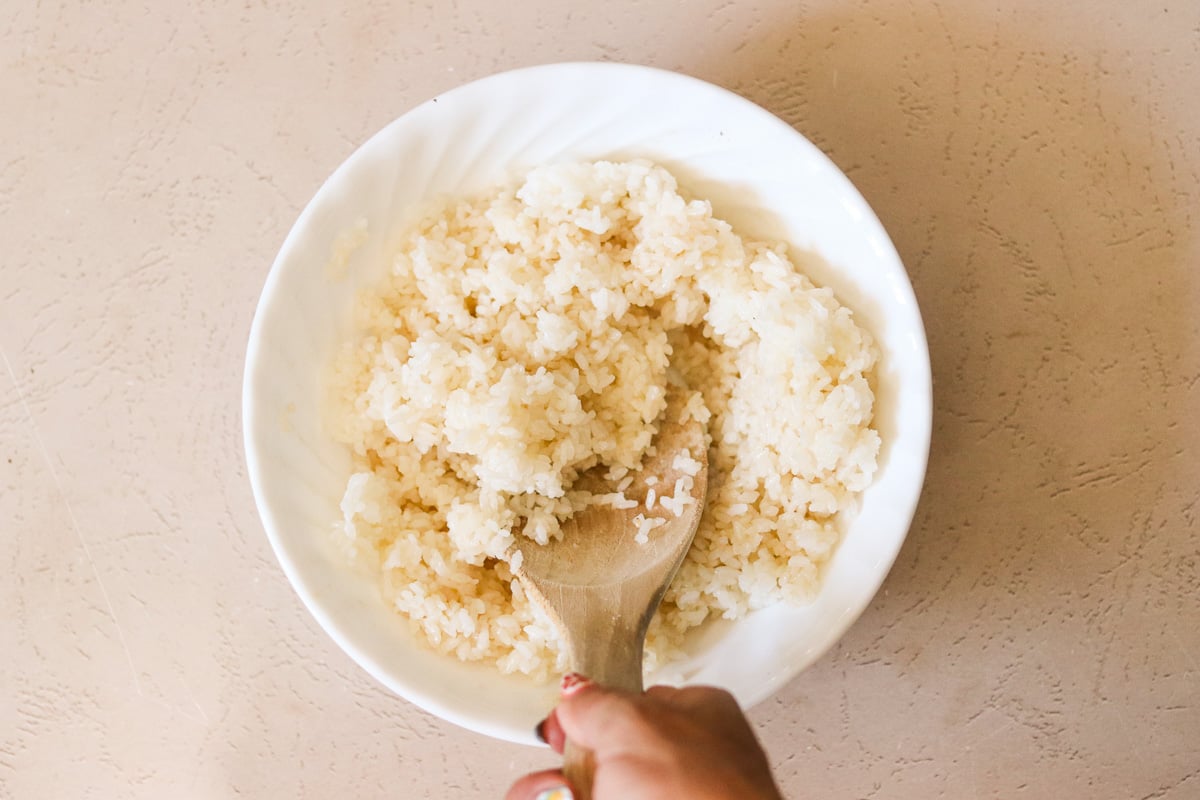
Step 5: In the same skillet, add the Spam and cook, stirring, for 3-4 minutes until lightly charred on the outside. Remove from heat.
Step 6: Once the rice is finished cooking, add 1 tbsp of sesame oil and 1/2 tsp sea salt. Toss gently to mix.
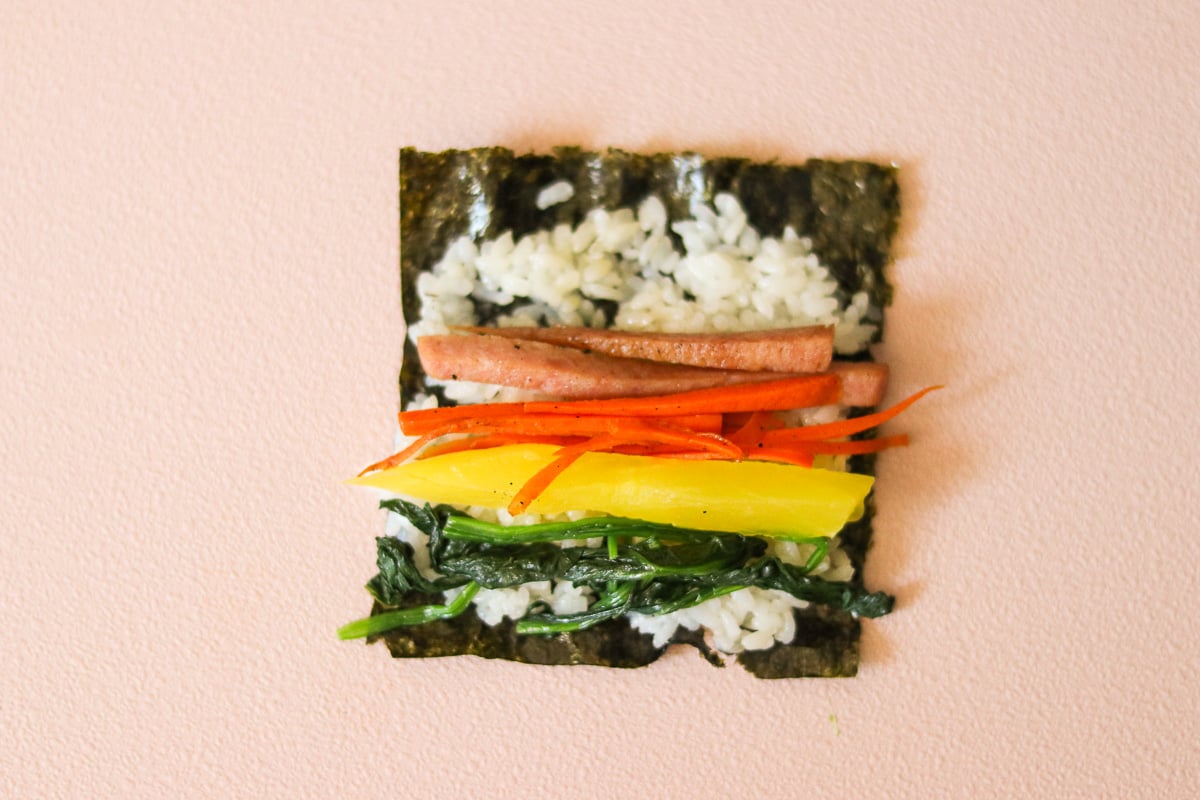
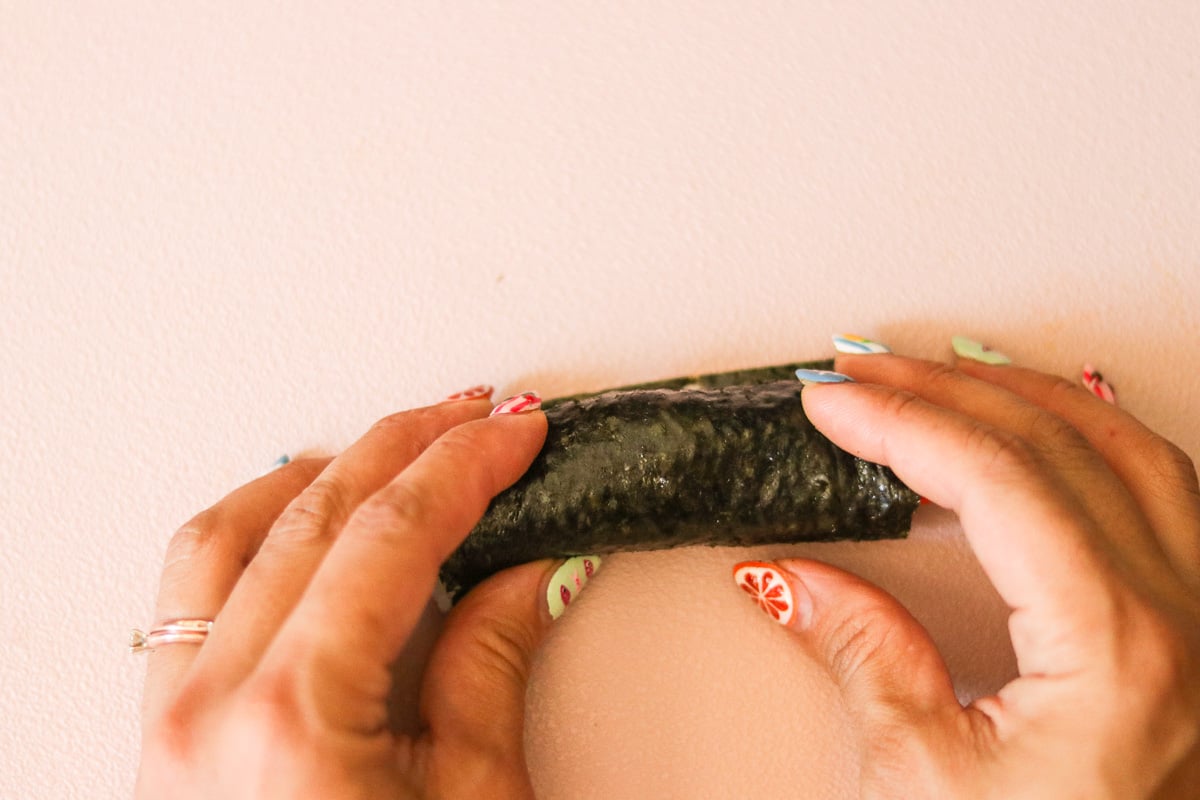
Step 7: Cut the seaweed sheets into 4 quarters. Lay a piece shiny side down with the shorter side facing you, and spread about 2 tbsp of rice over it, leaving a 1/2 inch space at the top. I like to wear a plastic glove for this step – the rice will stick to EVERYTHING, including your fingers.
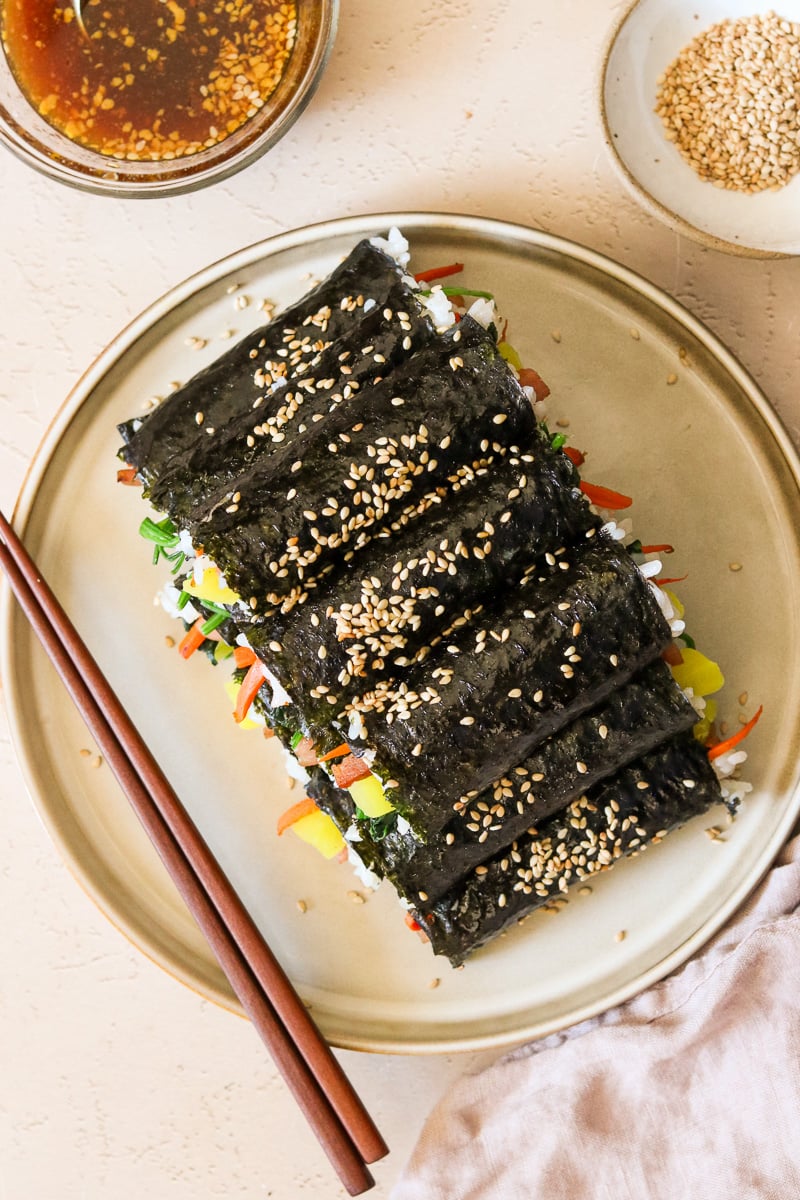
Step 8: Add small amounts of the spinach, carrot, radish, and Spam evenly across the bottom portion of the rice. Carefully roll the seaweed tightly from the bottom edge to the top, tucking the filling in with your fingers as you go. Repeat with the rest of the ingredients.
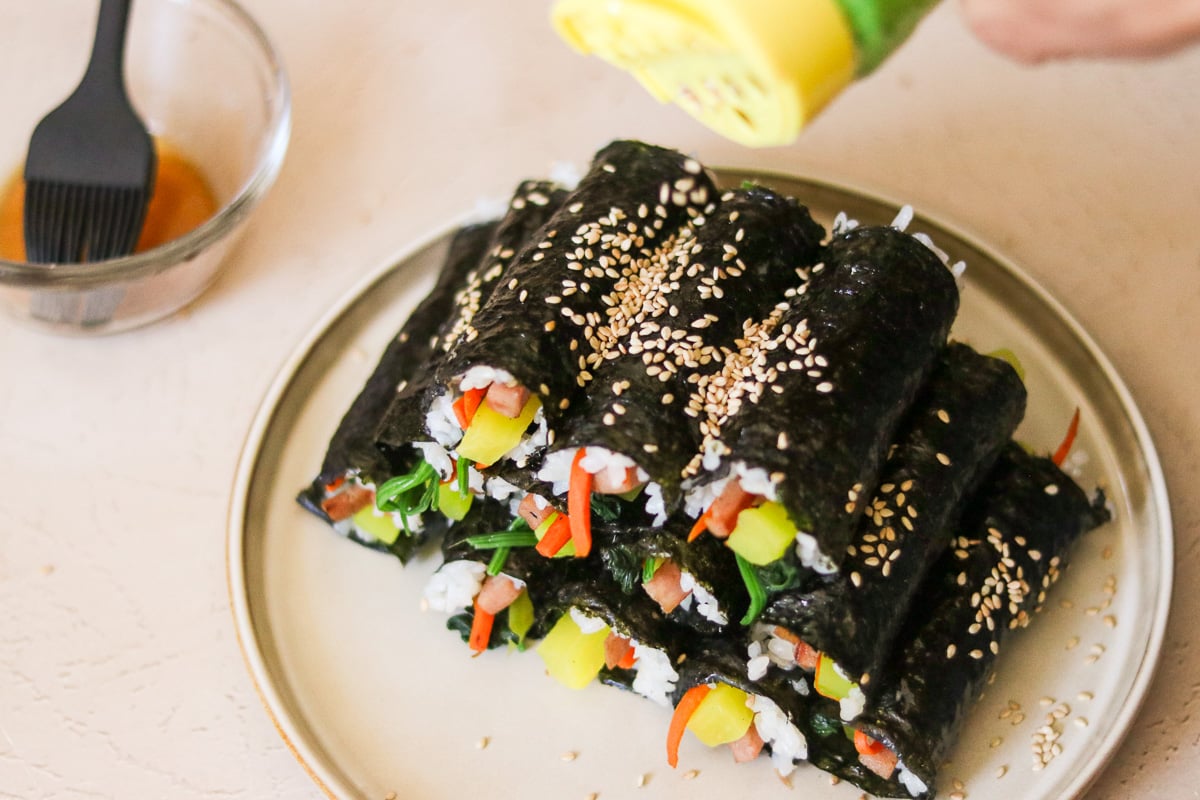
Step 9: Brush the rolled kimbap lightly with sesame oil and sprinkle with sesame seeds. Serve with the dipping sauce and enjoy!
These are yummy on their own, but pair them with a warm bowl of my comforting Korean radish soup (muguk) and you’ve got a full meal.
Expert Tips
- Use freshly cooked rice. Warm, fresh rice sticks to the seaweed easily – cold rice won’t hold the rolls together nearly as well.
- Squeeze the spinach really well. Any extra moisture will make the rolls soggy and harder to seal.
- Wear a plastic glove to spread the rice. It lets you press the rice out evenly with your fingers without it sticking to them.
- Leave that 1/2 inch border at the top. The bare seaweed helps the kimbap have a clean look. If the seaweed doesn’t stick after rolling, you can wet it slightly with water or add a grain of cooked rice to help it seal.
- Make extra dipping sauce. It keeps well in the fridge, and it’s so good on grilled meats, rice bowls, and veggies that you’ll run out fast if you only make one batch.
- Prep everything before you start rolling. Have all your fillings ready in little bowls so you can move quickly while the rice is still warm.
- Don’t overfill. Small amounts of each filling make it much easier to get a tight roll.
Storage
Honestly, kimbap is at its best the day it’s made – I don’t recommend trying to save it for tomorrow. But here are some details on how to keep it fresh for the day:
- Room temperature: Kimbap can be left out for 2-4 hours, which makes it great for picnics and lunch boxes. If you’re packing them, wrap the rolls in parchment or plastic wrap so they don’t dry out, and send the dipping sauce in a small container on the side.
- Fridge: You can store it in the fridge for up to 6 hours. Any longer than that, the rice will harden and won’t be enjoyable.
Recipe FAQs
Mayak means “drug” in Korean – the name is a nod to how addicting these mini rolls are. It’s a popular snack and finger food in Korea.
Yes, as long as you make the dipping sauce with tamari instead of regular soy sauce. Double-check your other ingredient labels to be safe.
I don’t recommend it. Kimbap is best eaten the same day it’s made – after about 6 hours in the fridge, the rice hardens and the texture just isn’t the same.
No – freezing wrecks the texture of the rice. If you have leftover fillings, store them separately instead.
Usually it’s one of two things: the rice cooled down too much before rolling, or the roll wasn’t tucked tightly enough. Warm, freshly cooked rice sticks to the seaweed and holds everything together.
Nope! These rolls are small enough to roll tightly by hand – just tuck the filling in with your fingers as you go.
More Easy Korean Recipes
30 Minutes or Less
Korean Radish Kimchi (Kkakdugi Recipe)

Side Dishes
Easy Korean Braised Tofu Recipe (Dubu Jorim)
30 Minutes or Less
Instant Pot Korean Beef (Paleo & Whole30)
If you make this recipe, please leave me a star rating and comment below! I love to hear your thoughts and feedback. Follow me on social media Instagram, Facebook, and Pinterest for even more delicious recipes!
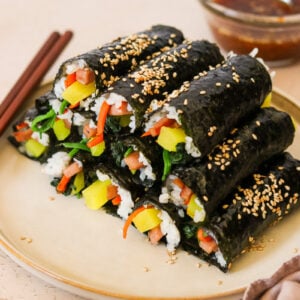
Mini Kimbap (Mayak Kimbap) with Mustard Dipping Sauce
Video
Ingredients
Kimbap
- 3 cups freshly cooked short grain rice, about 1.5 cups uncooked
- 1 tbsp + 2 tsp sesame oil, divided
- 3/4 tsp sea salt, divided
- 4 oz spinach
- 1 carrot, julienned
- 1/3 container spam, about 2.5 oz, thinly sliced
- 4 oz yellow pickled radish (danmuji), or lightly salted cucumbers, thinly sliced
- 4½ sheets dried seaweed, nori
- Sesame oil and sesame seeds, for garnish
Dipping Sauce (Optional)
- 2 tbsp tamari sauce, or soy sauce
- 2 tbsp water
- 2 tbsp mirin
- 1 tbsp Korean hot mustard, or dijon mustard
- 2 tsp sugar
- 1 tsp sesame seeds
Instructions
- If making, combine all ingredients for the sauce in a small bowl, and stir until the mustard is dissolved. Set aside. If the rice isn’t cooked already, start cooking it now.2 tbsp tamari sauce, 2 tbsp water, 2 tbsp mirin, 1 tbsp Korean hot mustard, 2 tsp sugar, 1 tsp sesame seeds, 3 cups freshly cooked short grain rice
- Boil a pot of water over high heat and prepare an ice bath. Blanch spinach in the boiling water for 30-60 seconds, then immediate transfer to the ice bath.4 oz spinach
- Squeeze out all moisture from the spinach, then place in a bowl. Toss with 1 tsp sesame oil and 1/8 tsp sea salt. Set aside.
- Heat 1 tsp of sesame oil in a skillet over medium high heat. Add carrots and 1/8 tsp sea salt. Stir cooking for about 2 minutes until softened slightly, then remove from the pan.1 carrot
- In the same skillet, add spam and cook stirring for 3-4 minutes until lightly charred on the outside. Remove from heat.1/3 container spam
- Once the rice is finished cooking, add 1 tbsp of sesame oil and 1/2 tsp sea salt. Toss gently to mix.
- Cut seaweed sheets into 4 quarters. Take a piece and lay shiny side down with the shorter side facing you. Spread about 2 tbsp of rice, leaving about 1/2 inch space at the top ( I like to wear a plastic glove to spread out the rice with my fingers without it sticking). Add small amounts of the spinach, carrot, radish, and spam slices evenly on the bottom portion of the rice.4½ sheets dried seaweed, 4 oz yellow pickled radish (danmuji)
- Carefully roll the seaweed tightly from the bottom edge to the top, tucking the filling with your fingers. Repeat with the rest of the ingredients.
- Brush the rolled gimbap lightly with some sesame oil and sprinkle with sesame seeds. Enjoy with the dipping sauce!Sesame oil and sesame seeds
Notes
- Use freshly cooked rice so it sticks to the seaweed easily.
- Wear a plastic glove to spread the rice without it sticking to your fingers.
- Squeeze the spinach very dry so the rolls don’t get soggy.
- Kimbap can be left out at room temperature for 2-4 hours, or stored in the fridge for up to 6 hours. Any longer and the rice will harden and won’t be enjoyable – it’s best eaten the same day it’s made.
Nutrition
Nutrition information is automatically calculated, so should only be used as an approximation.