This post may contain affiliate links. Please see our disclosure policy.
Add as Google preferred source
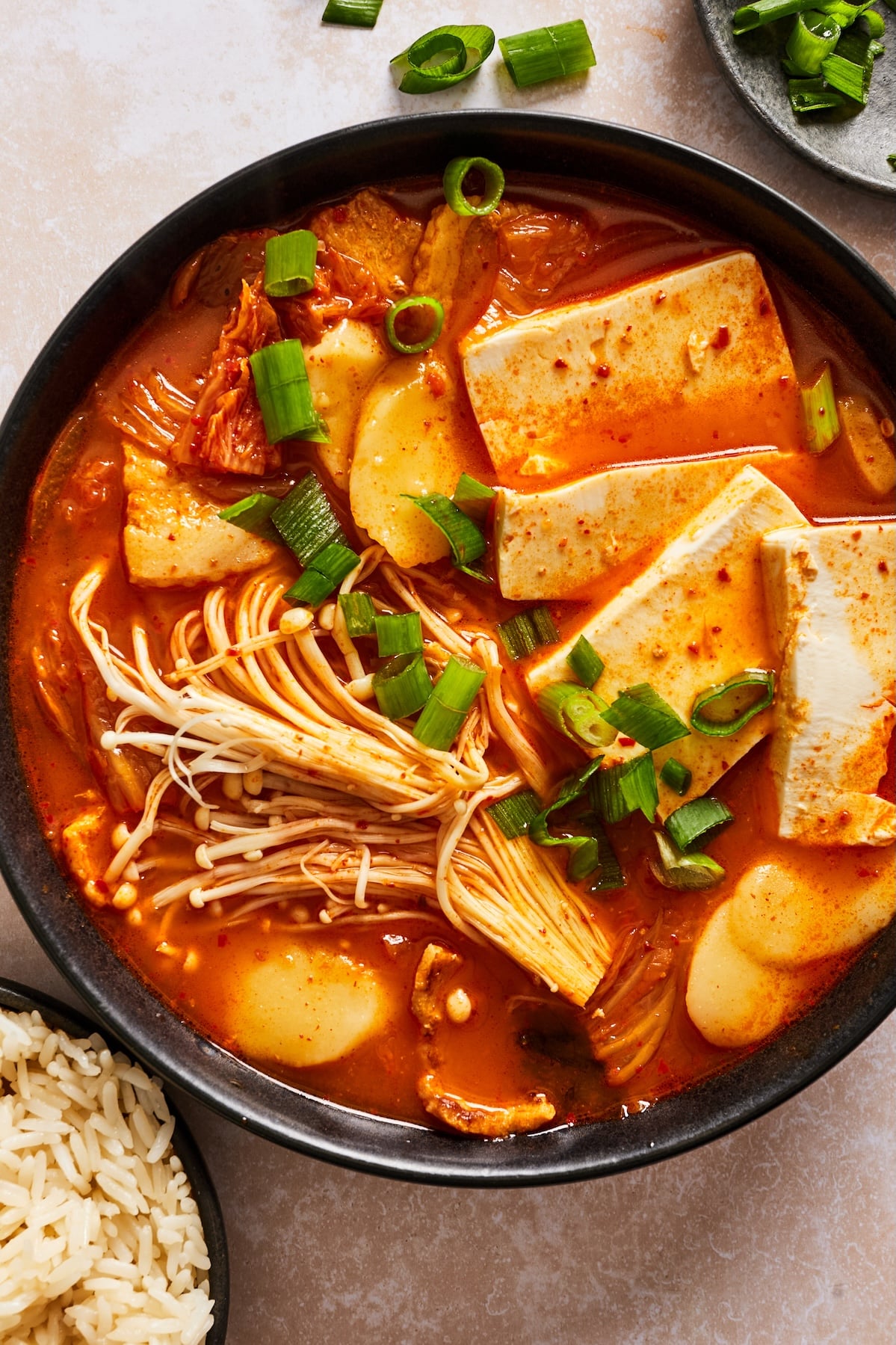
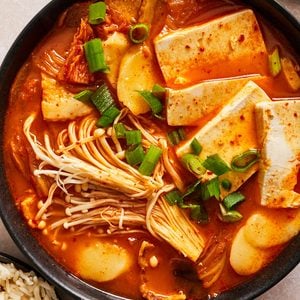
Kimchi jjigae, or kimchi stew, is a bold, spicy dish enjoyed in almost all Korean households, and it’s a staple dish made at least once a week by most families. I’ve had kimchi jjigae countless times growing up, and it’s still one of my favorite comfort foods to this day. In my version, I simmer pork belly and sour, well-fermented kimchi in a gochugaru broth, then lay firm tofu and enoki mushrooms right on top.
I use tamari, so it’s gluten-free, too, but soy sauce works just fine. Serve with a warm bowl of rice, alongside smaller side dishes called banchan (my recommendations are below!)
What Makes My Kimchi Jjigae Different
The one thing that’s a little different about mine is the rice cakes, and I add lots of them. I love how chewy they are, and they release starch into the stew as it simmers, so the broth is a little thicker. You can leave them out if you want, though. The broth is just water and kimchi juice, so there’s no stock to make first.
The rice cakes are also what helped my kids enjoy this spicy dish, since they love rice cakes so much. If you’ve made my kimchi soondubu, this is a different stew, with firm tofu instead of silken and a lot more kimchi. It serves 4 and takes about 30 minutes start to finish.
Ingredient Notes
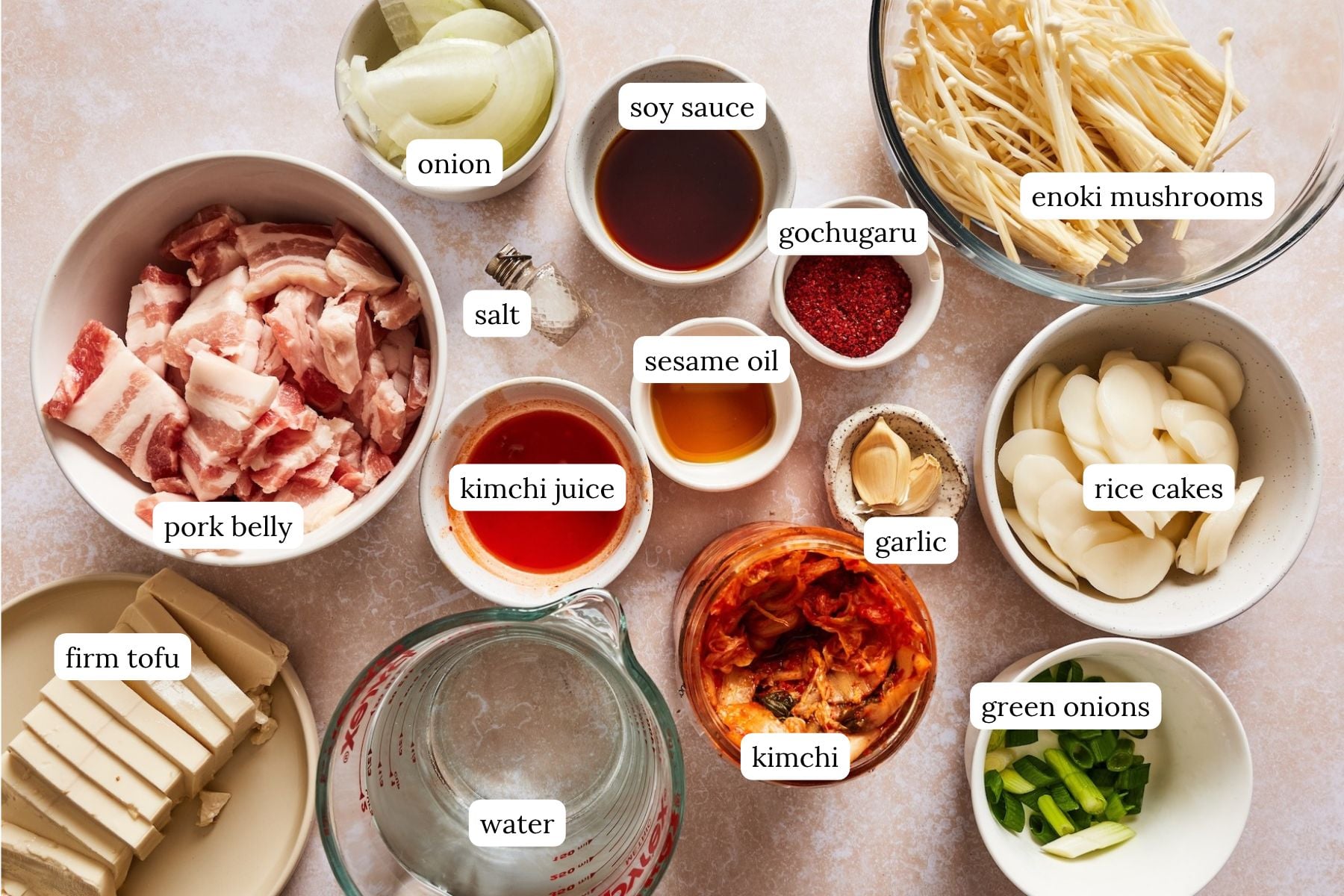
- Kimchi. Use kimchi that’s well fermented and sour, because that’s what gives kimchi jjigae its classic sour flavor. This is a great way to use up older kimchi. If your kimchi is still fresh, the stew will taste less sour, so you can leave the jar out at room temperature for a day or two to help it ferment faster. I also add ¼ cup of the kimchi juice for even more of that sour flavor.
- Pork belly. You can make kimchi jjigae with all kinds of protein, but pork belly is probably the most common, and it’s my favorite. There’s something so delicious about the combination of fatty pork and spicy kimchi.
- Gochugaru. All the heat comes from these Korean chili flakes and the kimchi, since there’s no gochujang in my version. As written, it has a good kick. If you’re cooking for kids or anyone who doesn’t like much heat, start with 1 tsp of gochugaru and add more when you taste the broth.
- Rice cakes. I use the flat, round sliced Korean rice cakes (tteok), but they’re optional. If you leave them out, use 2½ cups of water instead of 3. The rice cakes soak up some of that extra water as they cook.
- Firm tofu. I like firm tofu slices in this stew because they hold up better without falling apart. Want silken tofu instead? That’s my kimchi soondubu jjigae with silken tofu and an egg, which is a different stew with a lot less kimchi.
- Tamari or soy sauce. I’m mostly gluten-free, so I use tamari. But soy sauce is a 1:1 swap, so use whichever you have. Everything else in the pot is naturally gluten-free.
How to Make Kimchi Jjigae
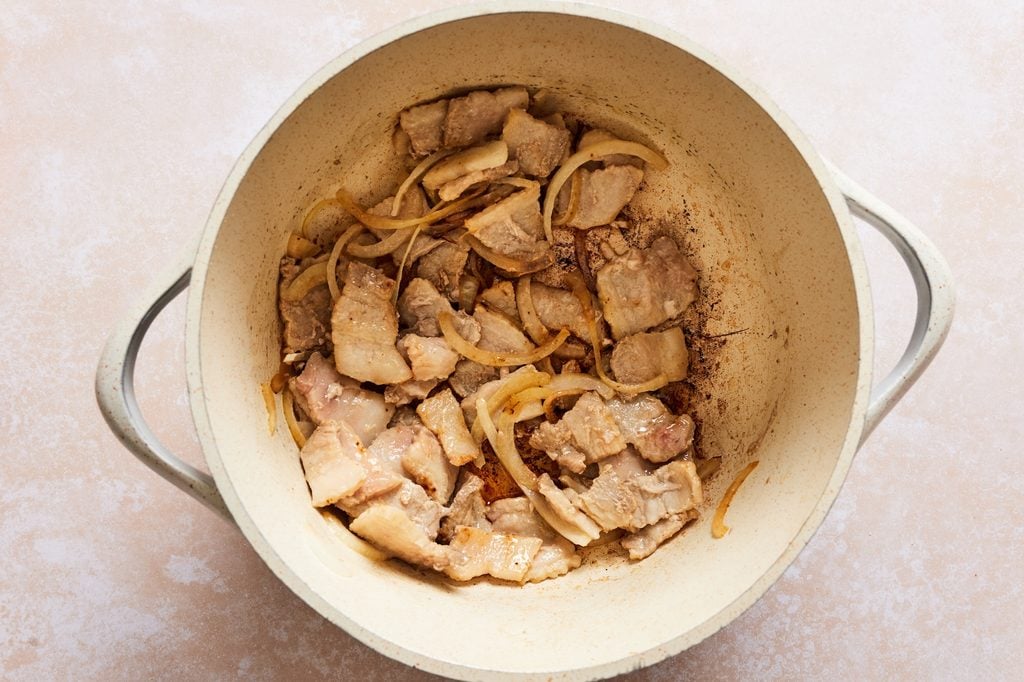
Step 1: Brown the pork belly and onion in the sesame oil for about 3 minutes, until the pork is mostly browned on the outside. It doesn’t need to cook through yet, since you’ll finish cooking it in the stew.
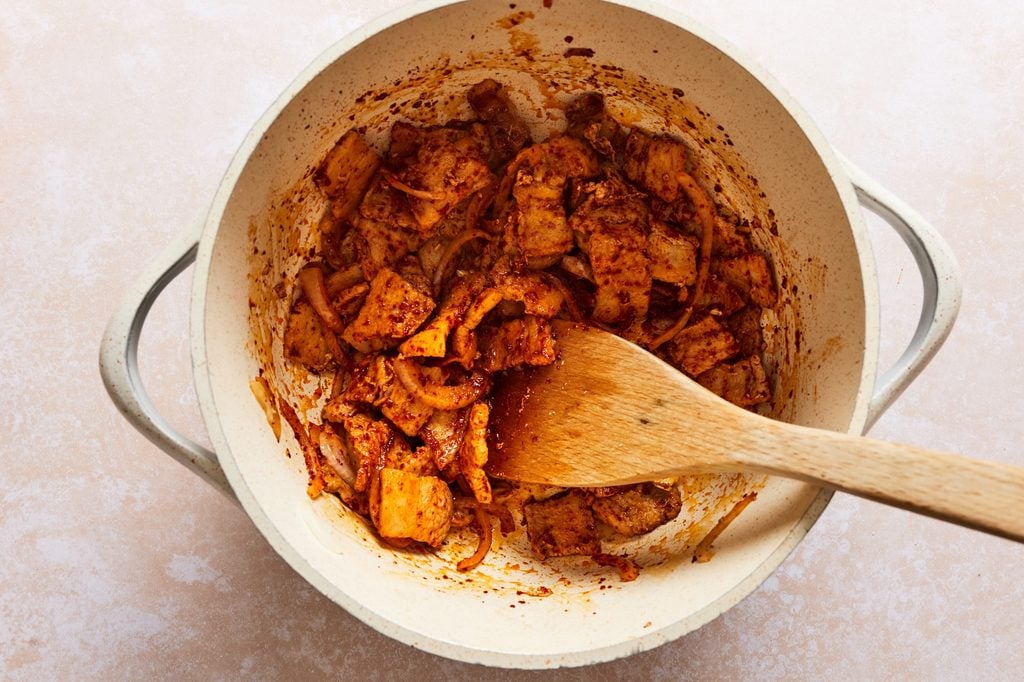
Step 2: Add the garlic and gochugaru and stir for 1 minute, until the pork and onion are coated in red. If you cook it much longer than that, the garlic can burn and taste bitter.
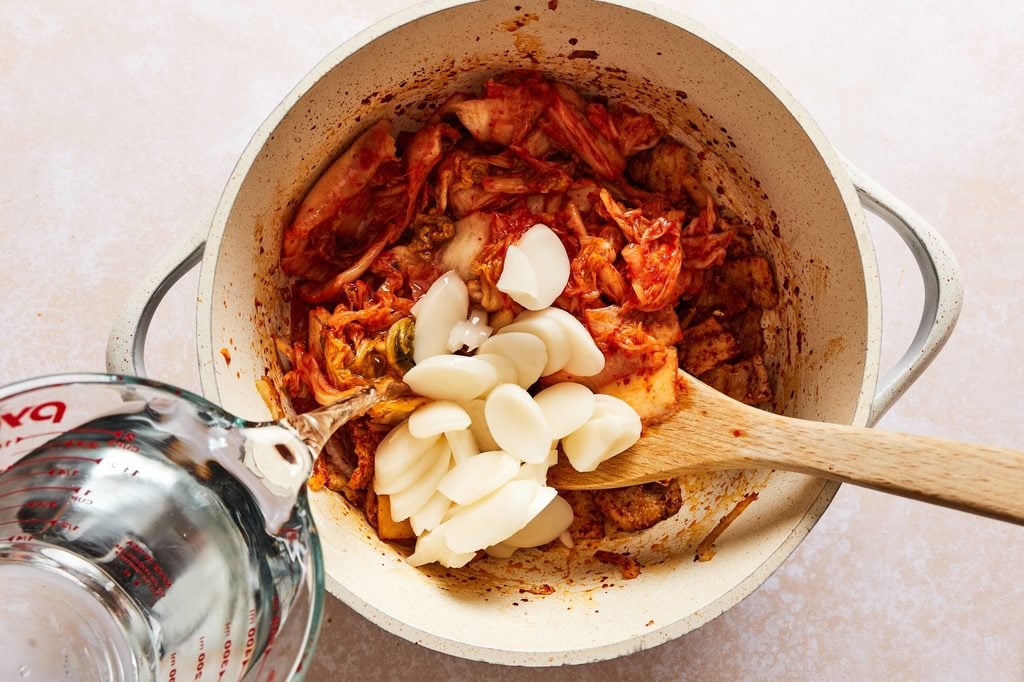
Step 3: Add the kimchi, kimchi juice, rice cakes, water, and tamari, then put the lid on and bring it to a boil. Turn the heat down and simmer for 15 to 20 minutes, until the rice cakes are soft and chewy all the way through. Taste the broth and add a pinch of salt if it needs more seasoning.
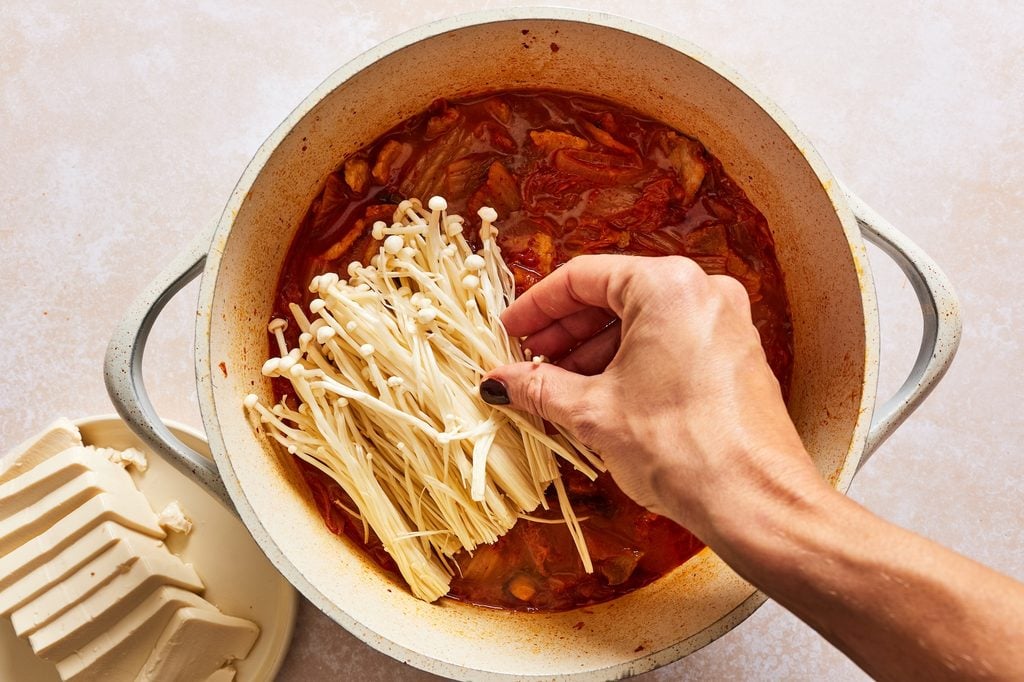
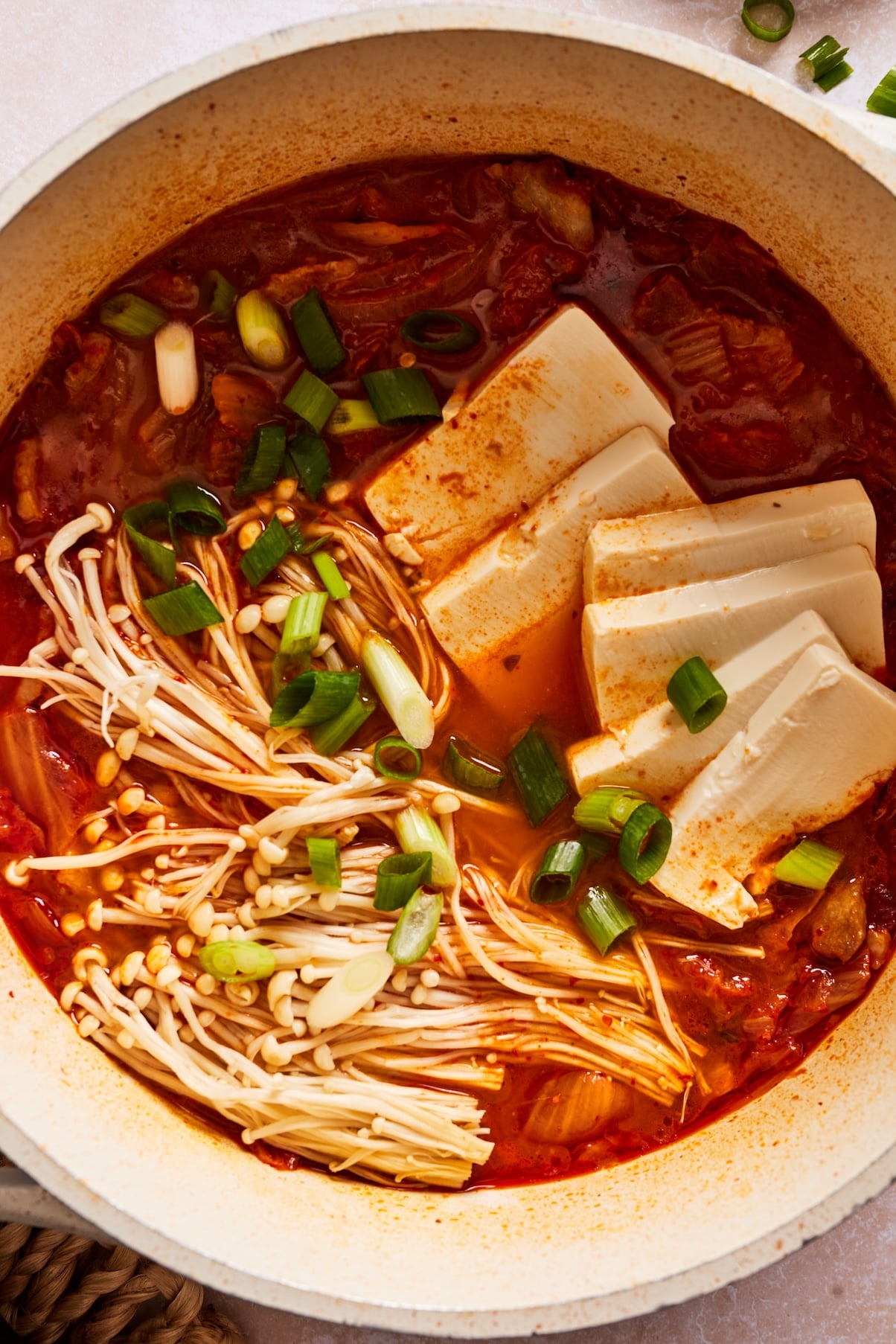
Step 4: Gently lay the tofu slices and enoki on top and put the lid back on. Simmer for 5 more minutes, until the enoki wilts and the tofu is hot. I lay them on top instead of stirring them in so the tofu slices stay whole.
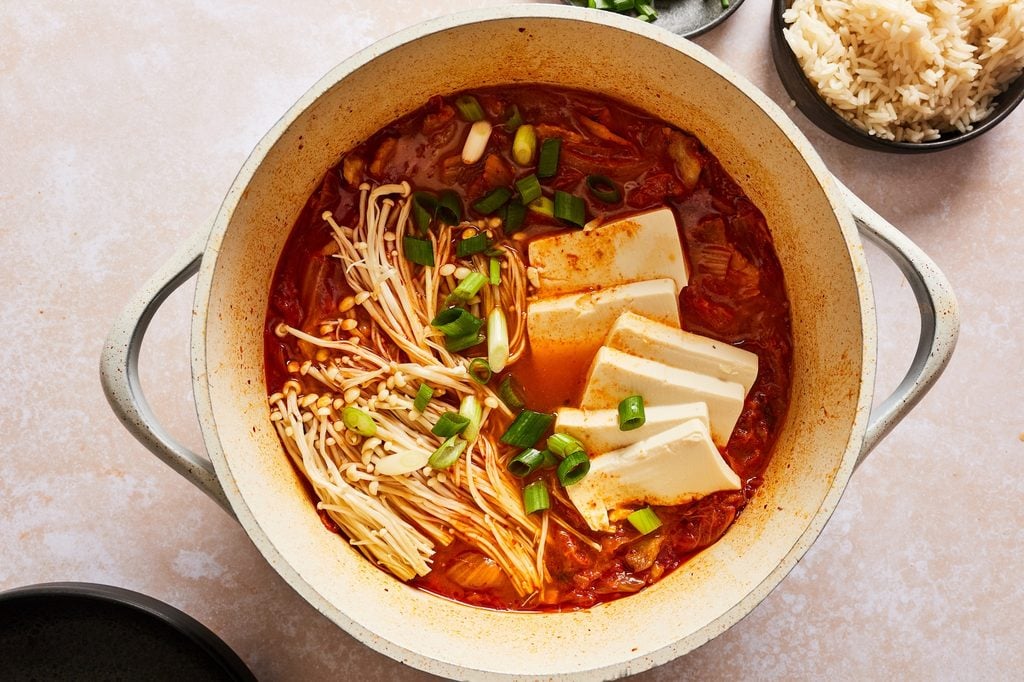
Step 5: Sprinkle on the green onions, take the pot off the heat, and serve it right away.
How to Serve
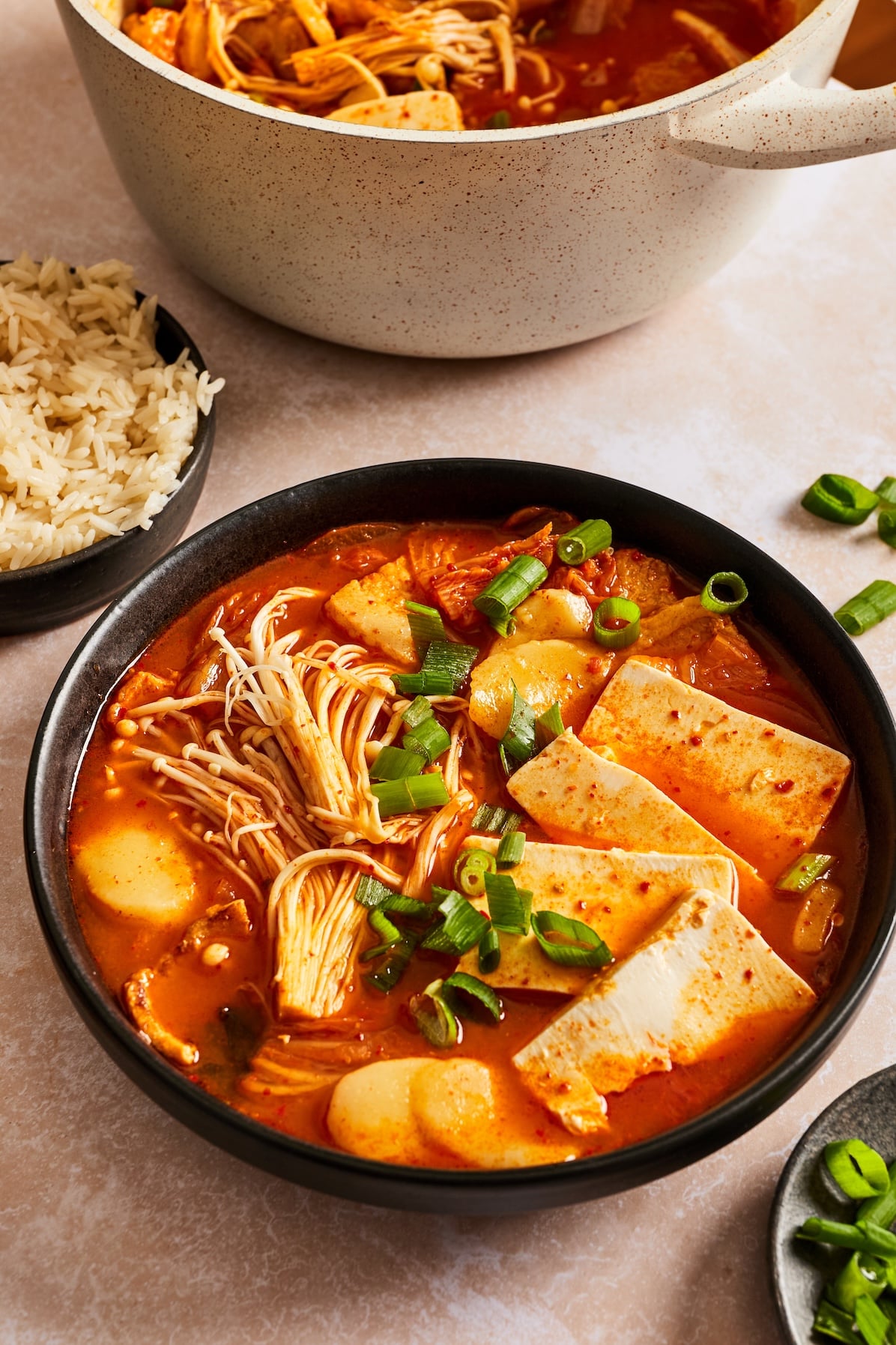
Serve it with a warm bowl of rice and some banchan (the smaller side dishes that come with a Korean meal). Want something mild next to all that spice? My fluffy Korean steamed eggs (gyeran jjim) take about 15 minutes, so you can make them while the stew simmers. For something fresh and crunchy, try my easy Korean cucumber salad (oi muchim).
And if you like to plan ahead, my Korean marinated eggs (mayak eggs) are perfect to make the night before, since they marinate for 8 hours. My pickled Korean perilla leaves (kkaennip jangajji) need an overnight start, too.
Storage & Leftovers
Kimchi jjigae tastes best right away. If you do have leftovers, the rice cakes soak up some of the broth overnight and firm up in the fridge. Just add a splash of water when you reheat it, and they’ll soften again as it simmers. My storage and reheating details are in the recipe card notes.
More Korean Recipes

30 Minutes or Less
30-Minute Dak Juk | Korean Rice Porridge with Chicken


Side Dishes
Easy Korean Braised Tofu Recipe (Dubu Jorim)
Recipe
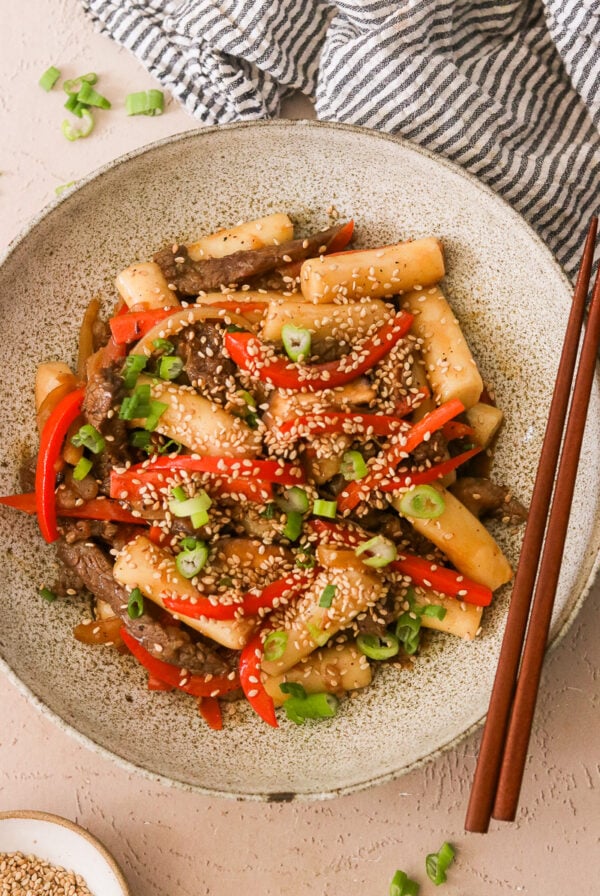
Gungjung Tteokbokki Recipe (Korean Royal Court Rice Cakes)
If you make this recipe, please leave me a star rating and comment below! I love to hear your thoughts and feedback. Follow me on social media Instagram, Facebook, and Pinterest for even more delicious recipes!
Kimchi Jjigae with Pork Belly and Rice Cakes
Ingredients
- 2 tsp sesame oil
- ¾ lb pork belly, cut into bite-sized slices
- ½ cup sliced onion
- 2 garlic cloves, minced
- 2 tsp gochugaru, Korean chili flakes
- 1 lb sliced kimchi, preferably fermented and sour
- ¼ cup kimchi juice
- 5-6 oz flat round rice cakes, like these (optional)
- 3 cups water, use 2½ cups if you aren’t adding rice cakes
- 1 tbsp soy sauce, or tamari sauce
- Salt, to taste
- 6-8 oz firm tofu, cut into slices
- 3 oz enoki mushrooms, stems cut off
- 1 green onion, chopped
Instructions
- Heat sesame oil in a large saucepan over medium high heat. Add pork belly and onion, and cook until the pork is mostly browned on the outside, about 3 minutes,2 tsp sesame oil, ¾ lb pork belly, ½ cup sliced onion
- Add garlic and gochugaru and stir everything for 1 minute.2 garlic cloves, 2 tsp gochugaru
- Add kimchi, kimchi juice, rice cakes (if using), water, and soy sauce. Cover and bring to boil, then reduce to simmer for 15-20 minutes. Taste the broth and add salt, if needed.1 lb sliced kimchi, ¼ cup kimchi juice, 5-6 oz flat round rice cakes, 3 cups water, 1 tbsp soy sauce, Salt
- Gently lay the tofu slices and enoki mushrooms on top of the stew, cover and simmer for 5 more minutes.6-8 oz firm tofu, 3 oz enoki mushrooms
- Garnish with green onions, remove from heat, and serve with warm rice.1 green onion
Notes
- Kimchi: Use well-fermented, sour kimchi for the classic sour flavor.
- Spice level: For a milder stew, start with 1 tsp gochugaru and add more to taste.
- Gluten-free: Use tamari. Soy sauce is a 1:1 swap if you don’t need it gluten-free.
- Storage: Kimchi jjigae tastes best right away. Cool leftovers completely, then store them in an airtight container in the fridge for up to 5 days.
- Reheating: The rice cakes soak up some of the broth, so add a splash of water. Reheat on the stovetop: bring it to a boil, then simmer for at least 1 minute.
Nutrition
Nutrition information is automatically calculated, so should only be used as an approximation.