

This post may contain affiliate links. Please see our disclosure policy.
Add as Google preferred source

Ingredient Notes
- meat: For the beef soondubu recipe, you can use any cut of tender steak like skirt steak or flat iron steak. For a pork version, pork chops, pork belly, or pork tenderloin will work. For vegan or vegetarian soondubu recipes, use enoki mushrooms.
- Fermented kimchi: This is what turns the recipe into my favorite kimchi version of soondubu and adds kimchi flavor throughout the broth. If you love cooking with kimchi, try my kimchi braised pork ribs next.
- gochugaru: There are two types of gochugaru (Korean red pepper flakes): coarse and fine. Use coarse for this recipe.
- silken tofu: This is the type you need for soondubu tofu. You can find them at most grocery stores these days. They are extra soft and give this tofu stew its extra fluffy texture.
- salted shrimp: Salted shrimp, called saewoojeot, is basically tiny shrimp that’s been salted and fermented. It adds a ton of flavor to dishes, much like fish sauce or soy sauce. If you are making vegan soondubu jjigae or if you are having a hard time finding salted shrimp, use soy sauce instead.

Recipe Variations
- Beef: This is my favorite way to make soondubu and the version you see in the photos. You can use any tender cut of steak, like skirt steak or flat iron steak.
- Pork: If you prefer pork, use pork chops, pork belly, or pork tenderloin in place of the beef.
- Seafood: You can also make this soondubu with shrimp instead of beef or pork.
- Vegan: Use enoki mushrooms instead of the meat. Make sure to use vegan kimchi, swap the salted shrimp for soy sauce, and omit the egg.
How to Make Korean Soondubu Jjigae
Note before you begin: This sundubu jjigae comes together quickly, so chop your ingredients before you start cooking!
Step 1: Chop the onion, garlic, and kimchi, and slice the meat into small pieces. Once the pot is hot, there’s no time to stop and chop the veggies.
Step 2: Heat sesame oil in a pot over medium-high heat, then add the onion and garlic. Stir and cook for 2 to 3 minutes until lightly browned.
Step 3: Add the meat and cook, stirring, for 3 minutes until browned on the outside. It doesn’t need to cook through yet. It will finish in the broth.
Step 4: Stir in the water, kimchi juice, gochugaru, and kimchi. Once it comes to a boil, lower the heat to medium, cover, and simmer for 5 minutes. The broth should turn a deep red-orange as the gochugaru and kimchi juice work into it.

Step 5: Stir in large chunks of silken tofu and the salted shrimp, then simmer for 3 minutes. Be gentle here. Silken tofu breaks apart if you stir hard, and you want spoonfuls of tofu, not cloudy broth.
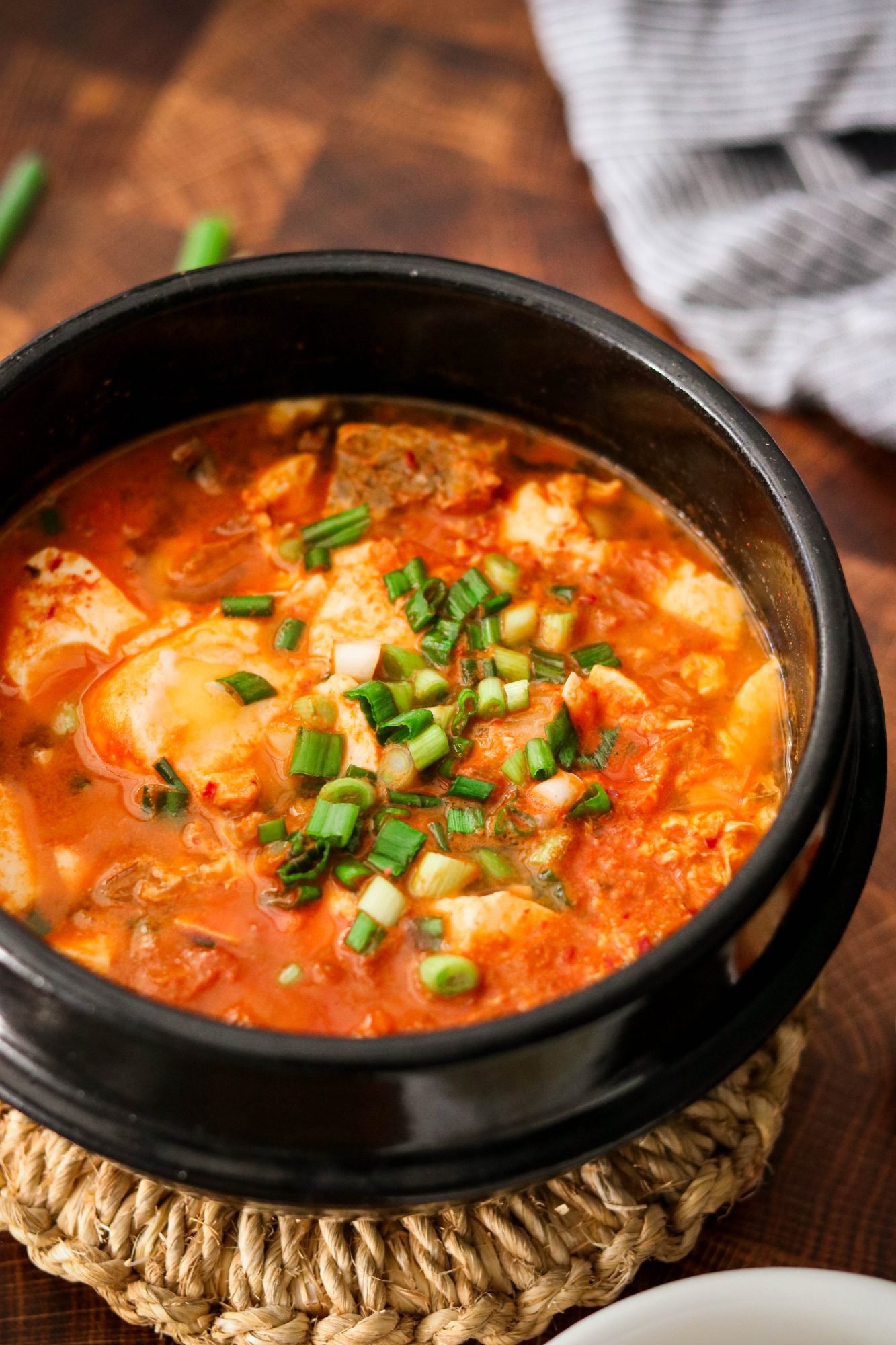
Step 6: Crack in the egg and stir. This gives the finished stew its soft, silky texture as the egg cooks into thin ribbons. If you’d rather have a whole egg with a runny yolk, crack it in and let it sit without stirring for a minute instead.
Expert Tips
- Serve it piping hot. This Korean tofu soup is best enjoyed hot with a bowl of rice and banchan. I love it with this Korean cucumber salad or carrot radish kimchi, too.
- Add the tofu in large chunks. Silken tofu is very soft, so keeping the pieces large helps give the finished stew that soft, fluffy texture.
- Adjust the heat to your taste. I make this version moderately spicy, but soondubu can be as spicy or mild as you want it.

Recipe FAQs
This recipe doesn’t use gochujang. It gets its spice and red color from coarse gochugaru, or Korean red pepper flakes, along with the kimchi and kimchi juice. If you’re looking for a recipe that does use gochujang, try my spicy Korean gochujang noodles.
This version is moderately spicy, but you can make it milder or spicier depending on your preference. Adjust the amount of gochugaru to get the spice level you like.
More Korean Recipes to Try


If you make this recipe, please leave me a star rating and comment below! I love to hear your thoughts and feedback. Follow me on social media Instagram, Facebook, and Pinterest for even more delicious recipes!

Korean Soondubu Jjigae with Kimchi (Beef, Pork, or Vegan)
Video
Ingredients
- 1 tbsp sesame oil
- 1/4 cup onion, chopped
- 3 garlic cloves , minced
- 4 oz skirt steak or pork belly (can use any tender steak or cut of pork), or enoki mushrooms, for vegan
- 1 cup water
- 1/4 cup kimchi juice
- 1 tbsp gochugaru, plus more to taste
- 1/2 cup fermented kimchi, sliced thinly
- 12 oz silken tofu
- 1 tsp salted shrimp (saewoojeot), or fish sauce (or soy sauce, for vegan)
- 1 egg, omit for vegan
- Chopped green onions, for garnish
Instructions
- Heat sesame oil in a pot over medium high heat, then add onion and garlic. Stir cooking for 2-3 minutes until lightly browned.1 tbsp sesame oil, 1/4 cup onion, 3 garlic cloves
- Add meat and cook stirring for 3 minutes until browned on the outside.4 oz skirt steak or pork belly (can use any tender steak or cut of pork)
- Stir in water, kimchi juice, gochugaru, and kimchi. Once it comes to a boil, lower heat to medium, cover, and simmer for 5 minutes.1 cup water, 1/4 cup kimchi juice, 1 tbsp gochugaru, 1/2 cup fermented kimchi
- Stir in large chunks of silken tofu and salted shrimp, then simmer for 3 minutes.12 oz silken tofu, 1 tsp salted shrimp (saewoojeot)
- Crack an egg in and stir.1 egg
- Turn off heat, sprinkle with green onions, then serve.Chopped green onions
Notes
Nutrition
Nutrition information is automatically calculated, so should only be used as an approximation.





Delicious! I’ve made this twice. We love korean food but live in a small town. When we can’t drive to it, I can make it.
This was absolutely delicious!! Thank you
Thanks so much for leaving a review, Amanda!
Can I use fish sauce instead of salted shrimp?
Yes!