

This post may contain affiliate links. Please see our disclosure policy.
Add as Google preferred source

What is Japanese Curry?
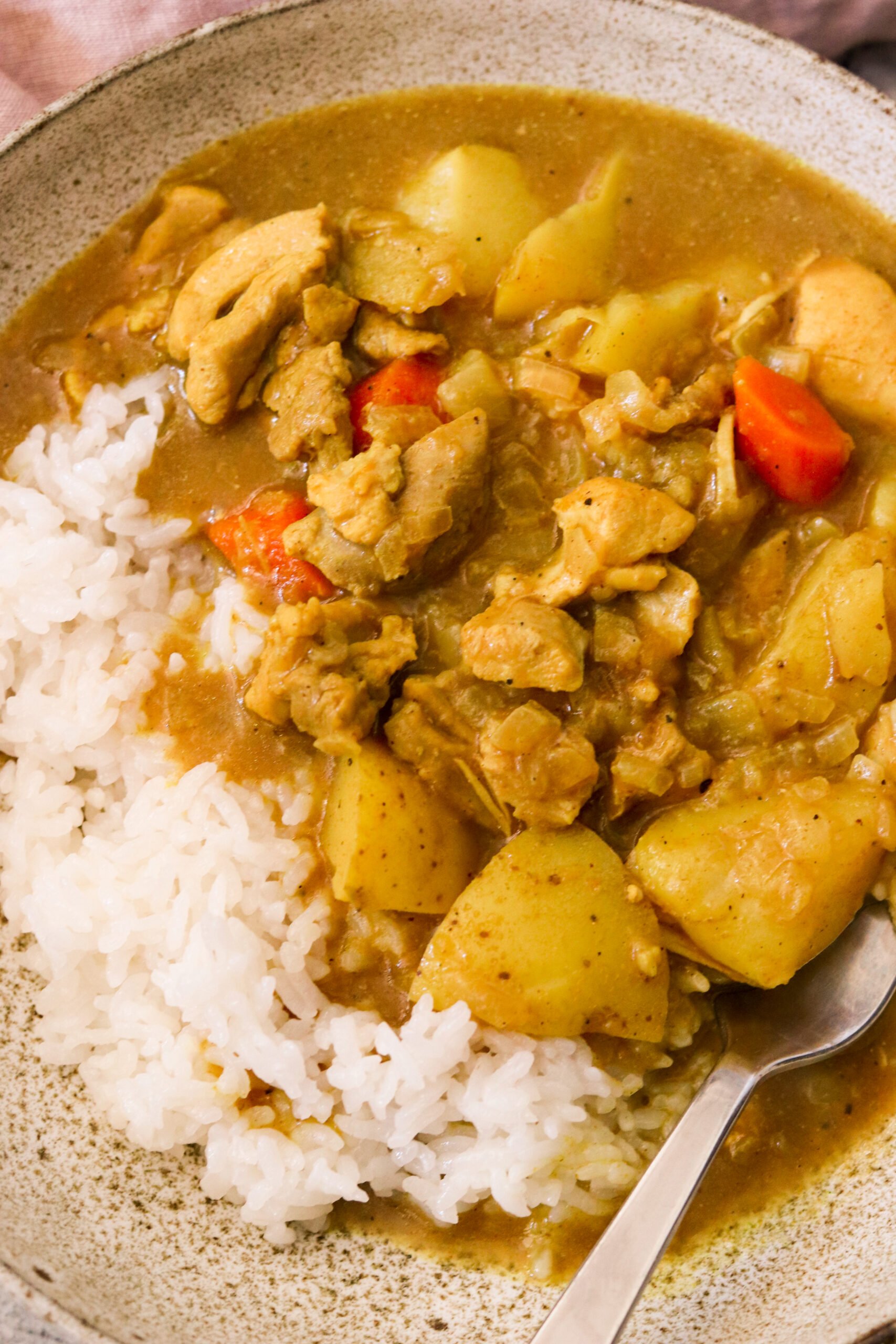
Japanese curry is an easy, classic Japanese dish that features a thick curry sauce that is mildly spicy, and slightly sweet. While it varies from region to region, today we’re making a classic version using chicken. It’s popular in Japanese households and made its way into my own growing up!
Unlike the spicier and more complex Indian or Thai curries, Japanese curry has a unique flavor that is savory, subtly sweet, and mild heat (though I do add more Japanese curry powder to make mine medium).
It’s quite an easy recipe to make at home, and the roux is combined with the sauce that includes this amazing curry powder from S&B Foods (one of the most popular brands!).
Why You’ll Love This Japanese Curry Recipe
This Japanese Curry Recipe is the ultimate comfort food. Also called “Japanese curry rice” or “Kare Raisu”, this dish is one that I grew up on and enjoyed often with my family. It has a stew-like consistency with delicious chunks of meat and vegetables. It tends to have a bit of sweetness along with spicy savory flavors – and it tastes even better the next day!
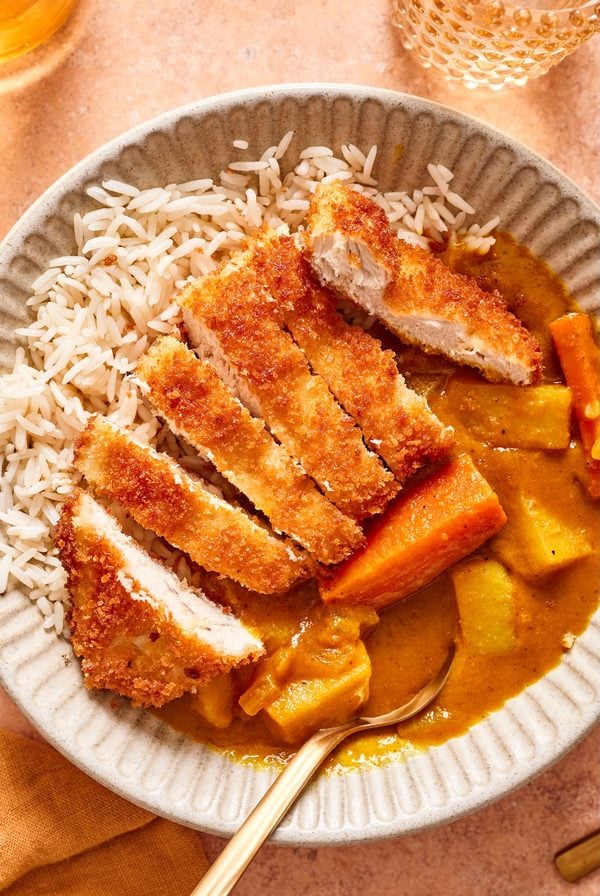
While you can enjoy it with various meats like katsu, this one is a classic Japanese chicken curry with spices and grated apple to sweeten the sauce. Typically, many households purchase pre-made curry sauce, but it’s actually very easy and delicious to make your own.
If you love delicious curry recipes, check out these as well: Easy Mango Chicken Curry, Curry Chicken Skewers, and Instant Pot Thai Coconut Curry.
Watch a Short Video of This Recipe
Ingredient Notes
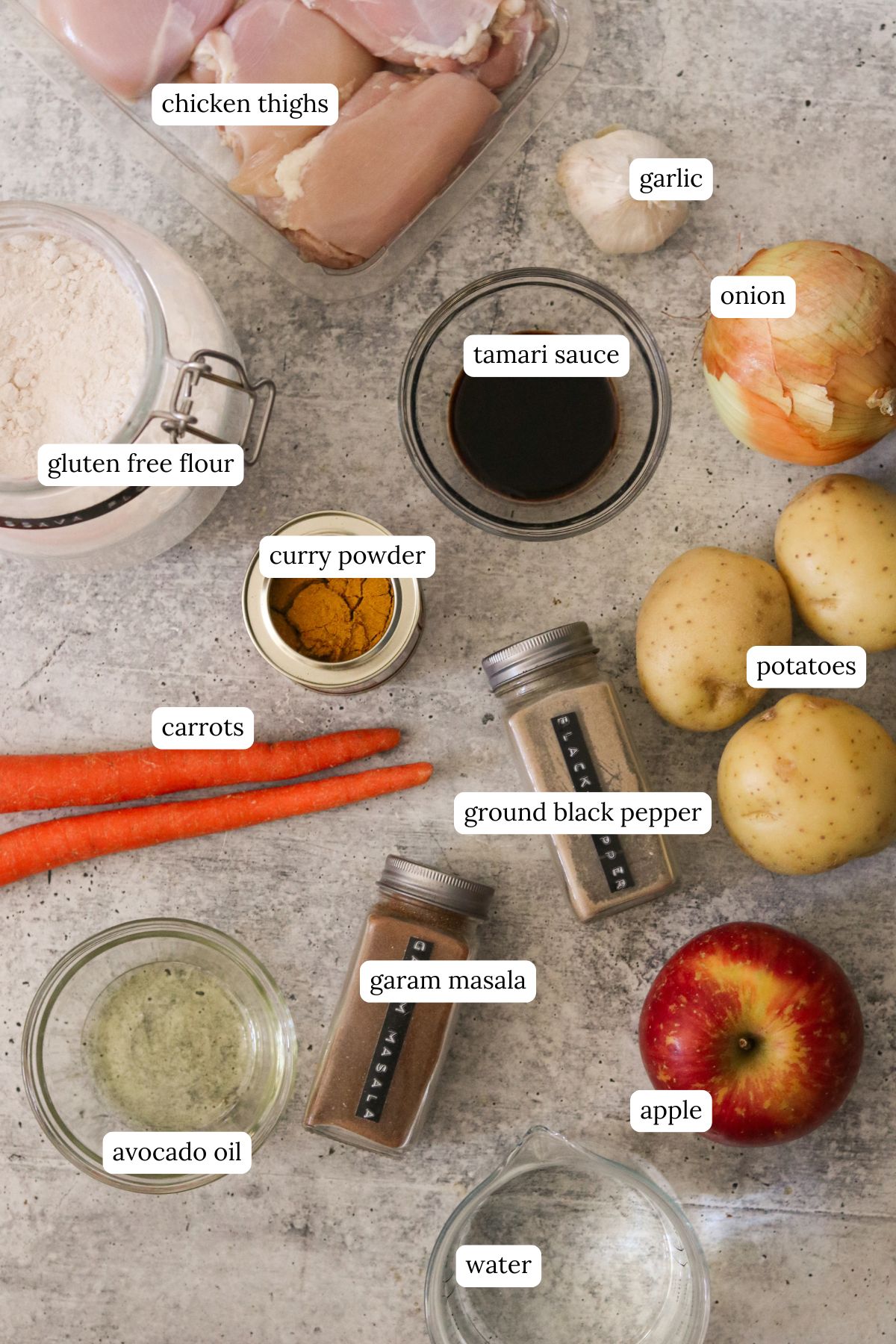
- avocado oil: Or any neutral vegetable oil.
- boneless skinless chicken thighs: You could also use chicken breast cut into bite-sized pieces if preferred.
- large onion
- potatoes
- carrots
- garlic cloves
- water
- cooked short-grain rice: For serving.
Curry Sauce
- water: You could use chicken stock or broth instead of water, but water works just fine.
- gluten-free all-purpose flour: Or regular all-purpose flour.
- oriental curry powder: Or regular curry powder. I like S&B Foods curry powder – it originated in the 1950s and is a staple in my house! You can source this from your local Asian grocery store or online.
- tamari sauce: Or soy sauce, if not gluten-free.
- garam masala
- apple
- ground black pepper
Step-by-Step Instructions

Step 1
Combine all ingredients for the curry sauce in a bowl. To cut down on time, you can cut the apple into chunks and blend all the ingredients together if you want.
Step 2
Heat avocado oil in a large pot or a Dutch oven over medium-high heat.
Step 3
Add chicken and onion, and cook stirring for 5-6 minutes until the chicken is golden brown on the outside.
Step 4
Add potatoes, chopped carrots, and garlic, and stir together for 1 minute.
Step 5
Pour in 2 cups of water and bring to a boil. Reduce to low heat (a gentle simmer), then cover for 10 minutes.
Step 6
Uncover, and stir in the prepared curry sauce. Simmer uncovered for 15-20 minutes until slightly reduced and thickened to your liking. Stir occasionally.
Step 7
Taste to add more soy sauce, or you can add some honey or sugar if you want it sweeter.
Step 8
Serve warm over rice.

Expert Tips
- Use oriental curry powder for a more authentic flavor, but you can use regular curry powder in a pinch. This dish is medium spicy – you can use 2 tbsp or less of the curry powder for a milder flavor. I like S&B Foods “curry roux”– it originated in the 1950s and is a staple in my house! You can source this from most Asian markets or online.
- For a gluten-free version, make sure to use gluten-free flour and Tamari.
- Season the sauce to your liking–Taste to add more soy sauce, or you can add some honey or sugar if you want it sweeter.
Serving & Storage Tips
Serve with warm white rice. Leftovers can be kept in the fridge in an airtight container for up to 5 days. Reheat on the stovetop or in the microwave.
Recipe FAQs
Japanese curry sauce is made by dissolving a pre-made curry roux in chicken broth or water for a rich texture. Onions, garlic, soy sauce, and grated apple contribute depth, sweetness, and umami. Carrots, potatoes, and chicken are added for heartiness, and the dish is served over white rice. Sometimes Worcestershire sauce is used, but because it’s not gluten-free, I did not use it.
Japanese curry is characterized by its mild, slightly sweet flavor and thick, gravy-like texture, setting it apart from traditional Indian curry or Southeast Asian curries, which are usually spicier, less sweet, and thinner in consistency.
More Asian-Inspired Recipes
If you make this recipe, please leave me a star rating and comment below! I love to hear your thoughts and feedback. Follow me on social media Instagram, Facebook, and Pinterest for even more delicious recipes!

Easy Japanese Chicken Curry Recipe
Video
Ingredients
- 1 tbsp avocado oil, or any neutral cooking oil
- 1½ lb boneless skinless chicken thighs, cut into bite-sized pieces
- 1 large onion, diced
- 1 lb potatoes, peeled and cubed
- 2 carrots, cut into 1/2 inch pieces
- 4 garlic cloves, minced
- 2 cups water
Curry Sauce
- 1 cup water
- 3 tbsp all-purpose flour, gluten-free or regular
- 3 tbsp oriental curry powder, or regular curry powder (This will be medium spicy, use less for a milder curry)
- 3 tbsp soy sauce or tamari, tamari is gluten-free
- 1 tsp garam masala
- 1 apple, cored and grated
- 1/2 tsp ground black pepper
Instructions
- Combine all ingredients for the curry sauce in a bowl. To cut down on time, you can cut the apple into chunks and blend all the ingredients together if you want.1 cup water, 3 tbsp all-purpose flour, 3 tbsp oriental curry powder, 3 tbsp soy sauce or tamari, 1 tsp garam masala, 1 apple, 1/2 tsp ground black pepper
- Heat avocado oil in a large pot or a Dutch oven over medium high heat.1 tbsp avocado oil
- Add chicken and onion, and cook stirring for 5-6 minutes until the chicken is browned on the outside.1½ lb boneless skinless chicken thighs, 1 large onion
- Add potatoes, carrots, and garlic, and stir together for 1 minute.1 lb potatoes, 2 carrots, 4 garlic cloves
- Pour in 2 cups of water and bring to a boil. Reduce to simmer, then cover for 10 minutes.2 cups water
- Uncover, and stir in the prepared curry sauce. Simmer uncovered for 15-20 minutes until slightly reduced and thickened to your liking. Stir occasionally.
- Taste to add more soy sauce, or you can add some honey or sugar if you want it sweeter.
- Serve warm over rice.
Notes
- Use oriental curry powder for a more authentic flavor, but you can use regular curry powder in a pinch. This dish is medium spicy – you can use 2 tbsp or less of the curry powder for a milder flavor.
- For a gluten-free version, make sure to use gluten-free flour and Tamari.
- Season the sauce to your liking–Taste to add more soy sauce, or you can add some honey or sugar if you want it sweeter.
- Serve with warm white rice. Leftovers can be kept in the fridge in an airtight container for up to 5 days. Reheat on the stovetop or in the microwave.
Nutrition
Nutrition information is automatically calculated, so should only be used as an approximation.
This post may contain affiliate links



Can I use the S&B cubes instead of the powder?
That should work!
This looks exactly like the Curry Chicken & Vegetables I enjoyed when I lived in Japan. Once a week I would treat myself to this dish that I could smell before I saw the vendor in the train station. I am looking forward to making this and sharing it with my family. Thank you for sharing the recipe. 😊
Aw I love that! I hope you enjoy the recipe!
Sooo good
what”s curry powder, Thai or India?
It’s linked in the recipe, but it’s Japanese.
So delicious, full of flavor! I followed recipe exactly, and did end up taking your suggestion of adding honey at the end (hot honey to be exact) and added salt instead of more soy sauce. Yum!
P.S. last night I made the tacos… they were sensational!
That makes me so happy. Thanks so much!
This recipe is delicious ! The curry sauce tastes incredibly authentic, just like the curry we’ve had in Japan. I love that I can recreate the same flavours at home now. It was enjoyed by everyone including my 2 fussy toddler’s (although I only added 1Tbsp of curry powder as to not make it too spicy for them)
Thank you so much for the review! I’m so happy you and your family enjoyed it. It’s exactly why I recreated this recipe – I was missing that Japanese curry flavor.
Enjoyed on a chilly Canadian winter night! My boyfriend (who’s normally a meat/potatoes and salt/pepper guy) mentioned how much flavor this has and how much he loved the stew like consistency. I only used 2 tbsp of curry powder just in case this first time, but the full 3 tbsp probably would be great! Will likely make again. Thanks!
Hi Jean,
Our family has been enjoying your recipes so much this past year! I’m currently doing Whole 30, and Japanese curry is one of our families go-to meals in the winter. This recipe came up as Whole 30 on your site filters and I’m so excited to try it, but I’m not seeing any substitution ideas for the flour to keep it Whole 30. I imagine arrowroot or tapioca starch would work, but was wondering if maybe I’m just missing something.
Thanks so much! Keep the amazing recipes coming!
Hi Bernadette! I’m so sorry, I think this recipe was categorized incorrectly. With that said, you can definitely thicken it with arrowroot starch or tapioca starch to keep it Whole30. Hope that helps!!
Delicious and so easy to make! I added a bit of ginger, rice wine vinegar, and curry-ketchup (since I’ve seen other similar recipes use these ingredients) to the sauce which tasted amazing, brought out all the flavours of the curry/garam masala spices. This will be a new staple for me during fall/winter 🙂 Thanks for the recipe!
So glad you enjoyed it!! Appreciate you sharing how you tweaked the recipe. Thank you so much for leaving a review!
This recipe waa so delicious! I’ve never had Japanese curry but it’s a new favorite in our house. I loved the stew like consistency. Perfect for fall!