

This post may contain affiliate links. Please see our disclosure policy.

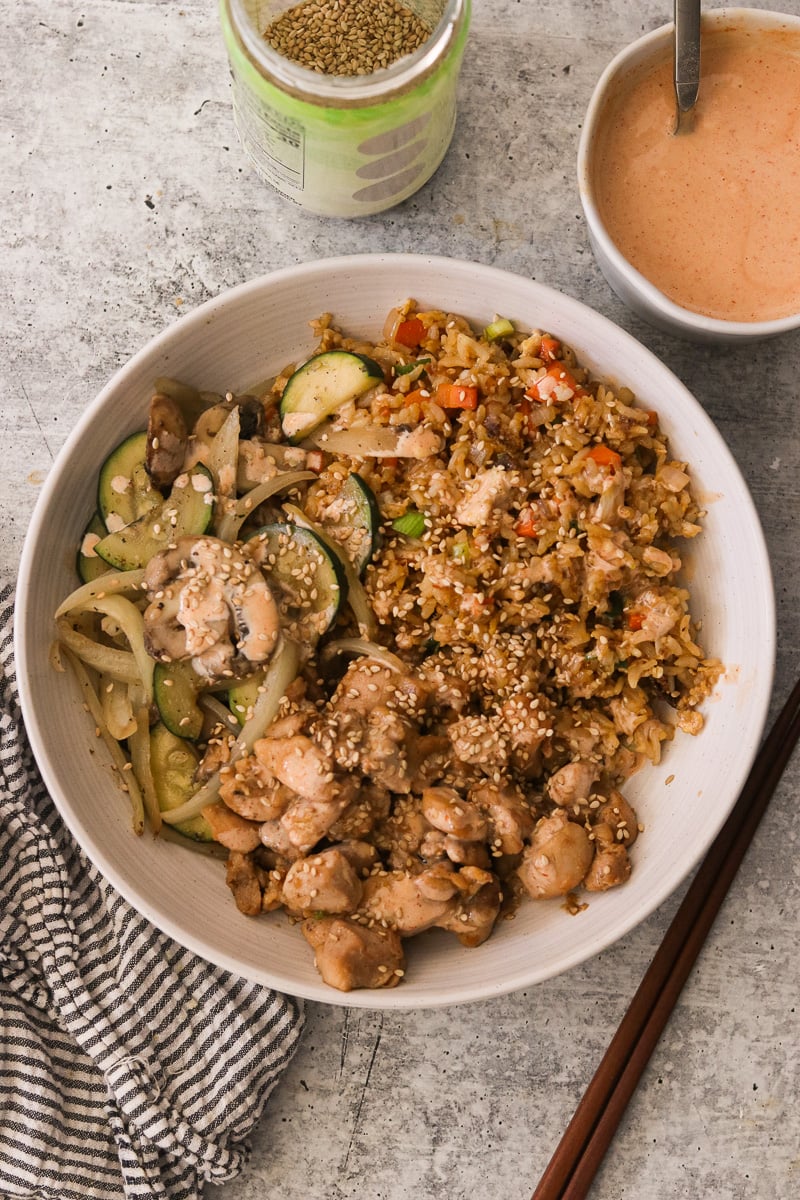
Why You’ll Love These Hibachi Chicken Bowls
I’ve always loved going to Japanese hibachi restaurants like Benihana, so I figured, why not make copycat hibachi bowls right at home? Cozy Japanese-inspired dinners like my Japanese curry recipe with chicken and air fryer tonkatsu are my favorite, so adding these bowls to that rotation was an easy decision.
A good hibachi chicken bowl is really about contrast. You want juicy chicken, vegetables that still have a little bite, and fried rice that is savory and rich without feeling heavy. This recipe builds those flavors with one simple hibachi sauce used for both the chicken and the fried rice, then finishes everything with a drizzle of homemade yum yum sauce. Even better, it all comes together in the same skillet, cooking the vegetables, rice, and chicken one after the other, so you do not need multiple pans.
Ingredients You’ll Need
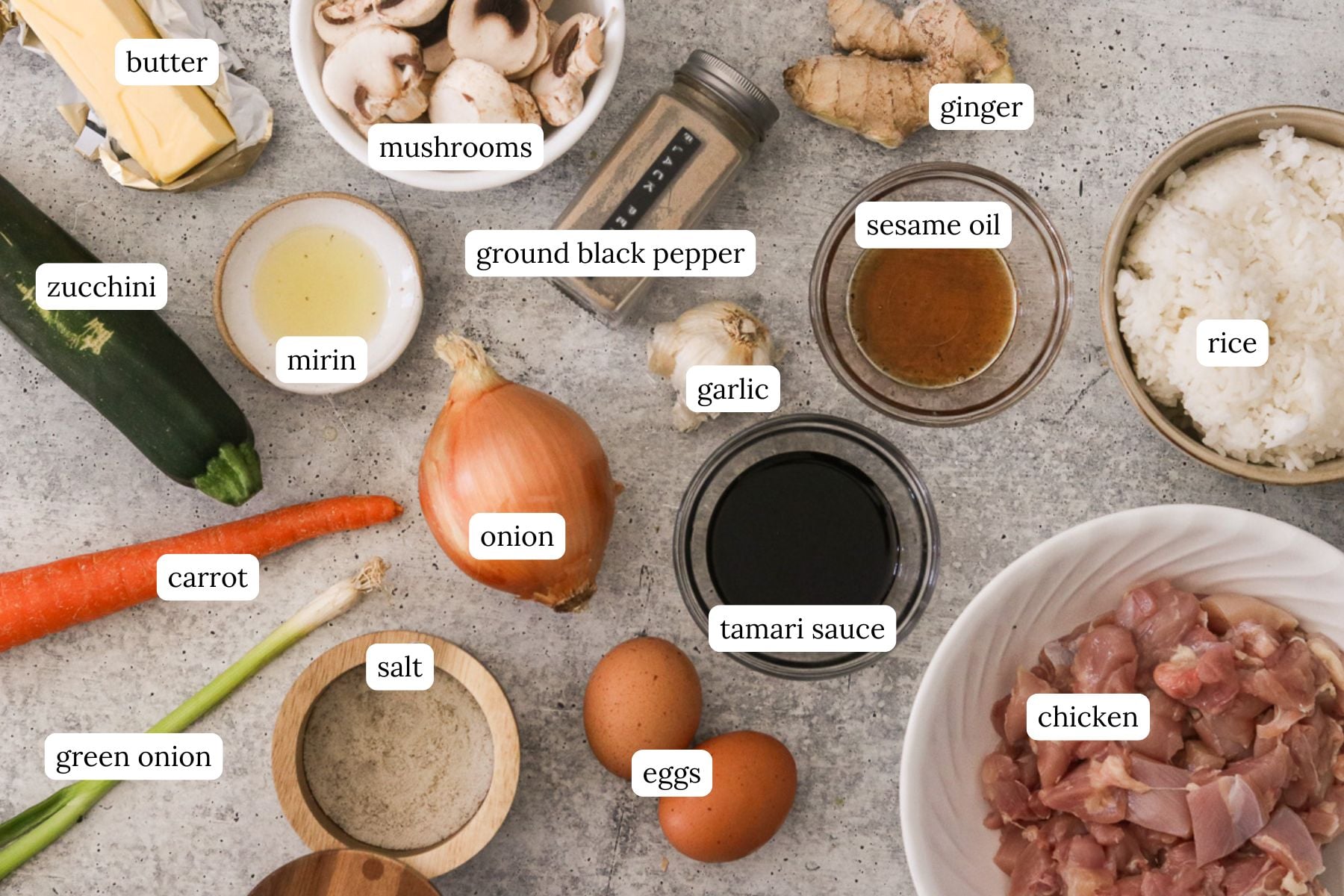
- Chicken thighs or chicken breasts: Thighs stay juicier at high heat and are more forgiving if you cook them an extra minute. Breasts work, but cut them small and watch the time.
Hibachi Sauce
- Tamari or soy sauce: The savory base of the sauce. Tamari keeps this gluten-free and has a slightly deeper, less salty flavor than regular soy sauce.
- Sesame oil: This gives the chicken and rice that distinct hibachi-style flavor. A little goes a long way here.
- Garlic: Don’t sub garlic powder here. Fresh garlic is what gives the sauce its punch.
- Fresh ginger: Ginger adds that warm, sharp flavor that makes the sauce taste more like restaurant-style hibachi.
- Ground black pepper: Simple, but it rounds everything out and adds a little warmth.
Hibachi Vegetables
- Avocado oil or another neutral oil: This is best for cooking the vegetables over higher heat without overpowering them.
- Onion: You will use onion in both the vegetables and fried rice, which builds flavor across the whole bowl.
- Zucchini: One of the most classic hibachi vegetables. It cooks quickly and pairs well with the mushrooms and onion.
- Mushrooms: These bring extra savory flavor and soak up all the good bits in the pan.
Hibachi Fried Rice
- Butter: This gives the fried rice that rich, classic hibachi flavor.
- Carrots: They add sweetness, color, and a little texture to the rice.
- Onion: Diced.
- Cold leftover cooked white rice: This is the most important part of good fried rice. Rice that’s been cooked and refrigerated overnight loses moisture, so it fries instead of steams. Fresh rice gets gummy. If you don’t have leftovers, spread freshly cooked rice on a sheet pan and refrigerate it for at least a couple of hours.
- Eggs: Scrambled into the fried rice for that classic steakhouse-style finish.
For Serving
- Yum yum sauce: This creamy Japanese steakhouse sauce is what brings the whole bowl together. I highly recommend making a batch of homemade yum yum sauce to serve with it.
- Green onion: This brightens the fried rice and adds fresh flavor at the end.
- Sesame seeds: Optional, but they make the bowls feel finished.
Recipe Substitutions
There is plenty of room to make these bowls work with what you have.
- Use chicken breast instead of thighs if you want a leaner option.
- Swap the zucchini for yellow squash.
- Add broccoli or cabbage if you want more vegetables, but keep the pan hot so they sauté instead of steaming.
- Use tamari instead of soy sauce if you need the bowls to stay gluten free.
If you are in the mood for another crispy Japanese-inspired chicken dinner, the crispy air fryer karaage (Japanese fried chicken) is a great one to try next.
How to Make Hibachi Chicken Bowls at Home
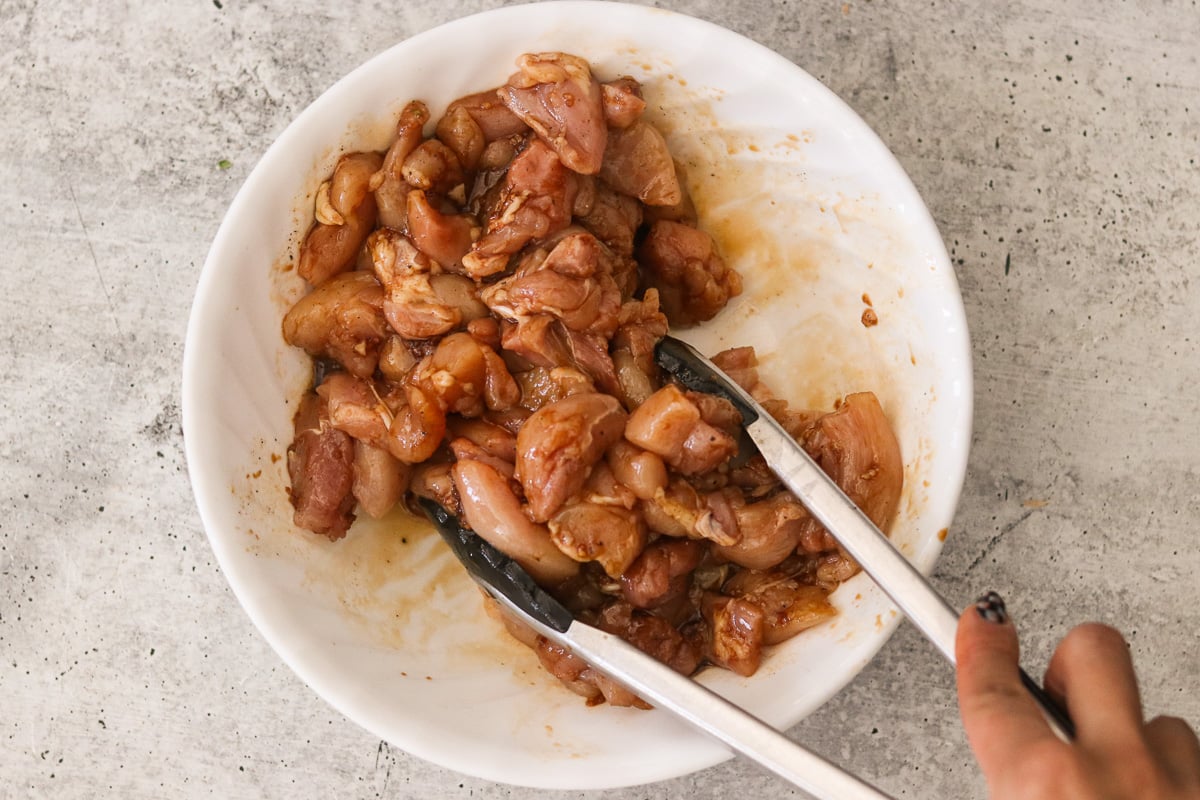
Step 1: Stir together the tamari, sesame oil, garlic, ginger, and black pepper to make the hibachi sauce. Toss half of the sauce with the cubed chicken and set the rest aside for the fried rice.
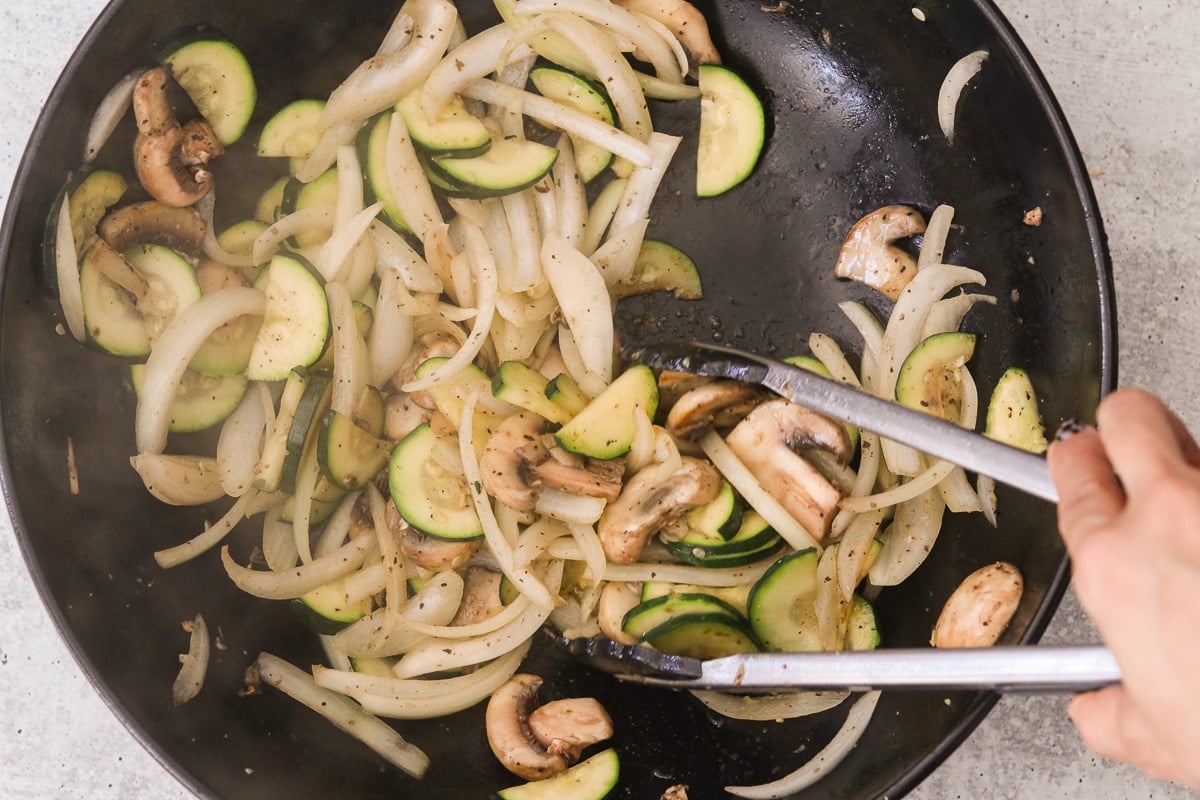
Step 2: Heat the avocado oil in a large skillet over medium-high heat. Add the sliced onion, zucchini, and mushrooms. Season with salt and pepper, then cook for 4 to 5 minutes, stirring occasionally, until the vegetables are tender-crisp and lightly browned in spots. Transfer them to a plate or bowl.
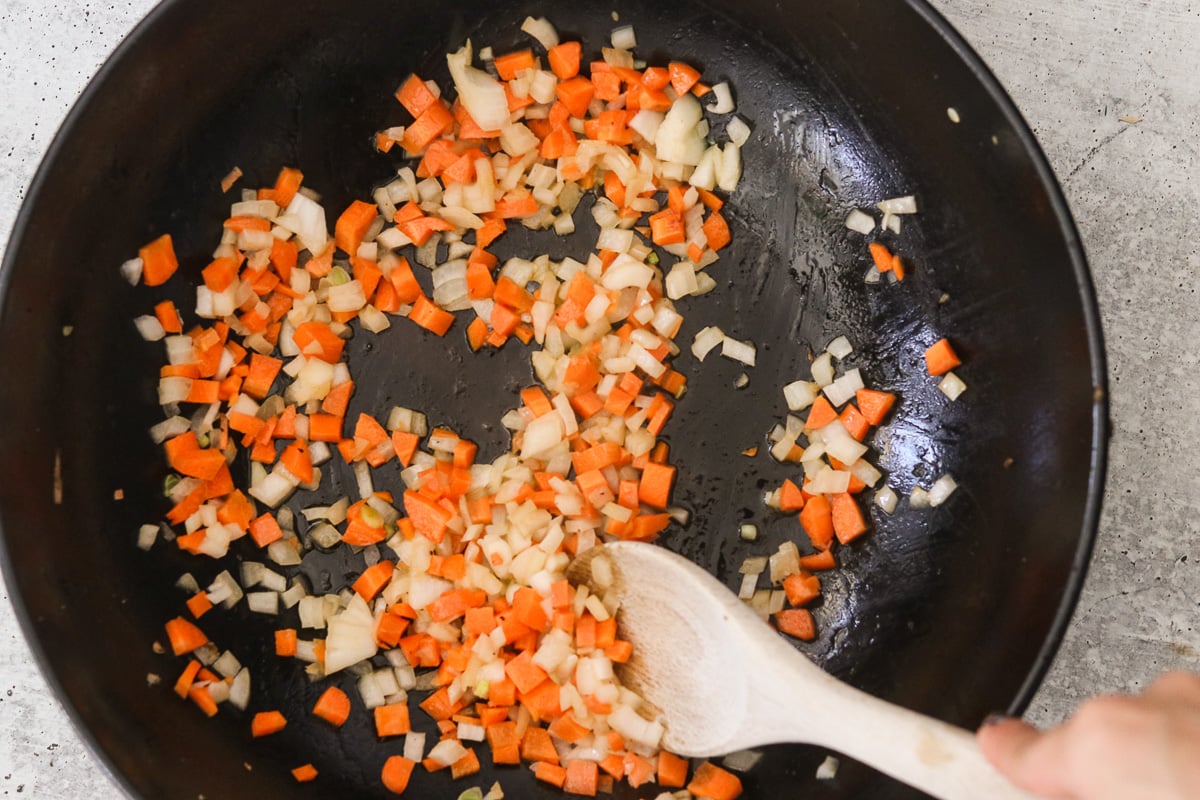
Step 3: In the same skillet, melt the butter. Add the diced carrots and diced onion, then cook for 4 to 5 minutes until the onions are translucent and the carrots have softened.
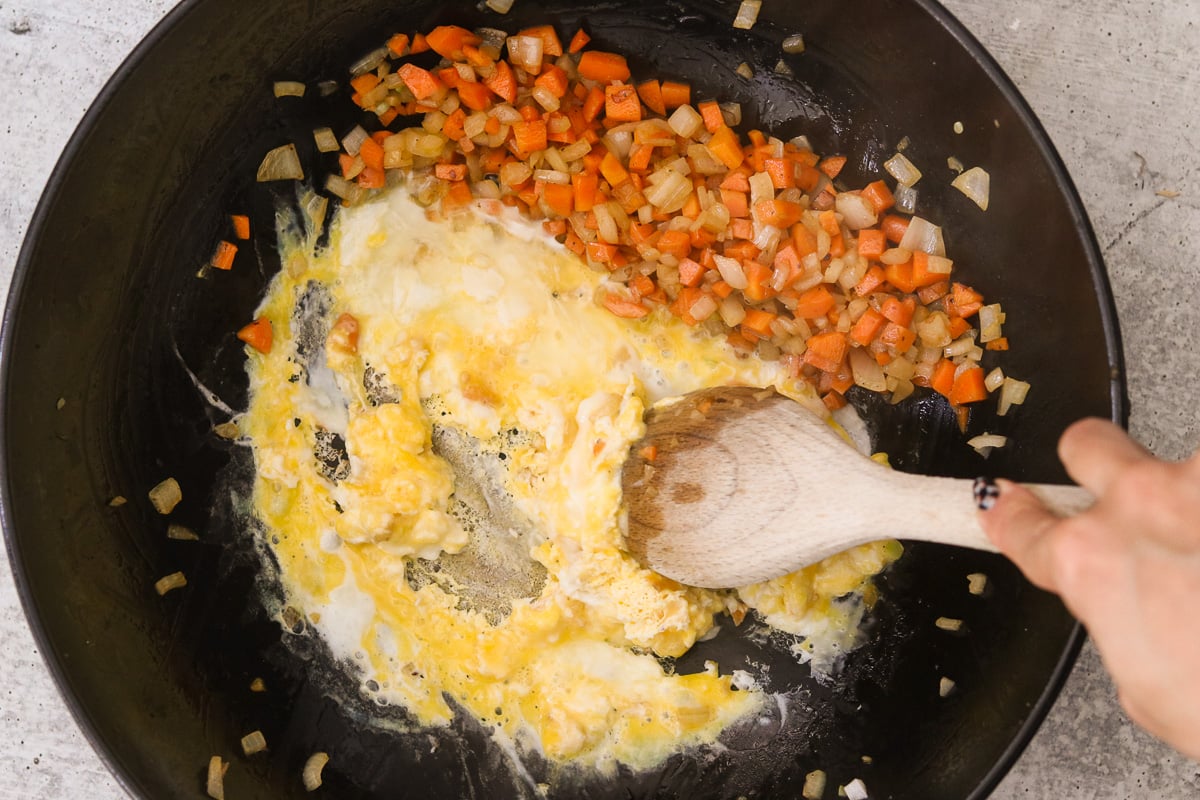
Step 4: Push the vegetables to one side of the skillet and crack in the eggs. Break the yolks and scramble until the eggs are just halfway cooked.
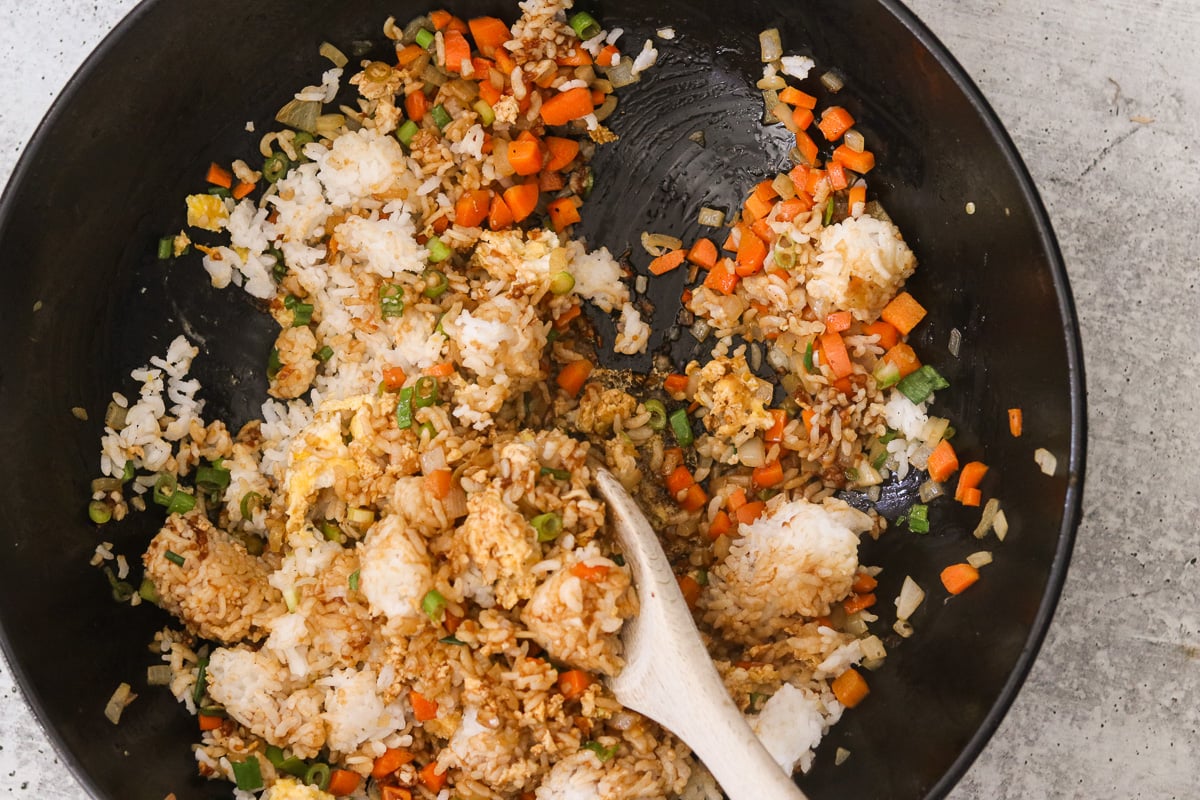
Step 5: Add the cold rice, green onions, and the reserved hibachi sauce. Break up the rice as you stir so it heats evenly and gets coated in the sauce. Cook for 2 to 3 minutes, until the rice is hot and the eggs are fully cooked. Transfer the fried rice out of the skillet.
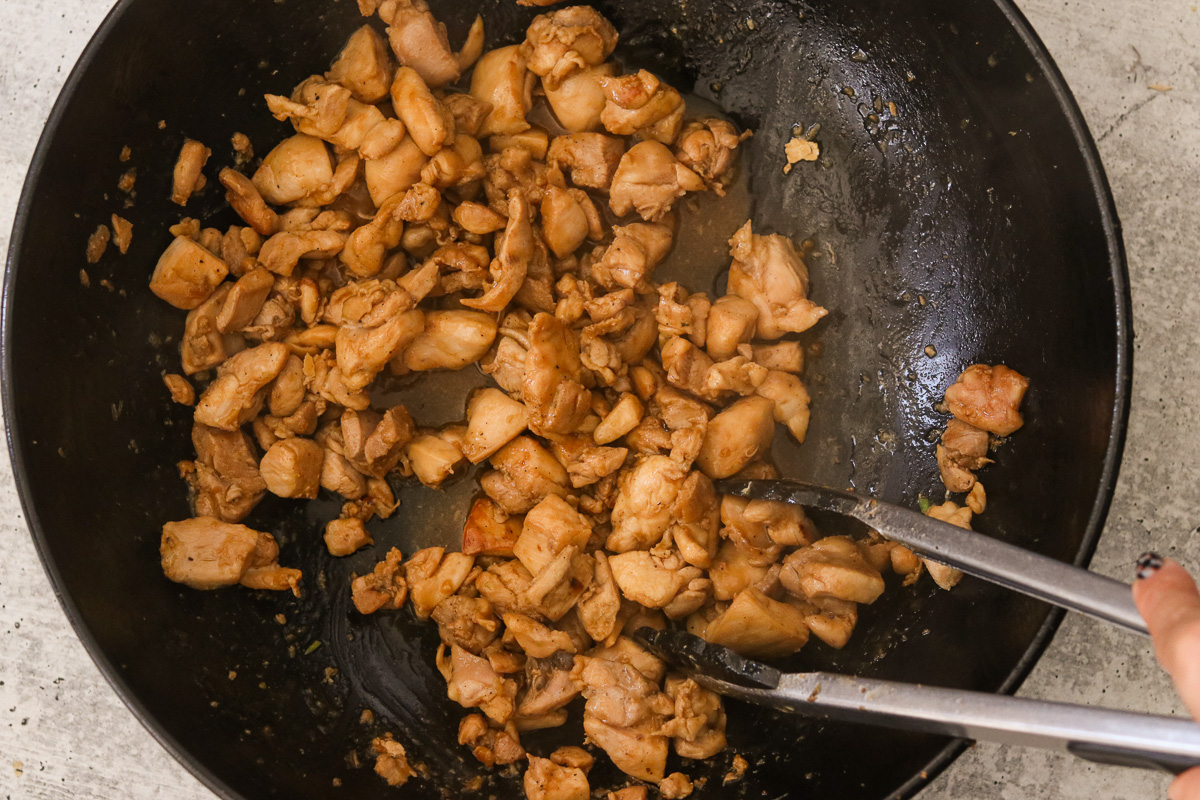
Step 6: Add the marinated chicken to the same skillet in an even layer. Let it sit for a minute or two before stirring so it can get some color. Continue cooking for 6–8 minutes, stirring occasionally, until the chicken is browned around the edges and the sauce starts to caramelize slightly.
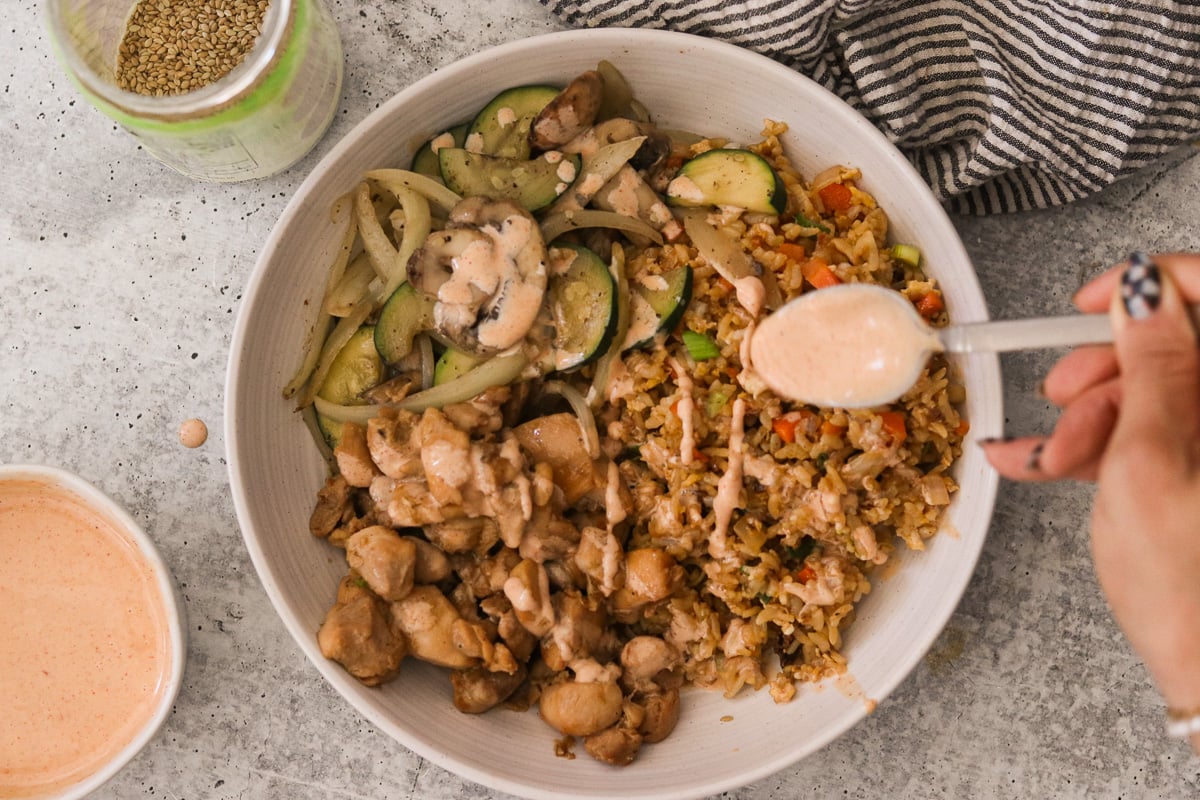
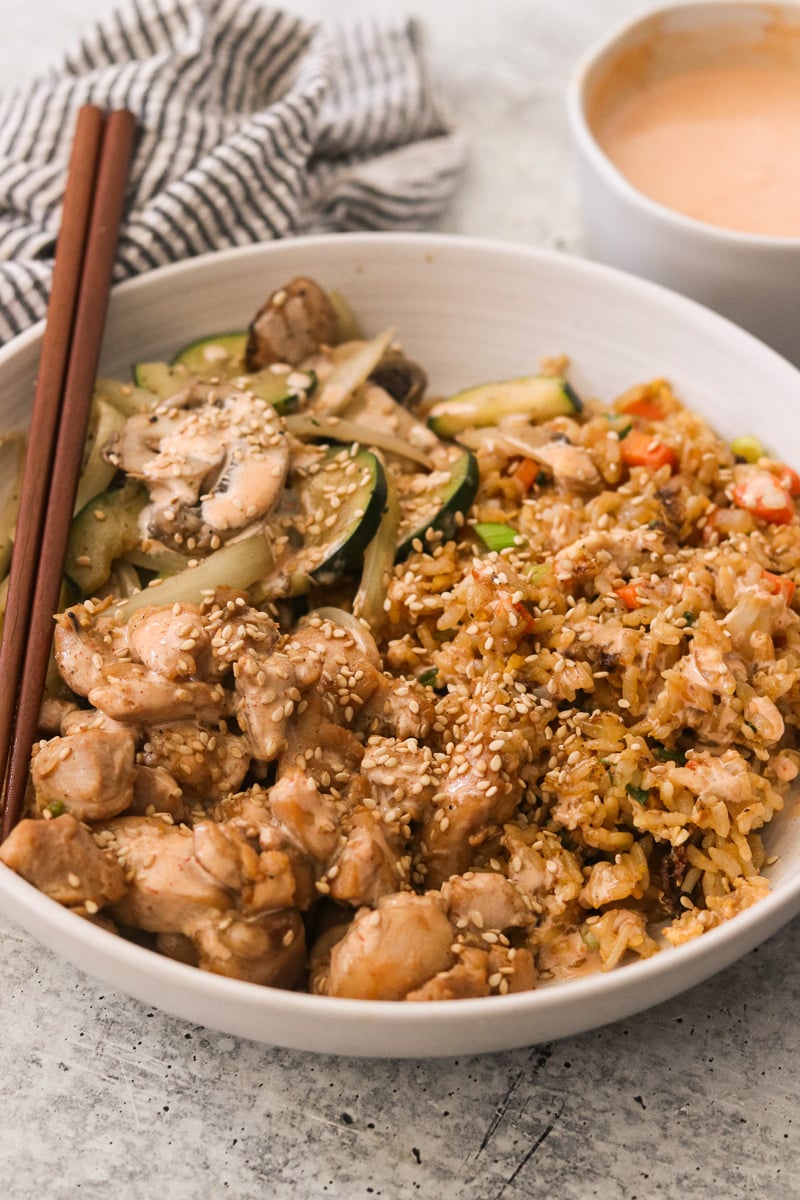
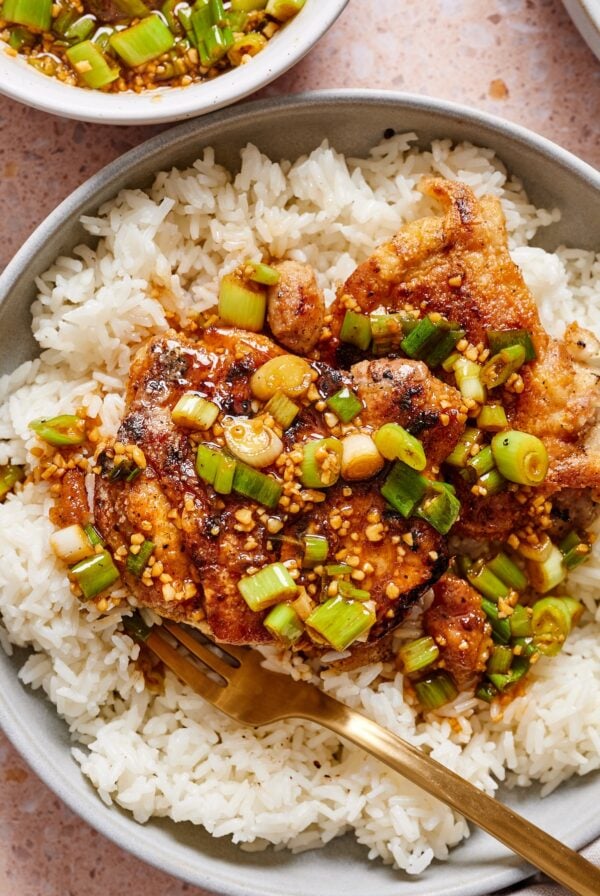
Step 7: Divide the fried rice, vegetables, and chicken into bowls. Finish with sesame seeds and a generous drizzle of yum yum sauce.
Expert Tips
- Cold rice is non-negotiable for good fried rice. Rice cooked and refrigerated overnight loses the extra steam and moisture that would otherwise make it clump. If you only have fresh rice, spread it in a thin layer on a sheet pan and refrigerate for at least 2 hours before using. It’s a small bit of planning that makes a real difference.
- Keep components warm in the oven. Cooking each component separately means the first one off the pan will be sitting while you finish the rest. Hold finished components in an oven set to 200°F so everything stays warm and you’re not serving a bowl with cold fried rice under hot chicken.
- Chicken thighs over breasts for this one. Thighs are more forgiving at high heat and stay juicy even if they cook a minute or two longer than planned. If you use chicken breasts, cut them into smaller pieces and pull them off the heat as soon as they’re cooked through.
- Store components separately. If you’re making this for meal prep or storing leftovers, keep the chicken, fried rice, and vegetables in separate containers. The rice absorbs moisture from the vegetables if they’re stored together, and it reheats better on its own.
Recipe FAQs
Hibachi-style chicken is typically cooked over very high heat with soy sauce, garlic, ginger, and butter, which gives it the savory flavor you get at Japanese steakhouse restaurants.
Not at all. A large skillet works perfectly. Cast iron holds heat especially well for this recipe, but any large, heavy-bottomed pan will do.
Yes. Just use tamari instead of soy sauce and make sure your yum yum sauce ingredients are gluten free too.
Store each component separately in airtight containers in the refrigerator for 4 to 5 days. The chicken and fried rice both freeze well for up to 2 to 3 months. The vegetables don’t freeze well, so it’s best to make those fresh. Reheat in a skillet over medium heat or in the microwave in short bursts, adding a small splash of water or broth when reheating the rice.
More Asian-Inspired Recipes
If you liked these restaurant-style hibachi chicken bowls, here are a few more dinners and sides with similar flavors:
Main Dishes
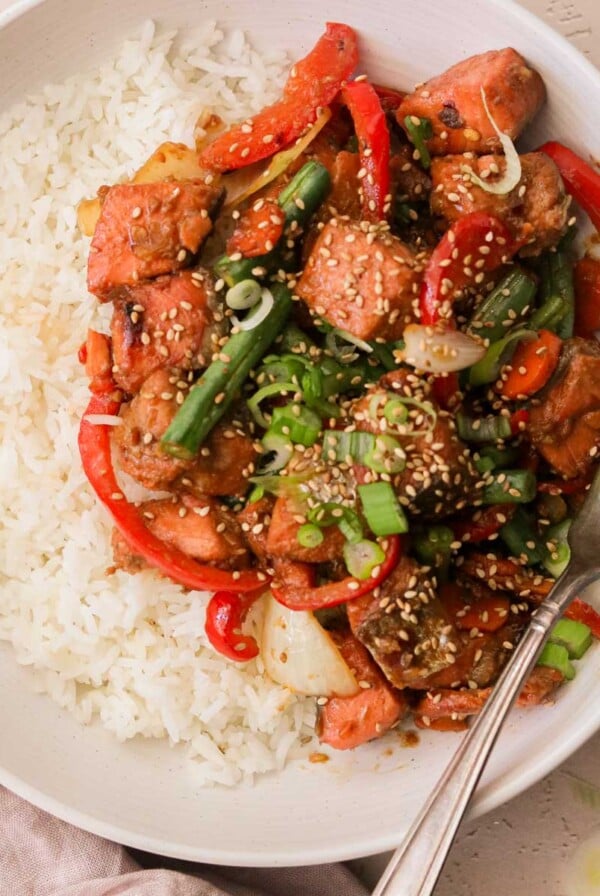
Quick & Easy Asian Salmon Stir Fry
Side Dishes
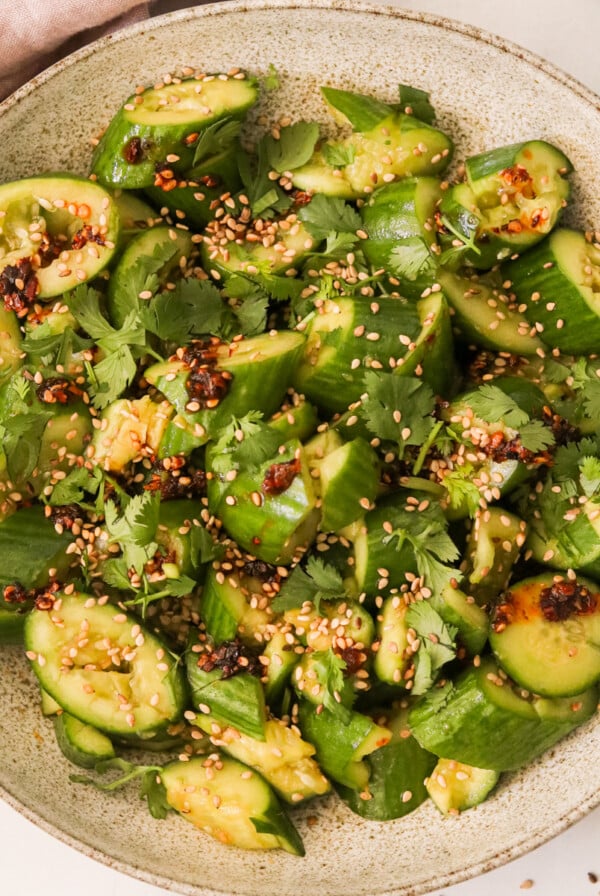
Smashed Cucumber Salad Recipe You’ll Make All Summer
If you make these hibachi chicken bowls, please leave me a star rating and comment below! I love to hear your thoughts and feedback. Follow me on social media Instagram, Facebook, and Pinterest for even more delicious recipes!
Hibachi Chicken Bowls (Japanese Steakhouse Copycat)
Video
Ingredients
- 1¼ lb skinless boneless chicken thighs or breasts, cubed
- Sesame seeds, for garnish
- Yum yum sauce
Hibachi Sauce
- 1/4 cup tamari sauce, or soy sauce
- 2 tbsp sesame oil
- 6 garlic cloves
- 1 inch fresh ginger, grated
- 1/2 tsp ground black pepper
Vegetables
- 1 tbsp avocado oil, or any neutral flavored oil
- 1 onion, sliced
- 1 zucchini, halved lengthwise and sliced into half moons
- 4 oz mushrooms, sliced
- Salt and pepper, to taste
Fried Rice
- 1 tbsp butter
- 1/2 cup diced carrots
- 1/2 onion, diced
- 2 eggs
- 2½ cups leftover cooked white rice, cold
- 1 green onion, sliced
Instructions
- Make the hibachi sauce by stirring together all the ingredients.1/4 cup tamari sauce, 2 tbsp sesame oil, 6 garlic cloves, 1 inch fresh ginger, 1/2 tsp ground black pepper
- Mix half of the sauce with chicken. Set aside the other half of the sauce.1¼ lb skinless boneless chicken thighs or breasts
- While chicken is marinating, heat avocado oil in a large skillet over medium high heat. Add the vegetables and season with salt and pepper. Cook for 4-5 minutes or until veggies are tender-crisp. Remove from heat and set aside.1 tbsp avocado oil, 1 onion, 1 zucchini, 4 oz mushrooms, Salt and pepper
- Heat butter in the same skillet, and add carrots and onion. Stir cooking until the carrots are softened and the onions are translucent, about 4-5 minutes1 tbsp butter, 1/2 cup diced carrots, 1/2 onion
- Push the vegetables to the side of the skillet, and crack two eggs. Break the yolk, then scramble until halfway cooked.2 eggs
- Add rice, green onions, and the remaining hibachi sauce to the skillet. Cook stirring for 2-3 minutes while breaking up the rice until heated and coated evenly. Remove and set aside.2½ cups leftover cooked white rice, 1 green onion
- Add the marinated chicken to the same skillet, and cook stirring until golden brown and cooked through.
- Assemble the chicken, fried rice, and veggies in a bowl. Garnish with sesame seeds, then drizzle with or dip in yum yum sauce. Enjoy!Sesame seeds, Yum yum sauce
Notes
- Cold rice is non-negotiable for good fried rice. Rice cooked and refrigerated overnight loses the extra steam and moisture that would otherwise make it clump. If you only have fresh rice, spread it in a thin layer on a sheet pan and refrigerate for at least 2 hours before using. It’s a small bit of planning that makes a real difference.
- Keep components warm in the oven. Cooking each component separately means the first one off the pan will be sitting while you finish the rest. Hold finished components in an oven set to 200°F so everything stays warm and you’re not serving a bowl with cold fried rice under hot chicken.
- Chicken thighs over breasts for this one. Thighs are more forgiving at high heat and stay juicy even if they cook a minute or two longer than planned. If you use chicken breasts, cut them into smaller pieces and pull them off the heat as soon as they’re cooked through.
- Store components separately. If you’re making this for meal prep or storing leftovers, keep the chicken, fried rice, and vegetables in separate containers. The rice absorbs moisture from the vegetables if they’re stored together, and it reheats better on its own.
Nutrition
Nutrition information is automatically calculated, so should only be used as an approximation.

It has been a long time since I went to a Japanese steakhouse, so I was excited to try this recipe. I eliminated the mushrooms, since they don’t ‘agree’ with me and substituted ghee for butter, and this turned out great! I meal prep everything and so I kept the rice separate from the meat and veggies- this worked well- when it came to reheating the food.
Yay! So happy that you enjoyed it!!