This post may contain affiliate links. Please see our disclosure policy.

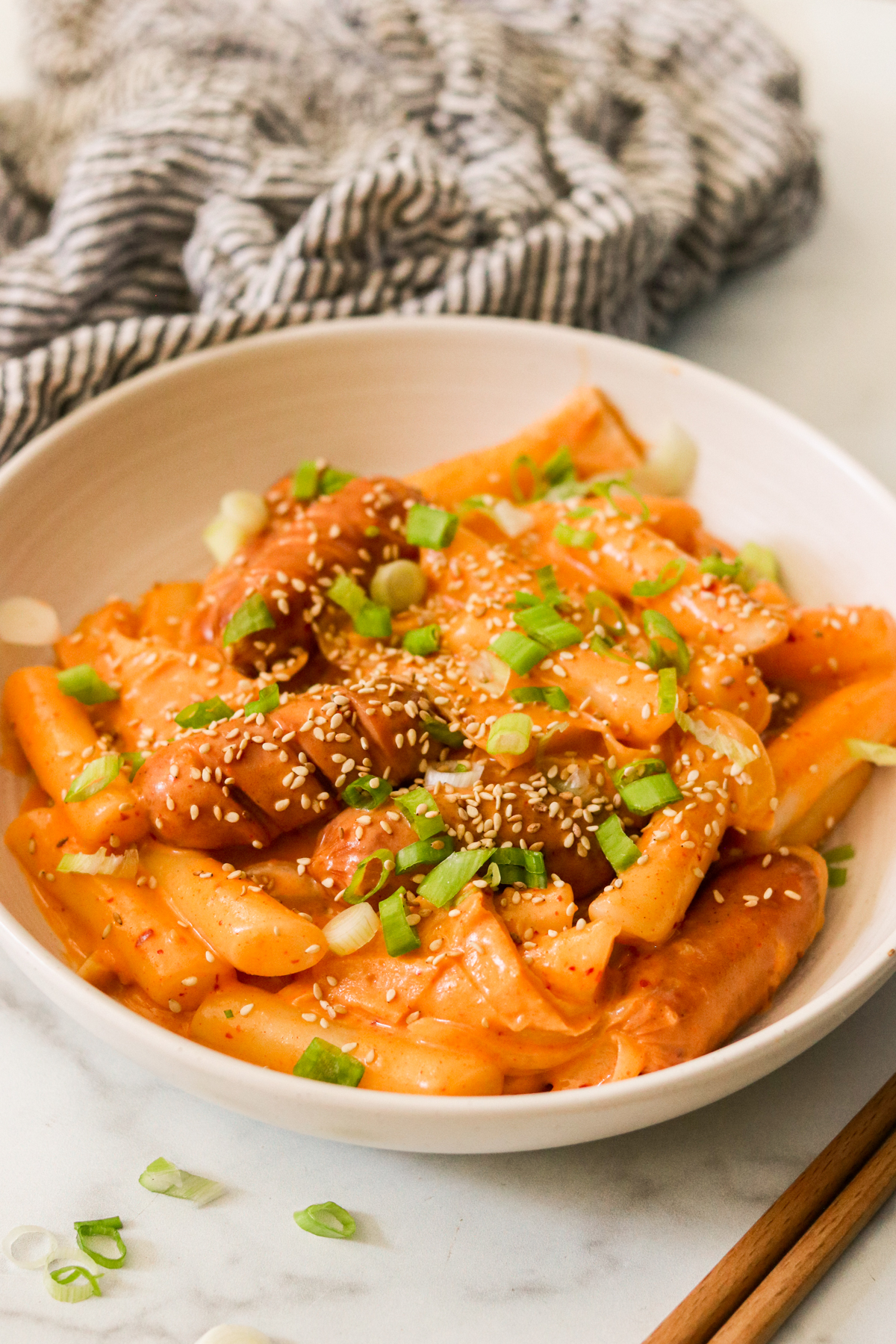
Why You’ll Love This Creamy Rose Tteokbokki Recipe
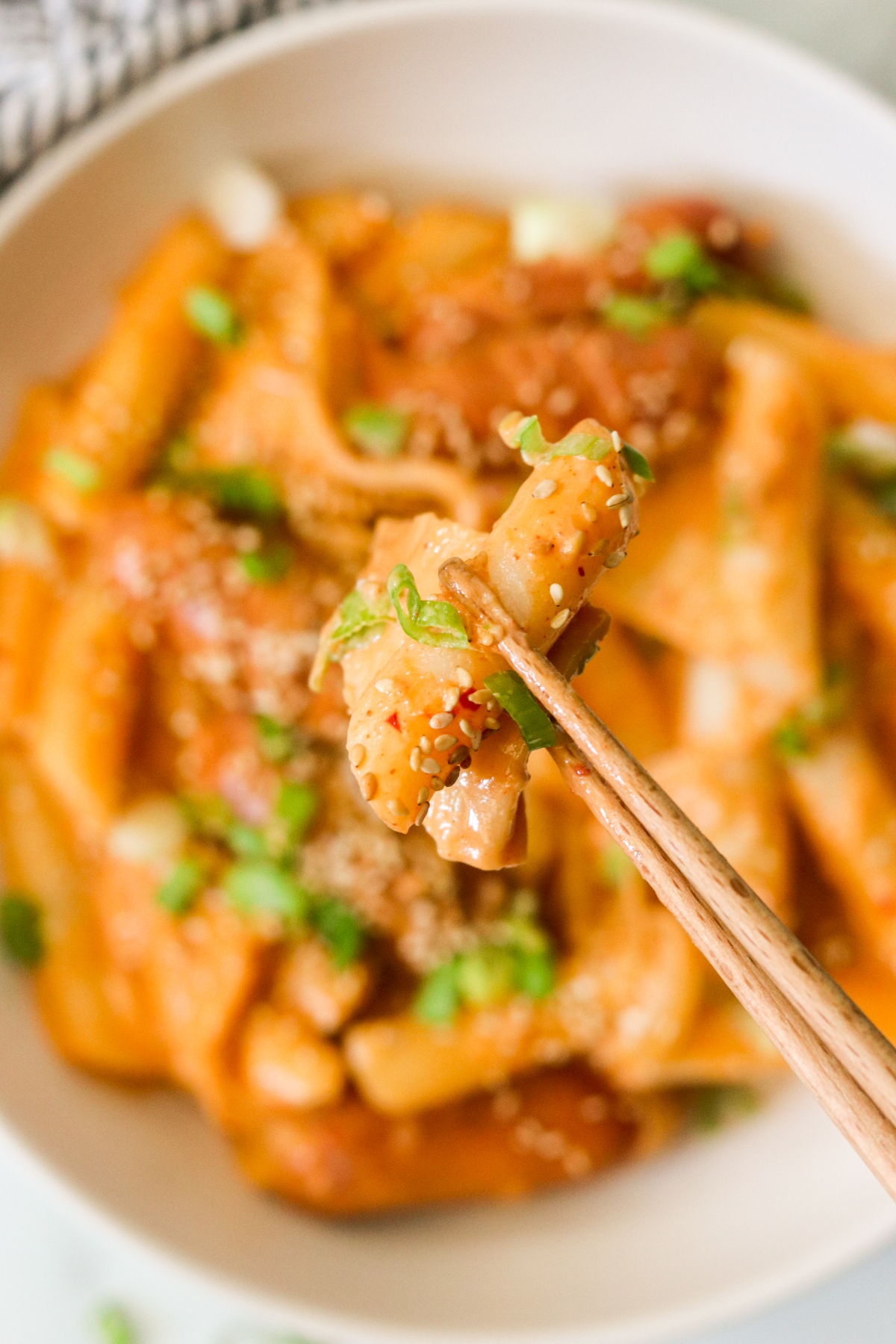
This rose tteokbokki recipe is quick, satisfying, and approachable, even if you’ve never cooked Korean food at home before. Everything comes together in one pan, making it perfect for busy weeknights when you still want something special and comforting, similar to my Korean rice cake soup.
What sets this version apart is how reliably it works. The sauce stays creamy without breaking, the rice cakes stay chewy instead of turning mushy, and the spice level is easy to adjust depending on who you’re cooking for. I’ve eaten many versions of tteokbokki over the years, and this creamy variation has become a favorite in my own kitchen and adapts easily for gluten-free or dairy-free needs.
What Is Rose Tteokbokki?
Tteokbokki (떡볶이) is one of the most iconic Korean street foods (among the ranks of hotteok), traditionally made with cylindrical rice cakes, fish cakes, and meat simmered in a spicy, red, rose tteokbokki sauce. “Tteok” means rice cake, and “bokki” refers to stir-frying or simmering, which explains the dish’s signature texture and preparation.
Korean rose tteokbokki is a modern fusion twist on the classic. Cream or milk is added to the gochujang-based sauce, giving it a softer heat and a creamy, slightly tangy flavor. The pink color is where the “rose” name comes from, and the end result is a sweet, savory, and mildly spicy dish that feels familiar yet new.
Ingredients You’ll Need
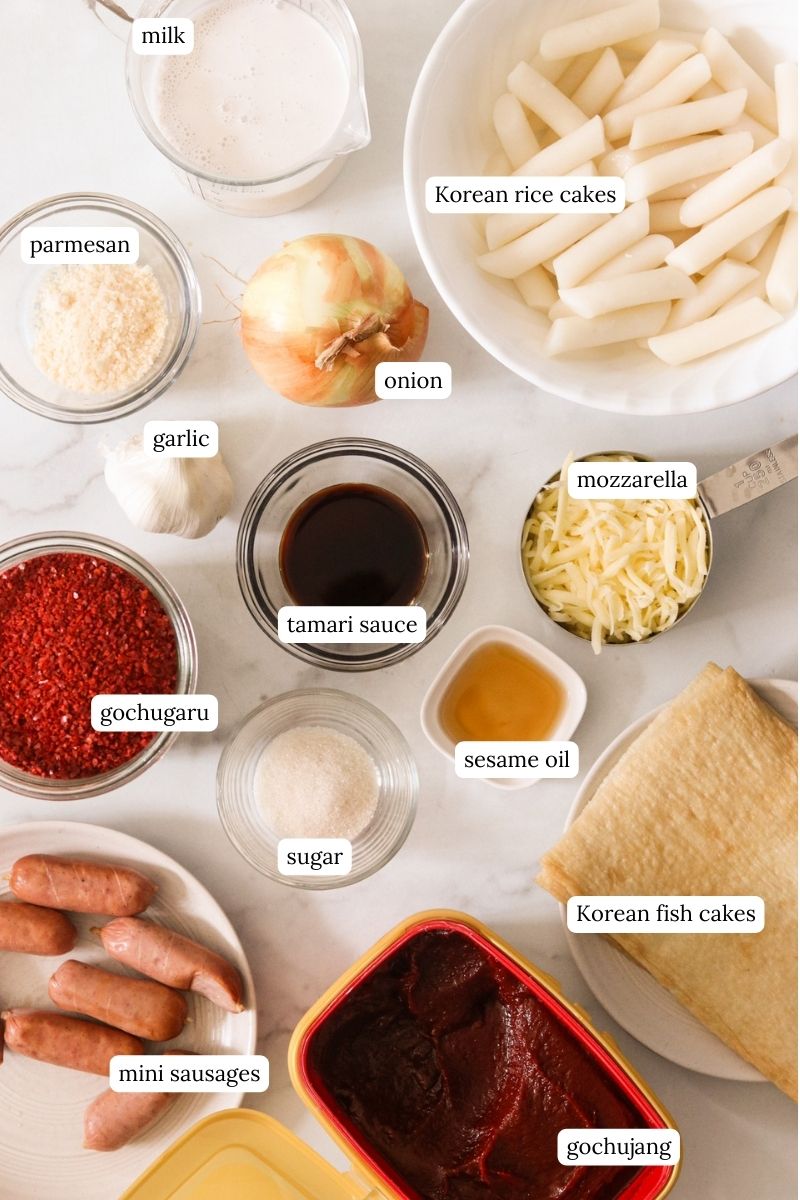
- Sesame oil: Adds a nutty, aromatic base that helps bloom the onion and garlic. You can substitute avocado oil or olive oil if needed.
- Onion: Brings natural sweetness and depth to the sauce as it softens. Yellow or white onions both work well.
- Garlic: Adds savory backbone and aroma to balance the creamy sauce. Fresh garlic is best, but jarred minced garlic works in a pinch.
- Gochujang: Provides signature Korean heat, umami, and color for the rose sauce. Use a gluten-free gochujang if needed, and choose a mild one for less spice.
- Tamari sauce (or soy sauce): Adds saltiness and depth. Tamari keeps the dish gluten-free, while regular soy sauce works if gluten isn’t a concern.
- Sugar: Balances the spice and salt in the sauce. Honey, maple syrup, or coconut sugar can be used instead.
- Gochugaru: Adds gentle heat and chili flavor without overpowering the dish. Adjust up or down depending on your spice tolerance.
- Milk: Creates the creamy rose sauce. Use any milk you like, including dairy-free milk, or swap in heavy cream for a richer result.
- Korean rice cakes: The chewy heart of the dish that absorbs the sauce beautifully. Frozen rice cakes should be soaked before cooking; fresh rice cakes can be used as-is.
- Korean fish cakes: Add savory, slightly sweet bites throughout the dish. You can omit them or replace them with extra sausage or tofu if preferred.
- Mini sausages: Add richness and protein, making the dish more filling. Regular sausage, sliced hot dogs, or plant-based sausage all work.
- Mozzarella cheese: Melts smoothly into the sauce for creaminess and mild cheesiness. Use dairy-free mozzarella if needed.
- Parmesan cheese: Adds a salty, savory finish that deepens the flavor. You can omit it or use a dairy-free alternative if needed.
- Green onions and sesame seeds: Used as garnish to add freshness, color, and light crunch. Optional but recommended!
How to Make Rose Tteokbokki
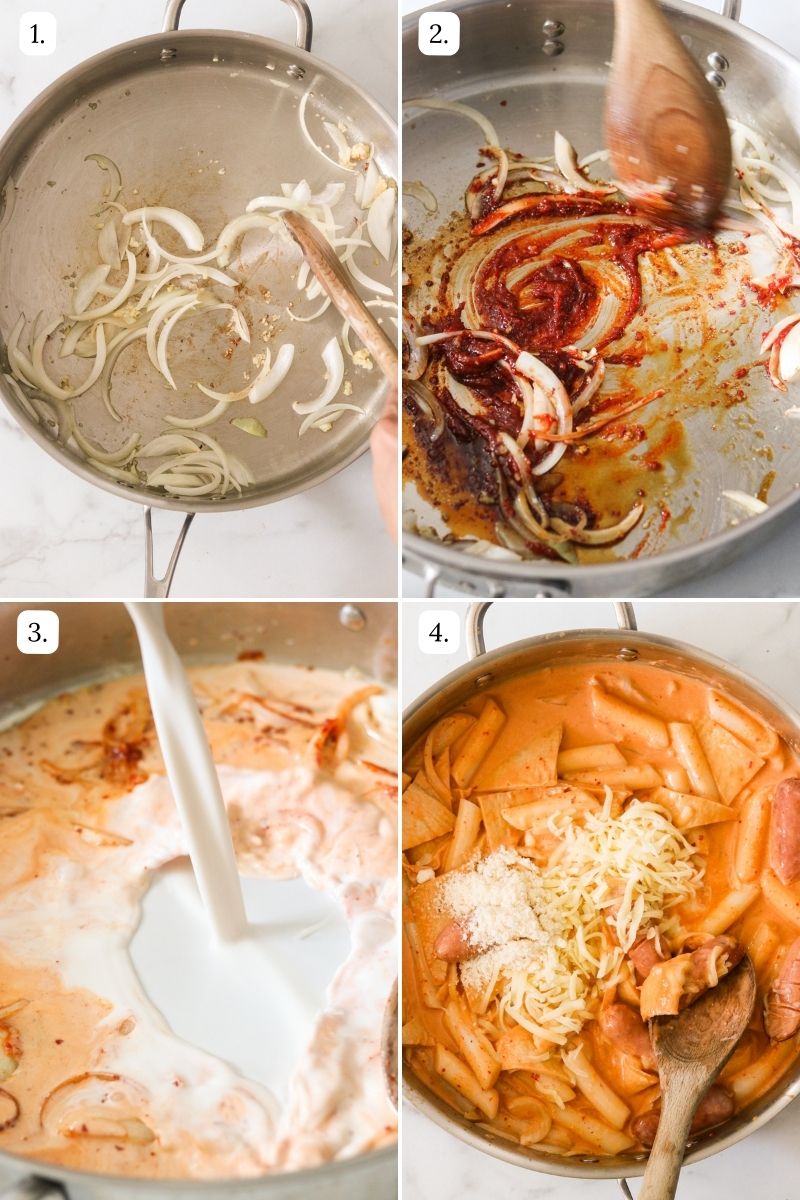
Step 1: Heat sesame oil in a large skillet over medium heat. Add the onion and garlic and cook for 3 to 4 minutes until softened and fragrant.
Step 2: Add the gochujang, tamari sauce, sugar, and gochugaru, stirring until everything is well combined and slightly thickened.
Step 3: Pour in the milk and stir until the sauce looks smooth and creamy.
Step 4: Increase the heat to medium-high and add the rice cakes, fish cakes, and sausages. Once the sauce comes to a boil, lower the heat and simmer for 4 to 5 minutes, stirring occasionally, until the rice cakes are tender but still chewy.
Step 5: Stir in the mozzarella and parmesan until the sauce becomes thick, creamy, and cheesy.
Step 6: Remove from heat and serve topped with sliced green onions and sesame seeds.
If you love the chewy rice texture but want to try a sweet twist, this songpyeon recipe is a traditional Korean rice cake dessert that’s also chewy and so delicious!
Expert Tips & Serving Suggestions
- To keep rose tteokbokki creamy, simmer gently once the milk is added and avoid high heat – it can cause the sauce to split.
- Stir often and remove the pan from heat as soon as the rice cakes are tender so they stay chewy instead of overcooking.
- If you’re using frozen rice cakes, soak them in cold water for about 30 minutes before cooking so they soften evenly. Fresh rice cakes don’t need soaking and can be used straight from the package.
- This dish is easy to customize depending on what you have on hand. You can add vegetables, tofu, steak, or glass noodles to make it heartier or adjust it to your preferences.
- This dish pairs well with Korean radish kimchi or pickled radish, and if you’re serving it as part of a larger meal, Korean rice balls make a great side.
Storage and Reheating
- I don’t recommend freezing. The rice cakes can become tough, and the creamy sauce may separate once thawed.
- Rose tteokbokki is best enjoyed fresh, but leftovers can still be saved with a few precautions. Store cooled tteokbokki in an airtight container in the fridge for up to 2 days. Keep in mind that rice cakes will continue to absorb sauce as they sit, which can affect texture.
- When reheating, warm it gently on the stovetop over low heat, adding a splash of milk or water to loosen the sauce and help restore creaminess. Stir frequently and heat just until warmed through to avoid overcooking the rice cakes. Microwaving works in a pinch, but use short intervals and stir between each one for the best texture.
Recipe FAQs
Reduce the gochugaru or use a mild gochujang. Adding a little extra milk also helps soften the heat.
The creamy sauce creates a milder, richer flavor compared to the traditional spicy red sauce.
Yes, but soaking them briefly helps them soften evenly while cooking.
With reduced chili flakes, this version is often more approachable for kids than traditional tteokbokki.
More Homemade Korean Mains

If you make this rose tteokbokki recipe, please leave me a star rating and comment below! I love to hear your thoughts and feedback. Follow me on social media Instagram, Facebook, and Pinterest for even more delicious recipes!
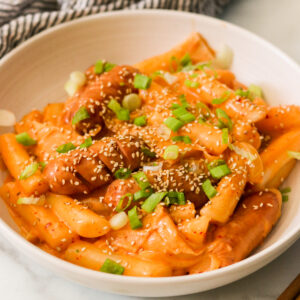
Creamy Rose Tteokbokki
Video
Ingredients
- 2 tsp sesame oil
- 1/2 onion, thinly sliced
- 3 garlic cloves, minced
- 1½ tbsp gochujang
- 1½ tbsp tamari sauce, or soy sauce
- 1½ tbsp sugar
- 1 tsp gochugaru, or more for spicier
- 1½ cup milk, of your choice
- 1 lb Korean rice cakes
- 2 sheets Korean fish cakes, about 4 oz, cut into bite-sized pieces
- 6 oz mini sausages
- 1 cup shredded mozzarella
- 2 tbsp grated parmesan
- Sliced green onions and sesame seeds, for garnish
Instructions
- Heat sesame oil in a large skillet over medium heat. Add onion and garlic, and stir cooking for 3-4 minutes until softened.
- Add gochujang, tamari sauce, sugar, and gochugaru, and stir to combine.
- Stir in milk until smooth and creamy.
- Increase the heat to medium high, then add rice cakes, fish cakes, and sausage. Once the sauce comes to a boil, reduce heat to simmer for 4-5 minutes stirring occasionally until the rice cakes are tender but not mushy.
- Stir in mozzarella and parmesan until the sauce is creamy, thick, and cheesy.
- Remove from heat and serve, sprinkled with green onions and sesame seeds.
Notes
Expert Tips
- Swaps & Substitutions: You can add any other vegetables you have in your refrigerator, other protein like bacon, steak or tofu, or glass noodles.
- Gluten-Free Option: To make this dish gluten-free, use gluten-free gochujang like this one and tamari sauce instead of soy sauce. Also, make sure your rice cakes and fish cakes are gluten-free because they commonly include wheat in them. All ingredients are usually found at your local Korean or Asian grocery stores.
- Dairy-Free Option: This can be made dairy-free by using dairy-free milk and omitting the cheese. It won’t have the same cheesy flavor, but it’ll still be delicious!
- Texture: Make sure not to simmer the rice cakes for too long because they’ll turn mushy.
Serving Tips
- Serve this dish hot, garnished with sesame seeds and chopped green onions. If you’re wondering what to eat with Tteokbokki, it goes well with sides like kimchi or pickled radishes. You can also serve it by itself. Enjoy!
Storage Tips
- Store leftover rose tteokbokki in an airtight container in the fridge for up to 5 days.
- Reheat the leftovers over the stove or in the microwave. You can add a bit of milk if the rose tteokbokki sauce is too thick.
Nutrition
Nutrition information is automatically calculated, so should only be used as an approximation.